
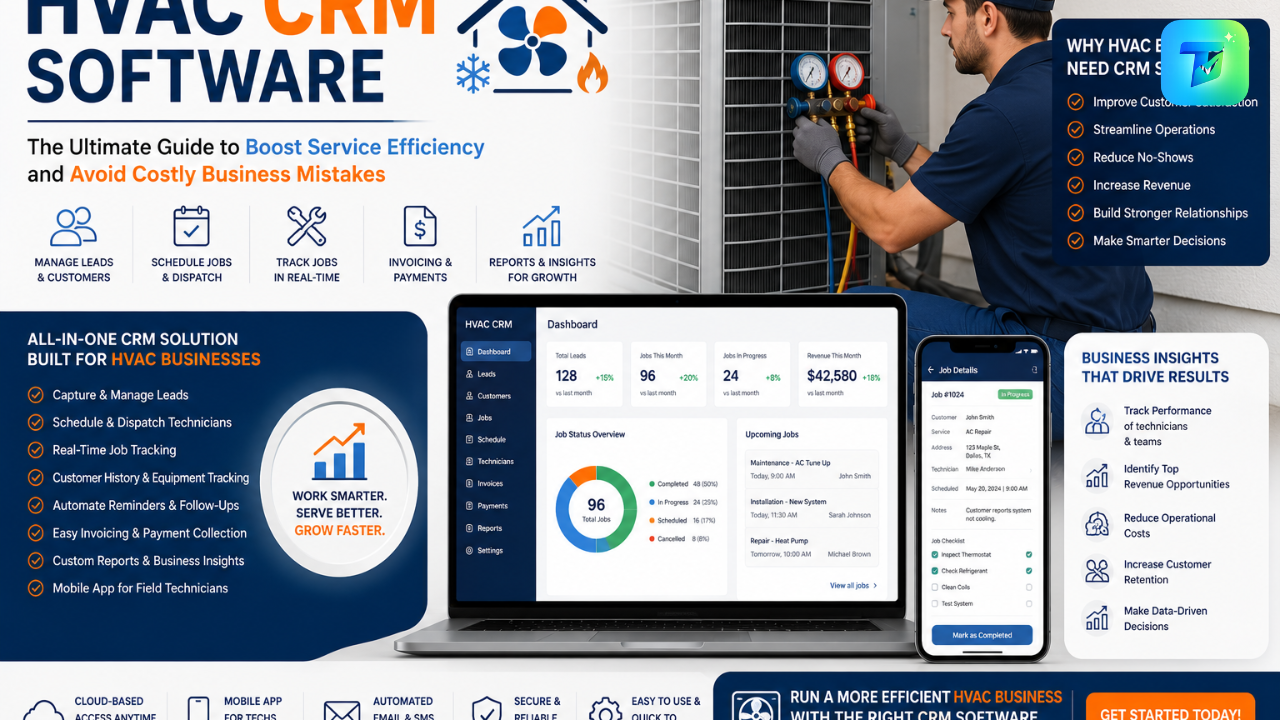
Running an HVAC business is far more complex than simply repairing heating and cooling systems. Every day, contractors must schedule appointments, dispatch technicians, manage customer records, prepare estimates, send invoices, and follow up with clients. Without a reliable system, these daily responsibilities can quickly become overwhelming and lead to missed opportunities.
This is where HVAC CRM software becomes an essential business tool. A modern customer relationship management solution helps HVAC companies organize customer information, automate repetitive tasks, improve communication, and deliver exceptional service. Whether you operate a small local business or a growing HVAC company with multiple technicians, the right CRM can streamline operations while supporting long-term growth.
What Is HVAC CRM Software?
HVAC CRM software is a specialized customer relationship management platform designed specifically for heating, ventilation, and air conditioning businesses. It combines customer management with field service tools to help companies handle sales, scheduling, dispatching, maintenance agreements, invoicing, and customer communication from one centralized system.
Unlike a basic spreadsheet or manual filing system, HVAC business software keeps every customer interaction organized in one place. From the first inquiry to recurring maintenance visits, every detail is stored securely, making it easy for office staff and technicians to access accurate information whenever needed.
Why HVAC Companies Need CRM Software
Today’s customers expect quick responses, accurate scheduling, and professional service. Managing these expectations manually often results in scheduling conflicts, delayed follow-ups, and inconsistent customer experiences.
HVAC CRM software reduces these challenges by automating routine processes and providing real-time visibility into business operations. Office staff can schedule appointments efficiently, while technicians receive complete job information before arriving at customer locations, improving both productivity and customer satisfaction.
Key Features of HVAC CRM Software
Customer Relationship Management
One of the biggest strengths of HVAC CRM software is centralized customer management. Every customer’s contact details, equipment history, maintenance records, estimates, invoices, and communication history remain accessible in one dashboard.
Having complete customer profiles enables technicians to deliver personalized service while helping office staff respond quickly to customer inquiries without searching through multiple systems.
Appointment Scheduling
Efficient scheduling keeps technicians productive throughout the day. HVAC scheduling software allows dispatchers to assign jobs based on technician availability, location, and expertise.
Automated scheduling also minimizes double bookings and reduces administrative work. Customers benefit from timely appointments, while businesses maximize daily service capacity.
Technician Dispatching
Field service dispatching is another valuable feature. Dispatchers can assign jobs instantly, monitor technician locations, and adjust schedules whenever emergencies arise.
Real-time updates ensure technicians receive new assignments immediately, helping HVAC companies respond faster to urgent repair requests while reducing travel time.
Estimates and Invoicing
Professional estimates and invoices improve customer trust. HVAC CRM software allows businesses to generate accurate quotes quickly and convert approved estimates into invoices with minimal effort.
Digital invoicing also speeds up payments by providing customers with convenient billing options, improving overall cash flow for the business.
Benefits of Using HVAC CRM Software

Better Customer Experience
Customer satisfaction directly impacts business growth. HVAC CRM software helps businesses respond faster, communicate more effectively, and maintain detailed service records that improve future visits.
When customers feel valued and receive consistent service, they are more likely to become repeat clients and recommend the company to others.
Increased Operational Efficiency
Manual paperwork consumes valuable time that could be spent serving customers. CRM software automates repetitive administrative tasks, reducing human error and improving workflow efficiency.
Employees spend less time searching for information and more time completing productive work that generates revenue.
Improved Team Communication
Communication gaps between office staff and field technicians often create delays and misunderstandings. HVAC field service management software ensures everyone has access to the same information in real time.
Technicians receive job updates instantly, while office teams can monitor progress and communicate accurate arrival times to customers.
Better Sales Opportunities
Many HVAC companies lose potential revenue simply because customer follow-ups are inconsistent. CRM software automates reminders, maintenance notifications, and sales follow-ups, helping businesses capture more opportunities.
By maintaining regular communication with existing customers, businesses can increase maintenance contract renewals, equipment upgrades, and seasonal service appointments.
How HVAC CRM Software Supports Business Growth
Growing an HVAC company requires more than hiring additional technicians. Business expansion demands organized systems capable of handling increased customer volume without sacrificing service quality.
HVAC CRM software creates standardized workflows that allow companies to scale efficiently. Whether serving hundreds or thousands of customers, business owners maintain complete visibility into operations through centralized reporting and automation.
Data-Driven Decision Making
Modern CRM platforms generate valuable reports on revenue, technician performance, completed jobs, customer retention, and sales trends.
These insights help business owners identify strengths, discover operational weaknesses, and make informed decisions based on actual business performance instead of assumptions.
Important Features to Consider Before Choosing HVAC CRM Software
Mobile Accessibility
Field technicians spend most of their time outside the office. Mobile access allows them to view schedules, customer information, upload photos, collect signatures, and update job status directly from smartphones or tablets.
This reduces paperwork while keeping office staff informed throughout the workday.
Automation Capabilities
Automation saves both time and money. Features such as appointment reminders, maintenance notifications, invoice generation, and customer follow-ups reduce manual work while improving consistency.
Businesses that automate repetitive processes often experience higher productivity and fewer administrative errors.
Integration Options
The best HVAC CRM software integrates smoothly with accounting systems, payment processors, marketing tools, and communication platforms.
Connected systems eliminate duplicate data entry and create a more efficient workflow across every department.
Common Mistakes to Avoid When Selecting HVAC CRM Software

Choosing software based solely on price can become an expensive mistake. A low-cost solution that lacks essential features may eventually require replacement, creating additional costs and operational disruption.
Another common mistake is ignoring ease of use. Even powerful software delivers limited value if employees struggle to learn it. Businesses should prioritize user-friendly platforms that provide efficient workflows and simple navigation.
Best Practices for Getting Maximum Value
Successful CRM implementation begins with accurate customer data. Cleaning existing records before migration improves reporting accuracy and reduces future confusion.
Employee training is equally important. Staff members should understand how to use every major feature so the business gains the full benefits of automation, scheduling, customer management, and reporting capabilities.
Related Keywords Naturally Included
The article naturally incorporates related search terms including HVAC management software, HVAC scheduling software, HVAC service software, field service management, contractor CRM, customer management system, service dispatch software, maintenance management, technician scheduling, work order management, invoicing software, service business automation, and customer relationship management.
Conclusion
HVAC CRM software has become an essential investment for companies that want to improve efficiency, strengthen customer relationships, and support sustainable business growth. Instead of relying on manual processes that consume valuable time, businesses can automate scheduling, dispatching, invoicing, and customer communication through one centralized platform.
The right HVAC CRM software not only simplifies daily operations but also creates better customer experiences, increases productivity, and helps companies identify new revenue opportunities. By selecting software that matches business needs and focusing on proper implementation, HVAC contractors can build a more organized, profitable, and customer-focused operation for years to come.
Frequently Asked Questions
What is HVAC CRM software used for?
HVAC CRM software helps heating and cooling businesses manage customer information, schedule appointments, dispatch technicians, create estimates, send invoices, and improve customer communication from one centralized platform.
Is HVAC CRM software suitable for small businesses?
Yes. Small HVAC businesses can use CRM software to automate administrative tasks, improve scheduling, manage customer records, and provide professional service while preparing for future growth.
Can HVAC CRM software improve customer retention?
Yes. CRM software stores customer history, automates maintenance reminders, and supports regular follow-ups, helping businesses build stronger customer relationships and increase repeat business.
Does HVAC CRM software help field technicians?
Absolutely. Mobile access allows technicians to receive job assignments, access customer information, update work orders, capture photos, collect digital signatures, and complete jobs more efficiently.
What features should I look for in HVAC CRM software?
Look for customer management, scheduling, dispatching, mobile access, invoicing, reporting, automation, maintenance tracking, technician management, and integration with accounting or payment systems.
Quick Bio
Topic: HVAC CRM Software
Category: Business Software / SaaS
Primary Keyword: HVAC CRM Software
Search Intent: Informational
Target Audience: HVAC contractors, service businesses, HVAC company owners, field service managers, and small business operators looking to improve operational efficiency and customer management.
Reading Level: Professional yet easy to understand for beginners and experienced business owners alike.