
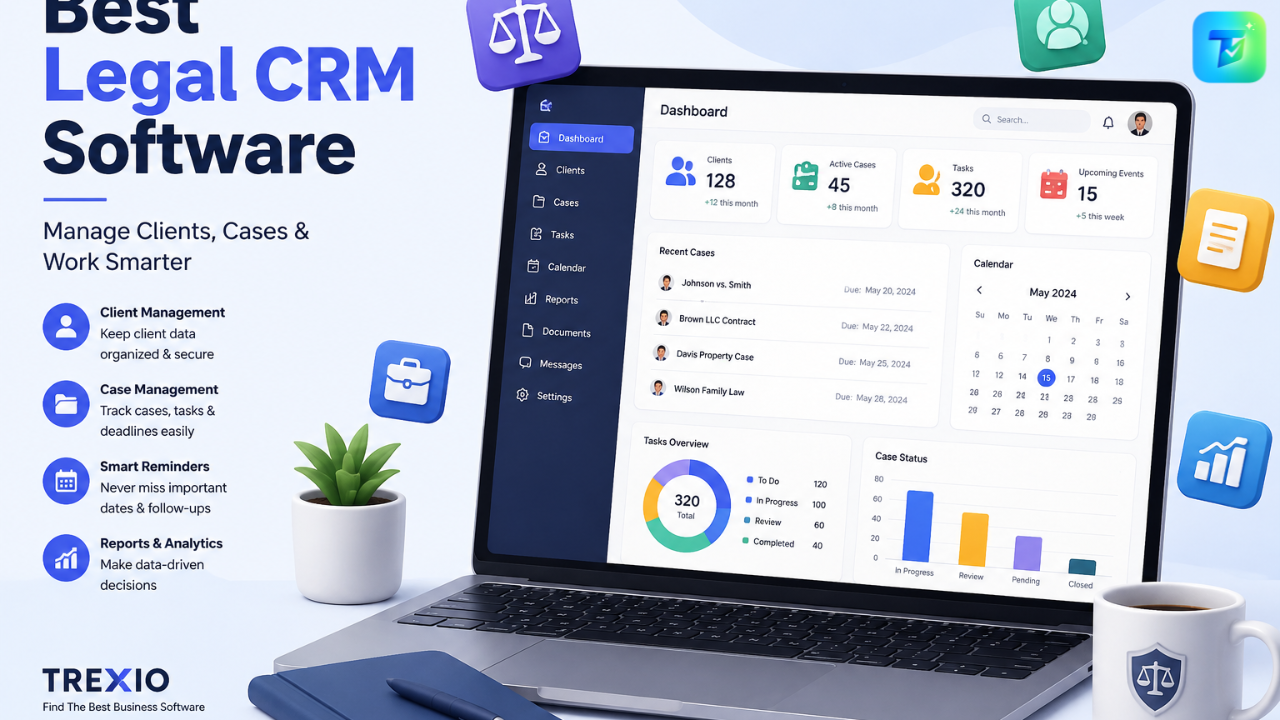
The legal industry has become more competitive than ever. Clients expect faster communication, personalized service, and seamless case updates. Managing hundreds of contacts, consultations, follow-ups, and client records manually is no longer practical for modern law firms. This is where legal CRM software becomes an essential business tool rather than just another software investment.
Whether you run a solo practice or a large law firm, choosing the right legal CRM software can improve efficiency, strengthen client relationships, and increase conversions. At the same time, selecting the wrong solution may create workflow problems, wasted resources, and frustrated staff. This guide explains everything you need to know about legal CRM systems, their benefits, key features, and how to choose the best solution for your legal practice.
What Is Legal CRM Software?
Legal CRM software is a specialized Customer Relationship Management system designed specifically for lawyers and law firms. Unlike traditional CRM platforms, legal CRM solutions focus on managing prospective clients, current clients, legal consultations, communication history, document tracking, and client intake workflows.
These platforms centralize client information into one secure location, making it easier for attorneys and legal teams to access important details whenever needed. Instead of relying on spreadsheets, emails, or paper files, firms can manage every interaction from a single dashboard while maintaining professional standards.
How Legal CRM Differs from Standard CRM
General CRM software is built for sales teams and customer service departments across different industries. Although useful, these systems often lack the specialized tools required by legal professionals.
Legal CRM software includes features such as client intake automation, conflict checking, legal document management, consultation scheduling, matter tracking, workflow automation, and integration with legal practice management software. These capabilities help law firms maintain compliance while improving operational efficiency.
Why Law Firms Need Legal CRM Software
Managing client relationships is one of the most important aspects of legal practice. Every missed call, delayed response, or forgotten follow-up can result in lost business opportunities.
Legal CRM software ensures every lead is tracked from the first inquiry until the client signs an agreement. Automated reminders, organized communication, and centralized records help attorneys focus more on practicing law instead of administrative tasks.
Better Client Communication
Modern clients expect prompt responses and regular updates. Legal CRM systems store emails, phone calls, appointments, notes, and documents in one place, allowing every team member to understand the client’s history.
This organized communication improves trust and reduces misunderstandings. Clients appreciate firms that respond quickly and provide consistent service throughout their legal journey.
Improved Client Intake Process
The client intake process often determines whether a prospective client hires your firm or chooses a competitor.
Legal CRM software simplifies online intake forms, appointment scheduling, document collection, and follow-up communication. Automated workflows reduce manual work while ensuring every lead receives timely attention.
Key Features to Look for in Legal CRM Software

Not every CRM offers the same capabilities. Choosing software with the right features can significantly improve productivity.
Contact Management
Effective contact management allows law firms to organize client information, consultation history, communication logs, and legal matters in one secure database.
Quick access to complete client records helps attorneys make informed decisions during meetings and court preparation.
Workflow Automation
Automation eliminates repetitive administrative tasks. Common automated processes include appointment reminders, follow-up emails, consultation scheduling, lead nurturing, and task assignments.
This reduces human error while saving valuable time for attorneys and legal assistants.
Document Management
Law firms handle a large number of legal documents daily. Legal CRM software helps organize contracts, agreements, evidence, court filings, and client records in one centralized location.
Version control and secure storage make document retrieval much easier while reducing paperwork.
Calendar and Appointment Scheduling
Integrated calendars help legal professionals manage consultations, hearings, court appearances, and internal meetings without scheduling conflicts.
Automated reminders also reduce missed appointments and improve client satisfaction.
Reporting and Analytics
Performance reports provide valuable insights into lead conversion, client acquisition, revenue trends, marketing performance, and staff productivity.
These analytics help law firms make better business decisions based on real data rather than assumptions.
Benefits of Using Legal CRM Software
Implementing legal CRM software offers both short-term and long-term advantages for law firms of all sizes.
One major benefit is improved organization. Instead of scattered emails and disconnected spreadsheets, every client interaction is stored in one searchable system.
Another important advantage is higher client satisfaction. Faster responses, personalized communication, and efficient case management create a better client experience that often leads to referrals and positive reviews.
Legal CRM software also improves collaboration among attorneys, paralegals, receptionists, and administrative staff. Everyone works with the same updated information, reducing duplication and communication errors.
In addition, automation helps reduce administrative workload. Staff spend less time on repetitive tasks and more time serving clients effectively.
How to Choose the Best Legal CRM Software
Selecting the right platform requires careful evaluation of your firm’s specific needs.
Start by identifying your daily workflow challenges. Consider how your team manages leads, consultations, documents, client communication, and appointments. Choose software that addresses these pain points without adding unnecessary complexity.
Scalability is equally important. As your law firm grows, your CRM should support additional users, increased client records, and expanded automation capabilities.
Ease of use should never be overlooked. A user-friendly interface encourages adoption across your entire team, reducing training time and increasing productivity.
Security should remain a top priority because legal professionals manage confidential client information. Look for software with secure data storage, access controls, and reliable backup options.
Common Mistakes When Choosing Legal CRM Software
Many firms purchase software based solely on price. While affordability matters, the cheapest option may lack important legal-specific features needed for long-term success.
Another common mistake is ignoring staff training. Even the best legal CRM software cannot deliver results if employees do not understand how to use it effectively.
Some firms also underestimate integration needs. Selecting software that works well with existing legal tools, email platforms, calendars, and document management systems can prevent future workflow issues.
Finally, avoid choosing software with unnecessary complexity. A clean, intuitive platform often delivers better productivity than a feature-heavy system that employees rarely use.
Future Trends in Legal CRM Software
Artificial intelligence continues to influence legal technology. Modern legal CRM software increasingly includes intelligent automation, predictive analytics, smart document organization, and automated client communication.
Cloud-based legal CRM solutions are also becoming more popular because they provide secure remote access, easier collaboration, and automatic software updates.
As client expectations continue evolving, law firms that adopt advanced CRM technology will likely gain a competitive advantage through faster service, improved efficiency, and stronger client relationships.
Quick Bio
Category: Business Software
Primary Keyword: Legal CRM Software
Best For: Solo attorneys, legal consultants, small law firms, and large legal practices seeking better client relationship management and workflow automation.
Main Benefits: Client intake management, contact organization, workflow automation, document management, appointment scheduling, reporting, and improved client communication.
Conclusion
Legal CRM software has become an essential investment for law firms that want to improve client relationships, increase operational efficiency, and support long-term business growth. The right solution simplifies client intake, organizes communication, automates repetitive tasks, and provides valuable business insights that help firms make smarter decisions.
While choosing the wrong platform can create unnecessary challenges, selecting software that aligns with your firm’s workflow, security requirements, and future growth goals can deliver significant long-term value. By focusing on usability, automation, scalability, and client experience, law firms can build stronger relationships while operating more efficiently in an increasingly competitive legal market.
FAQ
What is legal CRM software?
Legal CRM software is a customer relationship management system designed specifically for law firms to manage leads, clients, communications, appointments, and legal workflows more efficiently.
Is legal CRM software suitable for solo lawyers?
Yes. Solo attorneys can use legal CRM software to organize client information, automate follow-ups, manage consultations, and improve productivity without hiring additional administrative staff.
What features should legal CRM software include?
Essential features include client intake management, contact management, workflow automation, document management, appointment scheduling, reporting, communication tracking, and secure data storage.
Can legal CRM software improve client satisfaction?
Yes. Faster responses, organized communication, timely follow-ups, and personalized service help create a better client experience, leading to stronger relationships and more referrals.
How does legal CRM software improve law firm productivity?
By automating repetitive tasks, organizing client information, streamlining communication, and reducing manual administrative work, legal CRM software allows attorneys to spend more time focusing on legal services.
Is cloud-based legal CRM software a good choice?
For many law firms, cloud-based solutions offer flexibility, secure remote access, easier collaboration, automatic updates, and improved accessibility while maintaining strong data protection practices.