
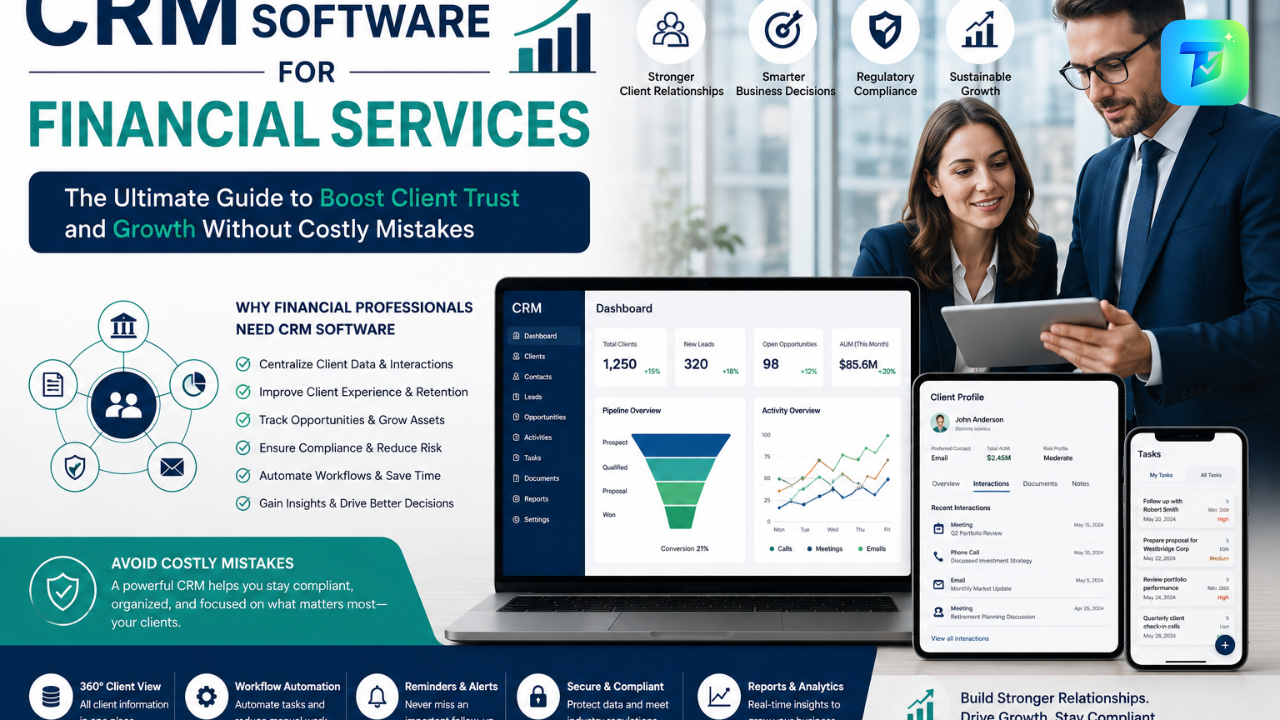
The financial services industry has become increasingly competitive, making customer relationships more valuable than ever before. Whether you are a financial advisor, wealth manager, insurance agency, mortgage broker, accounting firm, or investment consultant, managing client information efficiently is essential for long-term success. This is where CRM software for financial services becomes an indispensable business tool.
Modern CRM solutions go far beyond storing contact details. They help financial professionals automate repetitive tasks, monitor client interactions, manage compliance requirements, improve communication, and provide highly personalized services. Instead of relying on spreadsheets or scattered notes, firms can access complete customer profiles from a centralized platform.
Businesses that invest in CRM technology often experience stronger customer retention, increased productivity, better sales performance, and improved operational efficiency. However, selecting the wrong CRM can lead to wasted resources, frustrated employees, and poor customer experiences. Understanding what features truly matter is the first step toward making a smart investment.
What Is CRM Software for Financial Services?
CRM software for financial services is a specialized customer relationship management platform designed to help financial organizations manage customer data, communication, sales opportunities, and regulatory processes from one centralized system.
Unlike generic CRM platforms, financial CRM solutions focus on industry-specific workflows such as portfolio management, financial planning, compliance tracking, document management, appointment scheduling, and secure client communication. These features enable firms to deliver personalized financial advice while maintaining accurate records.
The software allows advisors and financial professionals to view complete customer histories, monitor investment discussions, record important meetings, and schedule follow-up activities without losing valuable information. This creates a more organized workflow and enhances customer satisfaction.
Why Financial Service Companies Need CRM Software
Financial professionals deal with sensitive information, multiple client accounts, regulatory obligations, and ongoing communication. Managing these responsibilities manually increases the risk of errors and missed opportunities.
CRM software simplifies these processes by organizing customer data into one secure location. Advisors can quickly retrieve client information, review previous interactions, track financial goals, and prepare for meetings more effectively. This results in stronger client relationships and improved service quality.
Additionally, automation reduces repetitive administrative work. Instead of spending hours updating spreadsheets or searching emails, staff can focus on providing valuable financial guidance and growing the business.
Key Features to Look for in CRM Software for Financial Services
Client Relationship Management
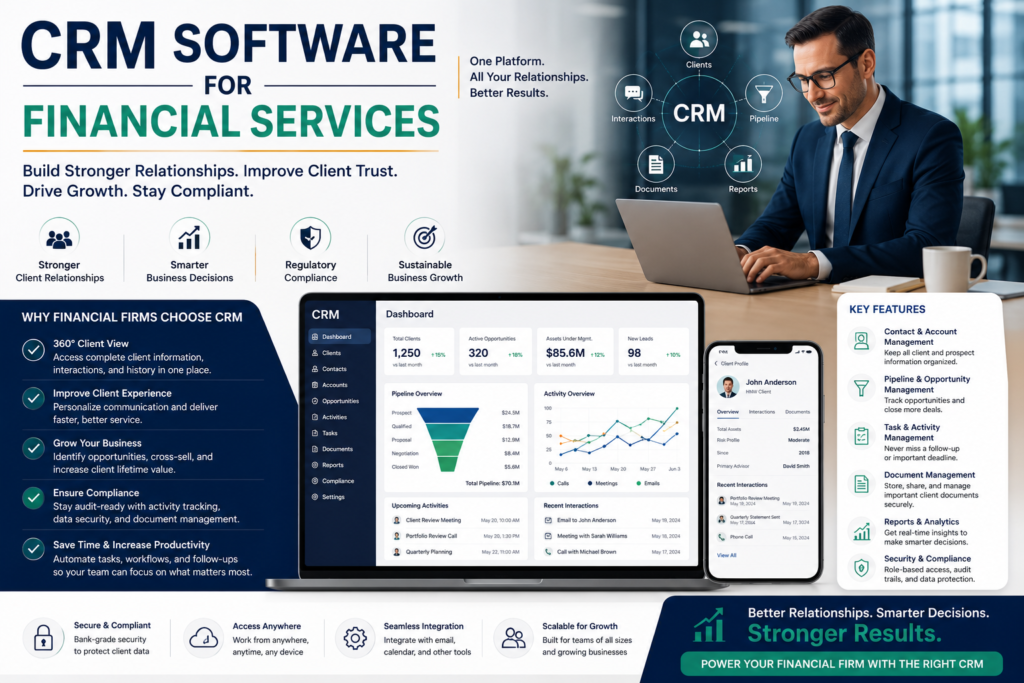
A quality CRM should provide a complete view of every client. This includes contact information, financial objectives, communication history, meeting notes, investment preferences, and important life events.
Having all customer information available in one place helps advisors deliver personalized recommendations and maintain consistent communication.
Workflow Automation
Automation is one of the biggest advantages of financial CRM software. Routine activities such as appointment reminders, follow-up emails, task assignments, and document requests can be handled automatically.
This improves efficiency while reducing the chances of human error in daily operations.
Compliance Management
Financial institutions must comply with various regulations and maintain detailed records of customer interactions.
CRM software helps organize documentation, track communication history, and maintain audit trails that support regulatory compliance while minimizing operational risks.
Document Management
Financial professionals exchange contracts, reports, tax documents, investment statements, and confidential files regularly.
Integrated document management allows users to securely store, organize, and retrieve important documents whenever needed.
Benefits of CRM Software for Financial Services
Stronger Client Relationships
Building trust is essential in financial services. CRM software enables businesses to understand client preferences, financial goals, and communication history, making every interaction more meaningful.
Personalized service creates stronger customer loyalty and encourages long-term relationships that benefit both clients and advisors.
Improved Productivity
Employees spend less time searching for information and more time serving clients. Automated workflows reduce manual tasks while improving collaboration between different departments.
The result is increased efficiency across the entire organization.
Better Sales Pipeline Management
CRM systems help financial firms monitor leads, identify sales opportunities, and manage every stage of the customer journey.
Advisors can easily track prospects, schedule follow-ups, and convert qualified leads into loyal clients without missing important opportunities.
Enhanced Customer Experience
Customers appreciate quick responses and personalized financial advice.
With instant access to client records and communication history, financial professionals can provide faster, more informed support that improves customer satisfaction.
Industries That Benefit from Financial CRM Software
Wealth Management Firms
Wealth managers use CRM platforms to organize investment portfolios, monitor client communications, and maintain detailed financial planning records.
This improves portfolio reviews while strengthening long-term client relationships.
Insurance Agencies
Insurance professionals can manage policy renewals, customer inquiries, claims documentation, and follow-up reminders from one centralized platform.
Automation helps improve customer retention while simplifying policy management.
Mortgage Brokers
Mortgage advisors often manage numerous applications simultaneously.
CRM Software for Financial Services helps organize loan applications, customer documents, lender communication, and approval stages efficiently.
Financial Advisors
Independent financial advisors benefit from centralized customer records, appointment scheduling, task management, and personalized communication.
This enables advisors to spend more time helping clients achieve their financial goals.
How CRM Improves Customer Retention
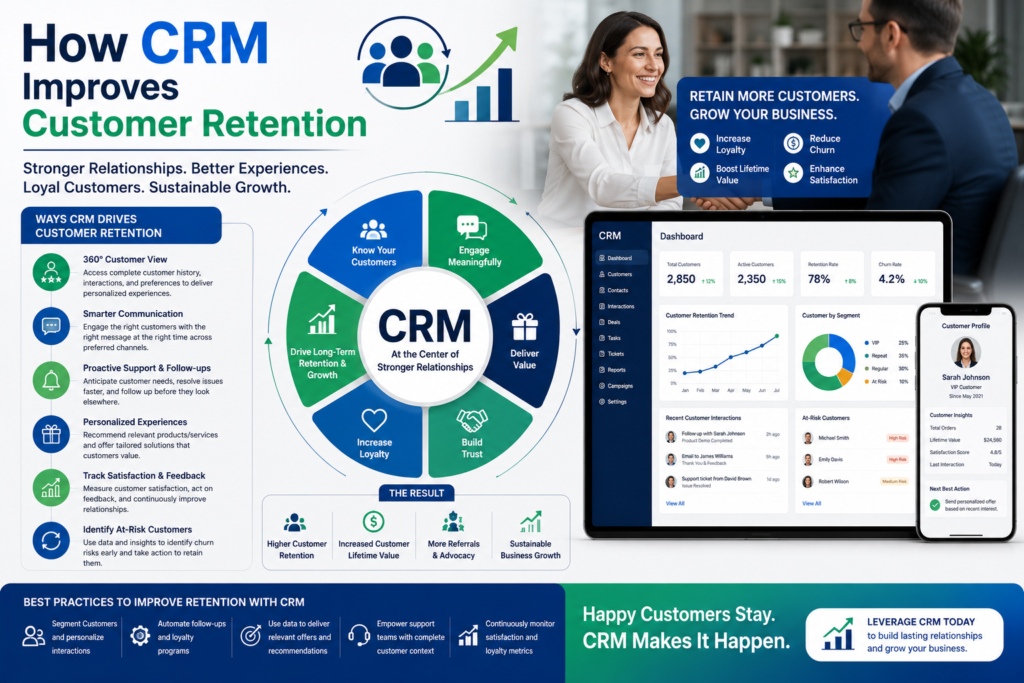
Retaining existing customers is often more profitable than acquiring new ones.
CRM Software for Financial Services allows businesses to maintain regular communication through scheduled reminders, personalized messages, annual financial reviews, and milestone celebrations. Clients appreciate proactive service and timely support.
When advisors consistently remember birthdays, investment anniversaries, retirement milestones, or policy renewal dates, customers feel valued and are more likely to remain loyal.
Common Challenges Without CRM Software
Many financial firms still rely on spreadsheets, paper files, or disconnected software systems.
This often leads to duplicated records, missed appointments, inconsistent communication, lost documents, and poor collaboration between employees.
Without centralized customer management, businesses may struggle to deliver personalized service or maintain regulatory compliance. These issues can negatively impact customer trust and business growth.
Tips for Choosing the Best CRM Software for Financial Services
Understand Your Business Needs
Different financial organizations have different requirements.
A small advisory firm may prioritize client management and scheduling, while a large financial institution may require advanced compliance features and workflow automation.
Prioritize Security
Financial information is highly sensitive.
Choose CRM software that offers strong data protection, secure user access, encryption, and regular backups to protect confidential client information.
Consider Integration
Your CRM should work smoothly with accounting software, email platforms, calendar applications, document management systems, and financial planning tools.
Integrated systems eliminate duplicate work and improve productivity.
Evaluate Ease of Use
Even the most powerful CRM becomes ineffective if employees struggle to use it.
An intuitive interface and simple navigation encourage faster adoption across the organization.
Future Trends in Financial CRM Software
Artificial intelligence is becoming an important part of CRM technology.
Modern systems are beginning to provide predictive insights, customer behavior analysis, automated recommendations, and intelligent workflow automation that help financial professionals make better business decisions.
Cloud-based CRM platforms continue to gain popularity because they offer flexibility, remote accessibility, automatic updates, and lower infrastructure costs. Mobile access also allows advisors to serve clients efficiently from virtually anywhere.
Quick Bio
Topic: CRM Software for Financial Services
Primary Keyword: CRM software for financial services
Industry: Financial Technology (FinTech)
Content Type: Informative SEO Guide
Target Audience: Financial advisors, insurance agencies, wealth managers, mortgage brokers, accounting firms, investment consultants, and financial institutions.
Search Intent: Informational with commercial value.
Main Benefits: Better customer relationship management, workflow automation, compliance support, improved client retention, enhanced productivity, and business growth.
Conclusion
CRM software for financial services has become an essential solution for organizations that want to build stronger client relationships while improving operational efficiency. By centralizing customer information, automating repetitive tasks, supporting compliance, and enhancing communication, CRM platforms help financial professionals deliver a higher level of service.
Choosing the right CRM requires careful evaluation of business goals, security requirements, ease of use, automation capabilities, and integration options. While implementing the wrong solution may create unnecessary challenges, selecting the right platform can improve productivity, strengthen customer trust, and support sustainable business growth for years to come.
FAQ
What is CRM software for financial services?
CRM software for financial services is a customer relationship management system designed specifically for financial professionals to manage client data, communication, sales activities, compliance, and workflow efficiently.
Why is CRM important for financial advisors?
CRM helps financial advisors organize customer information, improve communication, automate follow-ups, strengthen client relationships, and increase overall productivity.
Can CRM software improve customer retention?
Yes. CRM Software for Financial Services supports personalized communication, timely follow-ups, appointment reminders, and better customer service, all of which contribute to stronger client loyalty and higher retention rates.
Is CRM software suitable for small financial firms?
Absolutely. Small financial businesses benefit from improved organization, better client management, workflow automation, and scalable growth without relying on manual processes.
What features should financial firms prioritize in a CRM?
Important features include client management, workflow automation, document management, compliance tracking, reporting, appointment scheduling, secure data storage, and integration with existing business tools.
How does CRM software help with compliance?
CRM systems maintain organized client records, communication histories, audit trails, and document storage, making it easier for financial firms to meet regulatory requirements while reducing administrative risks.