
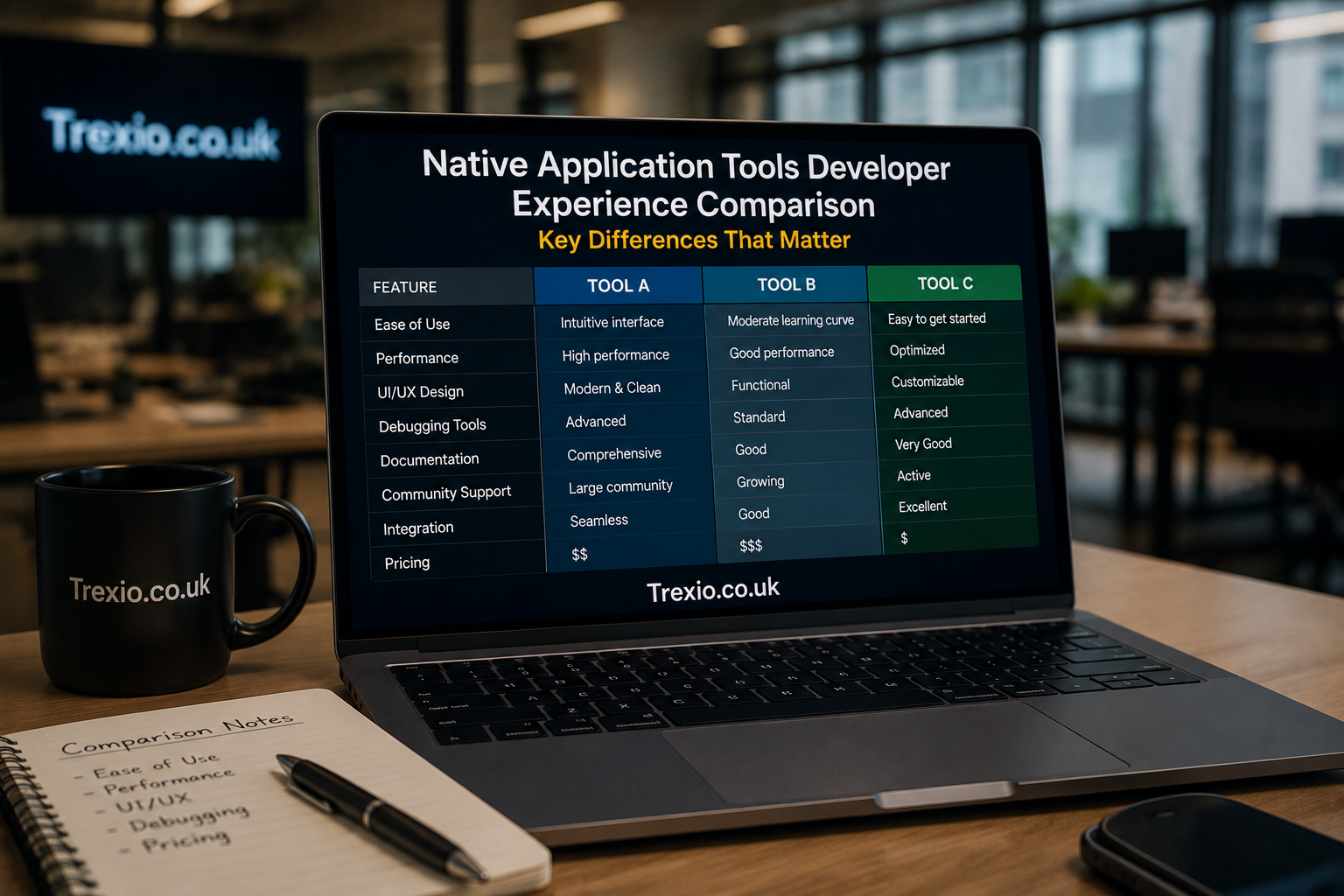
Developers today have more choices than ever before when selecting tools for building native applications. A thorough native application tools developer experience comparison helps software engineers, technical leaders, and businesses understand which ecosystem provides the most productive workflow. Modern development tools influence coding speed, debugging efficiency, deployment quality, application performance, and long-term maintainability. Whether creating iOS, Android, Windows, or macOS applications, selecting the right development environment can significantly affect project success. Developer experience has become one of the most important factors because it directly impacts productivity, collaboration, and software quality. Teams no longer evaluate tools solely by programming language support but also by automation, testing capabilities, documentation, community resources, and ecosystem maturity. Understanding these factors makes choosing the right native development platform much easier.
Quick Answer
A native application tools developer experience comparison shows that the best native development platforms prioritize fast performance, intelligent code completion, integrated debugging, automated testing, package management, continuous integration support, and strong documentation. Excellent developer experience reduces development time, minimizes bugs, improves collaboration, and simplifies long-term maintenance. The right development environment ultimately depends on project requirements, target operating systems, team expertise, scalability goals, and integration needs.
Introduction
Choosing native application development tools is no longer simply about writing code. Today’s software engineers expect intelligent IDEs, responsive emulators, integrated version control, automated testing pipelines, real-time debugging, cloud integration, and efficient deployment workflows. These expectations have transformed developer experience into a major competitive advantage among software platforms. A comprehensive native application tools developer experience comparison helps organizations evaluate how different ecosystems support developers throughout the entire software lifecycle. Instead of focusing only on technical specifications, experienced teams assess usability, documentation quality, plugin ecosystems, collaboration features, performance optimization, and long-term scalability. These considerations help reduce technical debt while accelerating software delivery. As native applications continue powering enterprise software, consumer mobile apps, healthcare platforms, banking solutions, and productivity tools, choosing the right development environment becomes increasingly important.
Understanding Developer Experience in Native Application Development
Developer experience, commonly called DX, refers to how efficiently software engineers can build, debug, maintain, and deploy applications using a particular technology stack. In a native application tools developer experience comparison, developer experience extends beyond an attractive interface or simple coding environment. It includes installation simplicity, project configuration, build performance, intelligent code suggestions, integrated testing frameworks, documentation accessibility, package management, dependency resolution, collaboration features, and deployment automation. Developers spend thousands of hours interacting with these tools throughout a project’s lifecycle, making every small improvement valuable. Poor developer experience often results in slower releases, increased bugs, onboarding difficulties, and frustrated engineering teams. Strong developer experience encourages faster innovation while reducing maintenance costs. Organizations increasingly prioritize developer satisfaction because productive developers create higher-quality applications more consistently.
Why Developer Experience Matters
Developer experience directly influences software quality because efficient tools reduce repetitive tasks while allowing engineers to focus on solving real business problems. A strong native application tools developer experience comparison reveals how modern IDEs streamline development through intelligent automation, contextual suggestions, integrated debugging, and seamless deployment pipelines. Teams working with optimized development environments generally complete features more quickly while maintaining higher code quality. Better workflows also simplify collaboration among distributed engineering teams by providing standardized project structures and integrated version control. Improved debugging capabilities reduce production errors before software reaches users. Continuous integration features enable automated quality assurance without slowing development cycles. Ultimately, excellent developer experience creates a healthier engineering culture where developers spend more time building innovative products instead of troubleshooting tooling issues.
Core Components Evaluated in a Native Application Tools Developer Experience Comparison
Every native application tools developer experience comparison should evaluate multiple aspects rather than focusing on one feature alone. Successful development environments combine coding efficiency, debugging, testing, deployment, collaboration, documentation, extensibility, and performance into one cohesive workflow. Developers benefit when these components integrate naturally without requiring excessive configuration or third-party plugins. A balanced evaluation helps organizations choose tools aligned with long-term software goals instead of temporary trends. Comparing these components also highlights strengths and weaknesses across competing ecosystems. Teams should consider current needs while anticipating future scalability requirements. The following sections explain the most critical evaluation categories.
Development Environment
The integrated development environment serves as the foundation of every native application workflow. High-quality IDEs provide intelligent code completion, syntax highlighting, project navigation, refactoring tools, error detection, integrated terminals, plugin support, and visual debugging. During a native application tools developer experience comparison, IDE responsiveness significantly affects daily productivity because developers constantly interact with editors throughout coding sessions. Fast indexing, reliable autocomplete, customizable interfaces, and efficient project management reduce cognitive load while improving focus. Native development platforms continue investing heavily in smarter IDE features powered by machine learning. Better code suggestions accelerate feature development while reducing syntax errors. Rich extension ecosystems further enhance flexibility for specialized workflows.
Code Navigation
Modern development environments include powerful navigation capabilities that simplify working within large codebases. Engineers can quickly locate files, methods, variables, dependencies, and project references without manually searching directories. Efficient navigation becomes increasingly valuable as enterprise applications grow in complexity. Strong navigation tools improve onboarding for new developers by making unfamiliar code easier to understand. Integrated search capabilities reduce wasted time while encouraging better code reuse. Navigation improvements contribute significantly to a positive native application tools developer experience comparison because they directly affect daily productivity.
Intelligent Refactoring
Refactoring tools safely rename variables, reorganize classes, update dependencies, and modify application architecture without introducing unnecessary errors. Automated refactoring reduces repetitive manual work while preserving code consistency. Modern IDEs continuously analyze project structures to recommend improvements that enhance maintainability. Intelligent refactoring becomes especially valuable during long-term software maintenance where architectural evolution is common. High-quality refactoring tools improve developer confidence when implementing significant changes. These capabilities remain one of the strongest differentiators in any native application tools developer experience comparison.
Performance and Build Speed
Build performance plays a major role in developer satisfaction because engineers frequently compile applications throughout the development cycle. A slow build process interrupts concentration while extending feature delivery timelines. Every native application tools developer experience comparison should carefully evaluate incremental compilation, dependency management, caching mechanisms, build parallelization, and hardware optimization. Faster compilation encourages continuous testing because developers receive feedback almost immediately after making changes. Efficient build systems also improve continuous integration performance by reducing server resource consumption. Modern native development environments increasingly optimize incremental builds to minimize unnecessary recompilation. Reduced waiting times translate directly into improved productivity and faster software releases.
Incremental Compilation
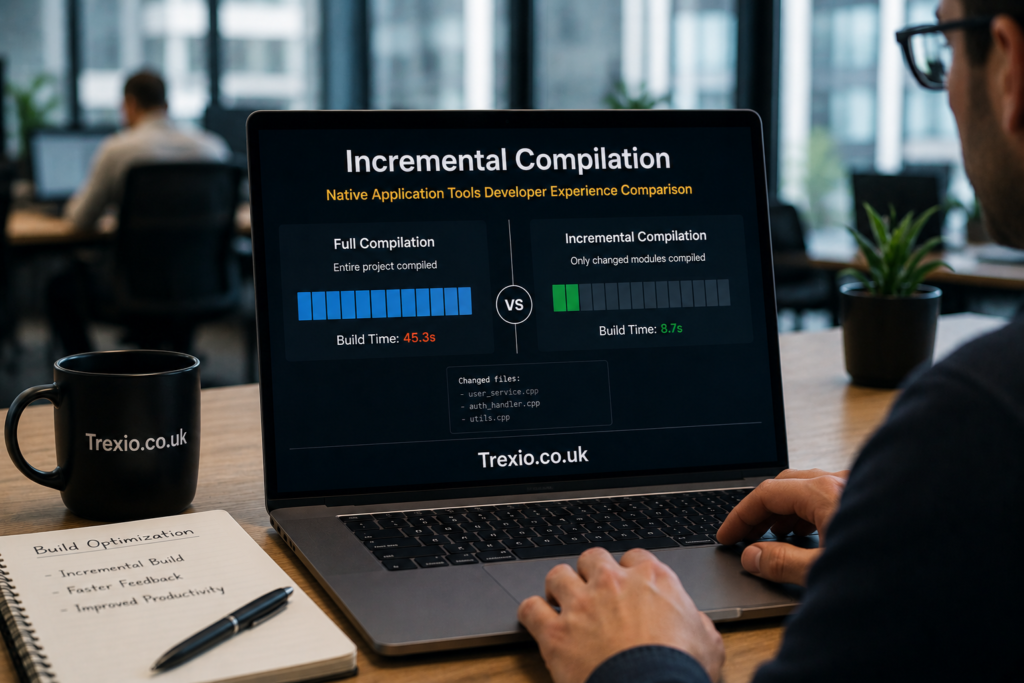
Incremental compilation rebuilds only modified components instead of compiling the entire application after every code change. This significantly decreases waiting time during development while improving iteration speed. Developers working on large enterprise applications especially benefit from efficient incremental compilation because project sizes continue growing rapidly. Modern build systems intelligently detect dependencies while avoiding redundant processing. These optimizations improve developer workflows while supporting agile development practices. Incremental compilation remains a crucial metric within every native application tools developer experience comparison.
Resource Management
Native development environments also differ in CPU usage, memory consumption, emulator performance, indexing efficiency, and background task management. Lightweight tools generally perform better on older hardware while resource-intensive IDEs often provide richer functionality. Organizations should balance performance requirements against available computing resources when selecting development platforms. Efficient resource management supports multitasking without slowing development environments. Better optimization also improves battery life for developers working remotely on portable devices. These factors significantly influence overall developer satisfaction.
Debugging and Error Detection
Debugging represents one of the most time-consuming phases of software development. A comprehensive native application tools developer experience comparison examines breakpoint management, runtime inspection, memory analysis, crash reporting, stack trace visualization, logging systems, exception handling, and live debugging capabilities. High-quality debugging tools allow developers to identify issues quickly before software reaches production. Visual inspection of variables, threads, network requests, and application states simplifies diagnosing complex problems. Advanced debuggers also integrate profiling tools that reveal performance bottlenecks during runtime. Efficient debugging shortens release cycles while improving software reliability. Modern native application ecosystems continue investing heavily in intelligent diagnostics powered by automated analysis and AI-assisted recommendations.
Real-Time Debugging
Real-time debugging enables developers to inspect running applications without repeatedly restarting the software. Live updates improve experimentation while reducing development interruptions. Engineers can observe variable changes, modify application states, inspect memory usage, and evaluate expressions during execution. These capabilities accelerate troubleshooting while improving productivity. Real-time debugging has become an essential feature in every competitive native application tools developer experience comparison because it dramatically reduces time spent identifying defects.
Integrated Logging
Comprehensive logging systems capture runtime events, network activity, exceptions, API requests, and performance metrics. Developers rely on structured logs to understand application behavior under different conditions. Centralized logging simplifies troubleshooting across distributed applications while improving collaboration between development and operations teams. Well-designed logging capabilities contribute significantly to better developer experience because they provide actionable insights during debugging. Native development environments increasingly integrate advanced logging dashboards directly into IDE workflows.
Testing Framework Integration
Testing is another critical area in any native application tools developer experience comparison because reliable software depends on efficient quality assurance throughout the development lifecycle. Modern native development environments integrate unit testing, integration testing, UI testing, performance testing, and automated regression testing directly into their workflows. Instead of relying on disconnected third-party solutions, developers can execute test suites with minimal configuration while receiving immediate feedback. Continuous testing helps identify defects earlier, reducing expensive fixes later in production. Rich testing dashboards display coverage reports, execution times, failed assertions, and historical trends that help engineering teams maintain high code quality. Strong testing integration also simplifies collaboration by ensuring every developer follows consistent quality standards. As organizations increasingly adopt DevOps and continuous delivery practices, testing automation has become an essential part of a productive developer experience. This makes testing capabilities one of the highest-priority evaluation criteria during a native application tools developer experience comparison.
Unit Testing Support
Unit testing enables developers to verify individual components before integrating them into larger applications. Native development tools with built-in testing frameworks reduce setup complexity while encouraging test-driven development. Automated execution allows engineers to validate changes within seconds, minimizing the risk of introducing regressions. IDEs that provide inline test results, debugging support, and code coverage visualization make writing tests significantly easier. These capabilities improve confidence when refactoring complex codebases. Efficient unit testing also shortens release cycles because developers identify issues before they affect other modules. Strong unit testing integration consistently improves results in every native application tools developer experience comparison.
Automated UI Testing
Graphical interface testing ensures applications behave correctly from an end-user perspective. Modern native development environments offer automation tools capable of simulating user interactions across multiple devices and screen sizes. Automated UI testing reduces manual verification efforts while improving consistency between releases. Visual testing also helps identify layout issues, accessibility concerns, and platform-specific rendering differences. These features become increasingly valuable as applications support multiple operating system versions and device configurations. Comprehensive UI testing contributes to long-term software stability and enhances the overall developer experience.
Documentation and Learning Resources
Excellent documentation dramatically improves developer productivity, making it a major consideration in every native application tools developer experience comparison. Even powerful tools lose value if developers struggle to understand features or troubleshoot problems. High-quality documentation includes detailed tutorials, API references, architecture guides, troubleshooting articles, migration instructions, sample projects, and best practices. Well-organized learning resources reduce onboarding time for new engineers while helping experienced developers discover advanced capabilities. Active documentation also reflects a healthy ecosystem where maintainers continuously improve developer support. Community tutorials, official videos, technical blogs, and interactive examples further strengthen the learning experience. Organizations benefit when developers spend less time searching for answers and more time building reliable applications. Comprehensive documentation remains a defining characteristic of mature native development platforms.
Community Support
A thriving developer community significantly enhances the overall development experience. Forums, discussion boards, open-source contributions, technical conferences, and community-created plugins provide valuable assistance beyond official documentation. Developers often solve complex problems more quickly when supported by an active ecosystem. Community engagement also accelerates innovation because users continuously share tools, extensions, and workflow improvements. During a native application tools developer experience comparison, ecosystems with larger communities generally provide better long-term support and knowledge sharing.
Collaboration and Version Control
Modern software development depends on teamwork, making collaboration tools essential in a comprehensive native application tools developer experience comparison. Native development environments increasingly integrate version control systems directly into IDE workflows, allowing developers to manage repositories without switching applications. Features such as branch visualization, conflict resolution, commit history, pull request integration, and code review support simplify collaborative development. Integrated collaboration reduces communication overhead while improving development efficiency across distributed teams. Real-time code sharing and cloud-based development environments further enhance productivity by enabling engineers to work together regardless of location. Consistent workflows minimize integration conflicts while supporting agile methodologies. Effective collaboration tools also improve transparency throughout the software development lifecycle. These capabilities help organizations deliver higher-quality software with fewer delays.
Continuous Integration and Deployment
Continuous Integration (CI) and Continuous Deployment (CD) automate software building, testing, and deployment after every code change. Native development tools with seamless CI/CD integration reduce manual tasks while improving release consistency. Automated pipelines ensure that code meets predefined quality standards before reaching production. Deployment automation also minimizes human error while accelerating feature delivery. Native application ecosystems that integrate effectively with modern DevOps platforms consistently score higher in any native application tools developer experience comparison.
Security Features for Developers
Security has become a core component of developer experience rather than an afterthought. A detailed native application tools developer experience comparison should evaluate secure coding assistance, dependency scanning, credential management, certificate handling, code signing, and vulnerability detection. Modern development environments increasingly identify security issues during coding rather than after deployment. Integrated static analysis tools warn developers about insecure APIs, memory leaks, unsafe data handling, and outdated dependencies. Secure package management also prevents vulnerable libraries from entering production applications. Automated code signing simplifies deployment while maintaining platform compliance. Security-focused development environments encourage developers to follow secure coding practices without significantly increasing complexity. Strong security integration protects both development teams and end users.
Extensibility and Plugin Ecosystem

One reason developers prefer certain native application platforms is their flexibility. An important part of a native application tools developer experience comparison involves evaluating plugin ecosystems and extensibility options. Highly customizable environments allow developers to tailor workflows according to project requirements. Plugins add support for additional programming languages, design tools, testing frameworks, cloud services, AI assistants, database management, and productivity enhancements. Open extension architectures encourage innovation because third-party developers continuously expand platform capabilities. Organizations also benefit from custom internal plugins that automate repetitive business processes. Flexible ecosystems remain valuable because software requirements evolve rapidly over time. Extensibility ensures development environments continue meeting changing organizational needs without requiring complete platform replacement.
Comparison Table: Key Evaluation Areas
| Evaluation Area | Excellent Developer Experience | Average Developer Experience | Limited Developer Experience |
|---|---|---|---|
| IDE Performance | Fast and responsive | Moderate speed | Frequent delays |
| Code Completion | AI-assisted and accurate | Standard autocomplete | Basic suggestions |
| Build Speed | Incremental and optimized | Moderate | Slow full builds |
| Debugging | Live debugging and profiling | Standard debugging | Limited diagnostics |
| Testing | Integrated automation | Partial integration | Mostly manual |
| Documentation | Comprehensive | Moderate | Sparse |
| Collaboration | Built-in version control | External tools required | Limited support |
| Security | Automated scanning | Basic checks | Manual verification |
| Plugin Support | Extensive ecosystem | Moderate | Minimal |
| Learning Curve | Beginner-friendly | Moderate | Difficult |
Best Practices for Choosing Native Application Development Tools
Selecting tools based only on popularity rarely produces the best long-term results. Organizations should first evaluate project requirements, supported platforms, team expertise, scalability expectations, and maintenance costs before making decisions. Conducting pilot projects helps validate workflows before organization-wide adoption. Teams should prioritize development environments with strong documentation, reliable debugging, automated testing, and active community support. Regularly updating development tools ensures access to performance improvements and security enhancements. Investing in developer training maximizes productivity while reducing onboarding challenges. Continuous evaluation allows organizations to adapt as technologies evolve. Following these best practices leads to better outcomes in any native application tools developer experience comparison.
Common Mistakes
Many organizations choose development tools without considering long-term maintenance requirements. Others underestimate the importance of documentation and community support, leading to slower onboarding and increased troubleshooting time. Ignoring build performance can reduce productivity across large engineering teams. Selecting overly complex development environments may overwhelm smaller teams with unnecessary features. Some companies also neglect testing automation, resulting in more production defects and slower release cycles. Failing to evaluate plugin ecosystems may limit future workflow customization. Another common mistake is overlooking security capabilities until late in the development process. Avoiding these issues improves the overall value gained from a native application tools developer experience comparison.
Pro Tips
- Evaluate developer workflows using real-world projects instead of feature checklists.
- Measure build times, debugging speed, and testing efficiency during pilot evaluations.
- Choose platforms with active documentation updates and vibrant developer communities.
- Prioritize integrated automation to reduce repetitive manual tasks.
- Standardize development environments across teams for improved collaboration.
- Regularly review plugins to remove outdated or unsupported extensions.
- Incorporate security scanning directly into development pipelines.
- Continuously collect developer feedback to improve internal workflows.
Conclusion
A comprehensive native application tools developer experience comparison demonstrates that developer productivity depends on much more than programming language support or interface design. Modern native development platforms compete by delivering faster builds, intelligent coding assistance, integrated debugging, automated testing, secure development practices, collaborative workflows, and extensive documentation. Organizations that carefully evaluate these factors are better positioned to build scalable, maintainable, and high-performing applications while reducing long-term engineering costs. Investing in developer experience also improves software quality, accelerates feature delivery, and increases team satisfaction. Rather than selecting tools based solely on popularity, businesses should assess how each platform aligns with technical goals, team expertise, and future growth plans. A thoughtful evaluation process ensures development environments remain productive as projects evolve. Ultimately, the right combination of native application tools empowers developers to focus on innovation instead of overcoming tooling limitations.
Frequently Asked Questions (FAQs)
1. What is a native application tools developer experience comparison?
It is an evaluation of native development platforms based on usability, productivity, debugging, testing, performance, documentation, and collaboration features.
2. Why is developer experience important?
Better developer experience improves productivity, reduces bugs, accelerates releases, and simplifies long-term software maintenance.
3. Which factors should be compared first?
Development environment, build speed, debugging, testing, documentation, security, collaboration, and extensibility are the most important factors.
4. Does build performance affect productivity?
Yes. Faster builds reduce waiting time and enable developers to iterate more quickly throughout the software development process.
5. Why is integrated debugging valuable?
Integrated debugging helps developers locate and resolve issues faster, reducing development time and improving application reliability.
6. How important is documentation?
Comprehensive documentation shortens onboarding, supports troubleshooting, and enables developers to use advanced features more effectively.
7. Should security be included in developer experience evaluations?
Absolutely. Secure coding tools, dependency scanning, and automated code analysis improve both developer efficiency and application safety.
8. Are plugin ecosystems important?
Yes. Strong plugin ecosystems allow developers to customize workflows and integrate additional tools as project requirements evolve.
9. How does automated testing improve developer experience?
Automated testing provides immediate feedback, reduces manual effort, improves software quality, and supports continuous delivery practices.
10. How often should organizations review their development tools?
Teams should periodically reassess development environments to ensure they continue meeting evolving technical, security, and business requirements.
Author Bio
Editorial Team
The Editorial Team specializes in software engineering, application development, cloud technologies, developer productivity, DevOps, and enterprise technology trends. Their content focuses on creating accurate, research-driven, and practical resources that help developers, IT professionals, and business leaders make informed technology decisions while following Google’s EEAT and Helpful Content best practices.