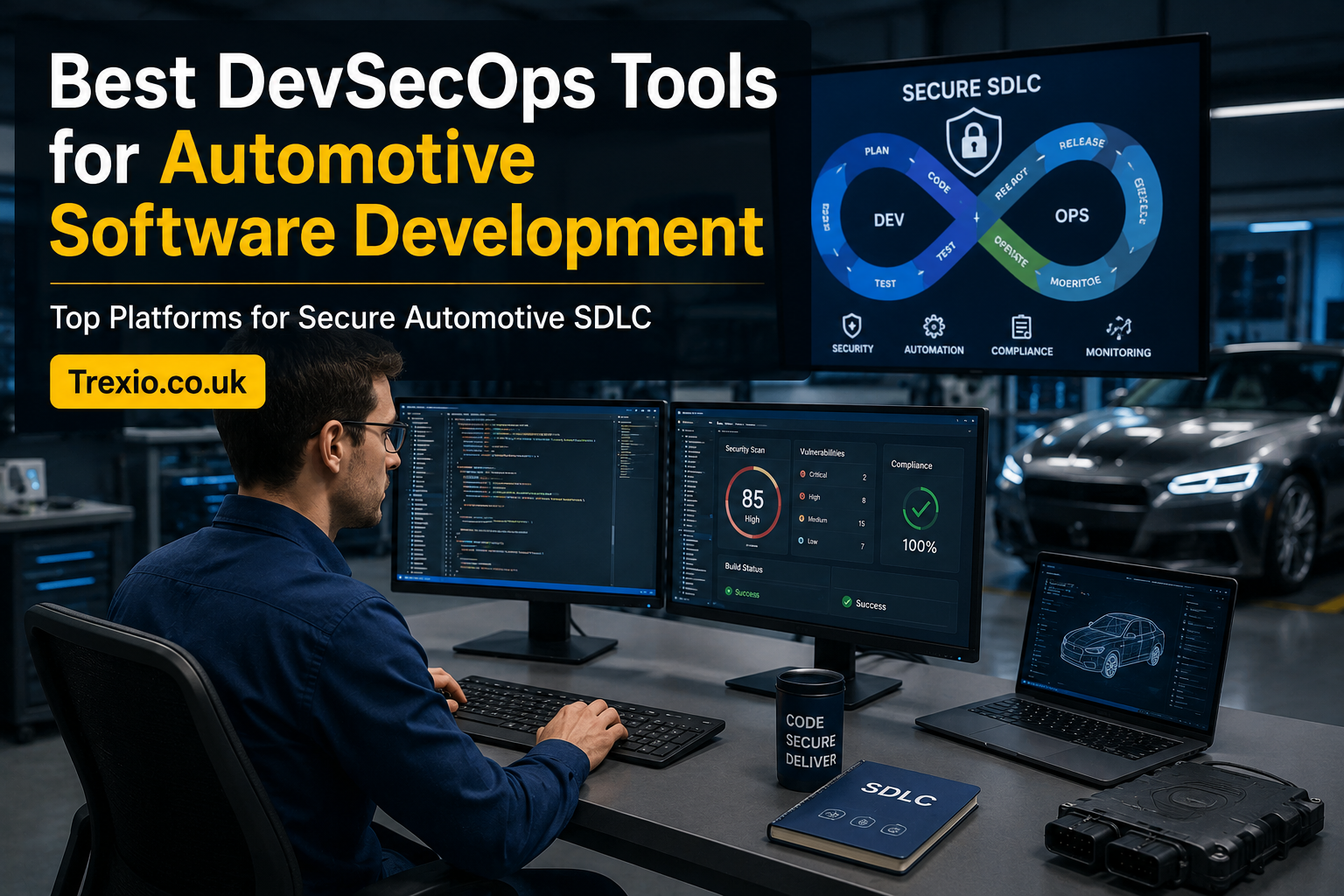
Modern vehicles have become software-defined machines that depend on millions of lines of code to control everything from infotainment systems to advanced driver assistance systems (ADAS). As automotive software becomes increasingly connected, security can no longer be treated as an afterthought. Manufacturers, suppliers, and software engineering teams are integrating security directly into every stage of the software development lifecycle through DevSecOps practices. Choosing the best DevSecOps tools for automotive software development helps organizations reduce vulnerabilities, automate compliance, improve software quality, and accelerate secure product releases. These tools combine development, security, and operations into a unified workflow while supporting industry standards like ISO 21434, AUTOSAR, UNECE WP.29, and ASPICE. Whether your organization builds embedded systems, connected vehicle platforms, or autonomous driving software, selecting the right DevSecOps ecosystem can dramatically improve development efficiency and cyber resilience. This guide explores the leading categories, essential capabilities, and evaluation criteria for choosing the right solution.
Quick Answer
The best DevSecOps tools for automotive software development combine automated security testing, static application security testing (SAST), software composition analysis (SCA), dynamic testing (DAST), infrastructure security, container scanning, CI/CD integration, and automotive compliance reporting. Popular platforms include GitLab, SonarQube, Checkmarx, Synopsys Coverity, Snyk, Veracode, Fortify, Black Duck, Jenkins, and Microsoft Defender for DevOps. The ideal toolset depends on project size, regulatory requirements, embedded software complexity, and existing development workflows.
Why DevSecOps Matters in Automotive Software Development
Automotive software has evolved beyond simple embedded firmware into complex ecosystems that manage communication between electronic control units, cloud services, mobile applications, sensors, and vehicle networks. Every connected component introduces new cybersecurity risks that can affect vehicle safety, customer privacy, and regulatory compliance. This growing complexity makes the best DevSecOps tools for automotive software development essential rather than optional. Instead of performing security reviews only before release, DevSecOps integrates automated security validation throughout coding, testing, deployment, and maintenance. Developers receive immediate feedback about vulnerabilities while security teams continuously monitor risks without slowing software delivery. Organizations adopting DevSecOps also improve collaboration between engineering, operations, quality assurance, and cybersecurity teams. Continuous monitoring enables faster detection of software weaknesses before they become expensive production issues. This proactive approach significantly improves product quality, software reliability, and long-term maintainability.
Understanding DevSecOps in Automotive Engineering
DevSecOps represents the evolution of traditional DevOps by embedding cybersecurity into every phase of software development rather than treating security as a separate process. Automotive manufacturers now rely on continuous integration, continuous testing, automated code analysis, dependency scanning, and runtime monitoring to ensure software remains secure throughout its lifecycle. The best DevSecOps tools for automotive software development automate these tasks while minimizing manual effort. Development teams receive actionable insights directly within their development environments, allowing vulnerabilities to be resolved before code reaches production. Automated pipelines ensure every software update undergoes the same security validation regardless of release frequency. This consistency supports functional safety initiatives and regulatory compliance while reducing development bottlenecks. Organizations also benefit from improved traceability because every security check becomes part of the documented software delivery process. As automotive software continues evolving through over-the-air updates, continuous security becomes even more valuable.
Core Principles of Automotive DevSecOps
Successful automotive DevSecOps begins with shifting security left so vulnerabilities are identified during development instead of after deployment. Teams automate security testing alongside functional testing to maintain release velocity while strengthening cybersecurity. Infrastructure as Code, policy automation, secrets management, dependency monitoring, and secure software supply chain validation all contribute to stronger security practices. The best DevSecOps tools for automotive software development support collaborative workflows where developers, testers, security engineers, and compliance specialists share responsibility for software quality. Continuous feedback loops reduce delays while increasing transparency across engineering teams. Security metrics become measurable, allowing organizations to monitor progress over time. Automated reporting also simplifies regulatory audits by generating consistent documentation. Together, these principles establish a scalable security framework suitable for modern automotive software engineering.
Automotive Standards Supported by DevSecOps
Automotive software development must satisfy numerous industry standards that focus on safety, cybersecurity, and process maturity. ISO 21434 establishes cybersecurity engineering requirements throughout the vehicle lifecycle. ASPICE evaluates software development process quality, while AUTOSAR provides standardized software architecture for electronic control units. UNECE WP.29 introduces cybersecurity management system requirements for vehicle manufacturers operating globally. The best DevSecOps tools for automotive software development help engineering teams demonstrate compliance through automated evidence collection, policy enforcement, audit logs, and vulnerability tracking. Rather than maintaining documentation manually, organizations generate reports directly from development pipelines. This automation reduces compliance costs while improving consistency. Engineering teams also spend less time preparing for external assessments and more time building secure software.
Essential Features to Look for in DevSecOps Tools
Choosing the right DevSecOps platform requires more than selecting popular software. Automotive engineering environments demand specialized capabilities that address embedded development, safety requirements, compliance management, and secure software supply chains. The best DevSecOps tools for automotive software development combine multiple security functions within integrated workflows rather than requiring disconnected security products. Organizations should evaluate automation capabilities, scalability, developer experience, compliance reporting, cloud compatibility, and integration flexibility before making purchasing decisions. Long-term maintainability is equally important because automotive software projects often remain active for many years. Selecting adaptable platforms ensures organizations can respond to evolving cybersecurity threats without replacing their development ecosystem. Comprehensive reporting also enables leadership teams to measure security performance using objective metrics. Investing in flexible DevSecOps solutions supports both current and future engineering initiatives.
Static Application Security Testing (SAST)
Static analysis examines source code before applications execute, identifying security weaknesses early in development. Automotive software frequently includes C, C++, Python, Java, and embedded programming languages that require advanced scanning capabilities. The best DevSecOps tools for automotive software development detect memory leaks, insecure coding patterns, buffer overflows, injection flaws, and authentication issues during coding rather than after deployment. Developers receive recommendations directly inside integrated development environments, enabling immediate remediation. Automated scanning also maintains consistent security standards across distributed engineering teams. Continuous analysis prevents vulnerabilities from accumulating throughout development cycles. Organizations gain improved code quality while reducing remediation costs. Early detection significantly lowers the likelihood of introducing security defects into production vehicle software.
Software Composition Analysis (SCA)
Modern automotive applications rely extensively on open-source software libraries that accelerate development but also introduce supply chain risks. Software Composition Analysis continuously identifies vulnerable dependencies, outdated packages, and licensing conflicts across development environments. The best DevSecOps tools for automotive software development automatically compare software components against continuously updated vulnerability databases. When new security advisories appear, affected development teams receive immediate notifications. Automated dependency monitoring minimizes exposure to publicly disclosed vulnerabilities without requiring manual research. Security teams also gain greater visibility into software inventories through Software Bill of Materials (SBOM) generation. These capabilities improve supply chain transparency while supporting regulatory compliance initiatives. Continuous monitoring strengthens long-term software security throughout product lifecycles.
Dynamic Application Security Testing (DAST)
Dynamic security testing evaluates applications while they are running, helping identify vulnerabilities that static analysis may miss. Automotive web portals, connected vehicle services, APIs, cloud dashboards, and fleet management platforms all benefit from runtime security assessments. The best DevSecOps tools for automotive software development automate penetration-style testing without interrupting development workflows. Security teams identify authentication weaknesses, session management flaws, API vulnerabilities, and configuration errors before production releases. Automated DAST complements static testing by validating real application behavior rather than simply reviewing source code. Together, both testing approaches provide more comprehensive security coverage. Organizations reduce cyber risk while maintaining rapid software delivery schedules. Continuous runtime testing strengthens overall software resilience.
CI/CD Integration for Secure Automotive Software Delivery
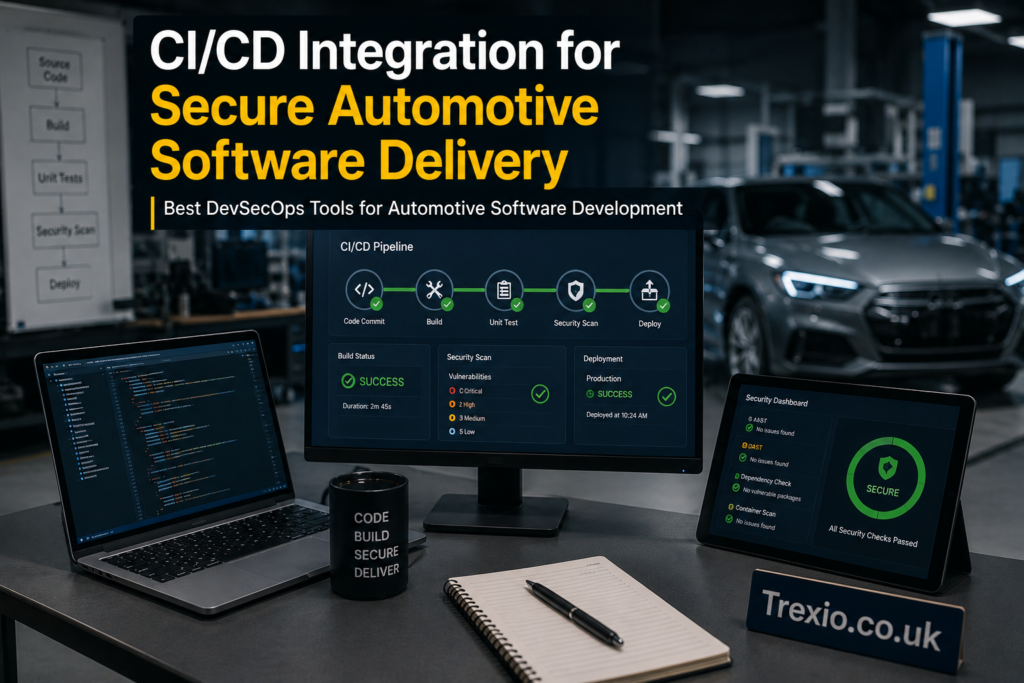
Continuous Integration and Continuous Delivery form the foundation of modern automotive DevSecOps pipelines. Every software change automatically triggers builds, testing, security validation, compliance verification, and deployment preparation without requiring extensive manual intervention. The best DevSecOps tools for automotive software development integrate directly with CI/CD platforms to automate these security controls. Developers receive rapid feedback that encourages secure coding while minimizing release delays. Security scanning becomes a standard pipeline stage rather than a separate project milestone. Pipeline automation also creates consistent quality gates across multiple engineering teams working on different vehicle platforms. Comprehensive dashboards provide visibility into vulnerabilities, code quality metrics, compliance status, and deployment readiness. Automated workflows reduce operational overhead while improving software reliability across increasingly complex automotive systems.
Benefits of Automated Security Pipelines
Automated security pipelines eliminate repetitive manual reviews and ensure every code change receives identical security validation. Engineering organizations reduce human error while accelerating software releases without sacrificing cybersecurity standards. Automated compliance evidence simplifies certification activities and internal audits. Continuous vulnerability monitoring enables faster incident response while reducing production risks. Integrated reporting improves collaboration between development, security, and executive leadership. Most importantly, automation enables organizations to scale software development without proportionally increasing security staffing requirements.
Top DevSecOps Tools for Automotive Software Development
Selecting the best DevSecOps tools for automotive software development requires evaluating security capabilities, automation features, compliance support, scalability, and compatibility with existing engineering environments. No single platform addresses every security requirement, so many automotive organizations build integrated toolchains that combine source code management, vulnerability scanning, software composition analysis, infrastructure security, and compliance reporting. The right combination depends on whether teams develop embedded firmware, cloud-connected vehicle services, autonomous driving software, or infotainment platforms. Organizations should also consider ease of integration with CI/CD pipelines, support for containerized workloads, and compatibility with automotive coding standards. Many leading platforms now include AI-assisted vulnerability detection, automated remediation recommendations, and centralized security dashboards that simplify large-scale security management. Vendor maturity, documentation quality, enterprise support, and regular security updates are equally important evaluation criteria. Investing in flexible solutions helps engineering teams adapt to evolving cybersecurity regulations without disrupting software delivery. A carefully selected DevSecOps ecosystem ultimately improves software quality, reduces security risks, and accelerates innovation across the automotive development lifecycle.
GitLab
GitLab provides an integrated DevSecOps platform that combines source control, CI/CD automation, vulnerability management, code review, and security testing within a unified environment. Automotive engineering teams benefit from built-in security scanning that reduces the need for multiple disconnected tools. Developers can identify vulnerabilities during code commits while maintaining rapid delivery pipelines. GitLab also supports Software Bill of Materials generation, dependency scanning, container security, and policy enforcement. Comprehensive dashboards allow security teams to prioritize remediation activities using risk-based metrics. The platform integrates with numerous third-party security solutions, making it suitable for organizations with existing enterprise toolchains. Automated merge request security reviews improve code quality before deployment into vehicle software environments. These capabilities make GitLab one of the best DevSecOps tools for automotive software development for organizations seeking an all-in-one platform.
SonarQube
SonarQube focuses on continuous code quality and static application security testing across multiple programming languages commonly used in automotive engineering. Developers receive immediate feedback regarding code smells, security vulnerabilities, maintainability issues, and reliability concerns before software reaches production. Quality Gates enforce organizational coding standards automatically, ensuring every release meets predefined quality thresholds. SonarQube integrates seamlessly with popular CI/CD platforms and development environments, making continuous code analysis simple to implement. Engineering managers gain visibility into technical debt trends, enabling proactive maintenance planning. Continuous monitoring also encourages developers to adopt secure coding practices throughout the software lifecycle. For organizations emphasizing code quality alongside cybersecurity, SonarQube remains among the best DevSecOps tools for automotive software development available today.
Checkmarx and Synopsys Coverity
Checkmarx and Synopsys Coverity are enterprise-grade security testing platforms widely adopted in industries requiring rigorous software assurance. Both solutions perform deep static code analysis capable of identifying complex security flaws within embedded software projects. Automotive manufacturers appreciate their extensive language support, compliance reporting, and integration with large enterprise development pipelines. Advanced vulnerability prioritization reduces alert fatigue while helping security teams focus on high-risk issues first. These platforms also provide detailed remediation guidance that accelerates developer response times. Automated reporting supports internal governance as well as external regulatory assessments. Their mature security capabilities make them strong candidates among the best DevSecOps tools for automotive software development, particularly for safety-critical vehicle systems.
Snyk, Veracode, and Fortify
Snyk specializes in developer-friendly vulnerability management across source code, containers, open-source libraries, and cloud infrastructure. Veracode delivers comprehensive application security testing through cloud-native services that integrate smoothly into enterprise development workflows. Fortify offers powerful static and dynamic analysis capabilities suitable for highly regulated industries. Each platform helps organizations automate vulnerability detection while improving collaboration between developers and security professionals. Built-in remediation recommendations reduce time spent researching fixes and accelerate secure software delivery. Their flexible deployment options allow organizations to secure both cloud-based and on-premises development environments. Together, these platforms represent several of the best DevSecOps tools for automotive software development available for organizations seeking scalable application security.
Comparison of Leading DevSecOps Tools
| Tool | Primary Strength | Best For | Key Security Features | CI/CD Integration |
|---|---|---|---|---|
| GitLab | Integrated DevSecOps | Enterprise development | SAST, DAST, SCA, Container Security | Excellent |
| SonarQube | Code Quality | Continuous code analysis | Static code analysis | Excellent |
| Checkmarx | Deep SAST | Large enterprise security | Advanced vulnerability detection | Excellent |
| Synopsys Coverity | Embedded Software | Safety-critical automotive systems | Static analysis, compliance | Excellent |
| Snyk | Open Source Security | Modern cloud-native development | Dependency scanning, container security | Excellent |
| Veracode | Cloud Application Security | Enterprise software security | SAST, DAST, SCA | Excellent |
| Fortify | Comprehensive Testing | Highly regulated industries | Static and dynamic testing | Very Good |
How to Choose the Best DevSecOps Tools for Automotive Software Development
Choosing the best DevSecOps tools for automotive software development begins with understanding organizational requirements rather than selecting software based solely on popularity. Engineering teams should evaluate supported programming languages, embedded development capabilities, compliance reporting, automation features, and scalability. Integration with existing version control systems, issue tracking platforms, and CI/CD environments minimizes deployment complexity. Organizations should also assess reporting capabilities because security metrics play a significant role during audits and executive decision-making. Vendor reputation, update frequency, documentation quality, and customer support contribute to long-term success. Pilot projects help validate compatibility before enterprise-wide implementation. Total cost of ownership should include licensing, maintenance, training, and infrastructure expenses rather than initial purchase price alone. A structured evaluation process ensures organizations invest in solutions that remain effective as software ecosystems continue evolving.
Questions to Ask Before Selecting a Platform
- Does the platform support ISO 21434 and automotive compliance workflows?
- Can it integrate with existing CI/CD pipelines?
- Does it provide SAST, DAST, and SCA capabilities?
- Is Software Bill of Materials (SBOM) generation supported?
- Can it scan embedded software and automotive-specific programming languages?
- Does it scale across multiple engineering teams?
- Are vulnerability reports easy for developers to understand?
- Does it support cloud, hybrid, and on-premises environments?
Best Practices for Automotive DevSecOps
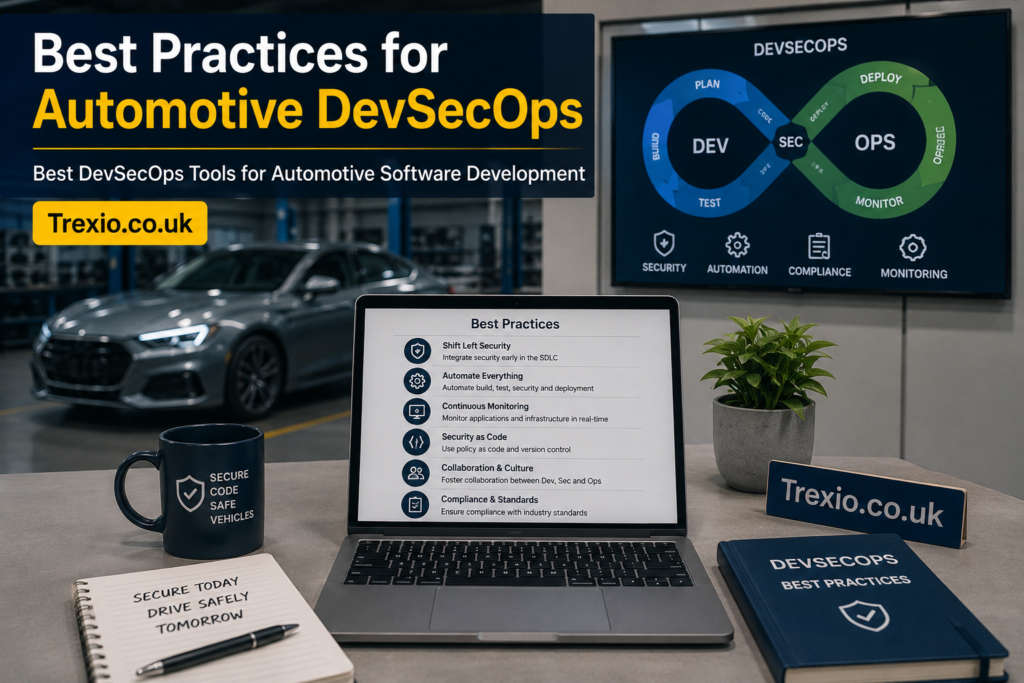
Implementing the best DevSecOps tools for automotive software development delivers maximum value when paired with disciplined engineering practices. Organizations should automate security scanning within every pipeline stage rather than relying on periodic assessments. Developers benefit from secure coding training that helps reduce recurring vulnerabilities before automated tools detect them. Dependency management should include continuous monitoring of third-party libraries to minimize software supply chain risks. Security policies must be standardized across all engineering teams to ensure consistent software quality. Regular penetration testing complements automated scanning by validating real-world attack scenarios. Compliance documentation should be generated automatically to reduce administrative overhead and improve audit readiness. Finally, organizations should establish continuous feedback loops between development, operations, and cybersecurity teams to encourage ongoing improvement and faster incident response.
Common Mistakes to Avoid
Many organizations invest in advanced security platforms yet fail to achieve expected results because implementation challenges are overlooked. One common mistake is treating DevSecOps as solely a security initiative instead of a collaborative engineering practice. Another frequent issue involves overwhelming developers with excessive security alerts that lack prioritization. Some organizations delay security testing until late development stages, increasing remediation costs significantly. Ignoring open-source dependency management also exposes projects to avoidable supply chain vulnerabilities. Poor CI/CD integration creates manual bottlenecks that slow software delivery. Inconsistent policy enforcement across teams reduces compliance effectiveness and increases operational risk. Avoiding these mistakes helps organizations maximize the value of the best DevSecOps tools for automotive software development while maintaining efficient engineering workflows.
Pro Tips for Maximizing DevSecOps Success
- Automate every security check possible within CI/CD pipelines.
- Continuously update vulnerability databases and dependency inventories.
- Use risk-based prioritization to address critical issues first.
- Integrate security directly into developer workflows.
- Generate Software Bill of Materials for every production release.
- Perform regular security training for engineering teams.
- Measure security improvements using meaningful KPIs.
- Review security policies periodically as automotive regulations evolve.
- Combine automated testing with manual penetration testing.
- Build cross-functional collaboration between developers, operations, quality assurance, and cybersecurity specialists.
Conclusion
As software increasingly defines modern vehicles, cybersecurity has become a fundamental requirement throughout the entire development lifecycle. Implementing the best DevSecOps tools for automotive software development enables organizations to identify vulnerabilities earlier, automate compliance, improve software quality, and accelerate secure releases without sacrificing engineering productivity. Integrated security testing, continuous monitoring, software composition analysis, and automated compliance reporting provide engineering teams with greater visibility into security risks while reducing manual effort. Organizations that embrace DevSecOps also strengthen collaboration across development, operations, and cybersecurity teams, creating a culture where security becomes a shared responsibility rather than an isolated function. By carefully evaluating platform capabilities, aligning them with automotive standards, and following proven implementation practices, manufacturers and suppliers can build resilient software ecosystems prepared for future cybersecurity challenges. Investing in a mature DevSecOps strategy today positions automotive organizations to deliver safer, more reliable, and regulation-ready software for the connected vehicles of tomorrow.
Frequently Asked Questions (FAQs)
1. What are the best DevSecOps tools for automotive software development?
Popular choices include GitLab, SonarQube, Checkmarx, Synopsys Coverity, Snyk, Veracode, Fortify, Black Duck, Jenkins, and Microsoft Defender for DevOps.
2. Why is DevSecOps important in automotive software?
It integrates security throughout the software development lifecycle, helping prevent vulnerabilities before software reaches production vehicles.
3. Which automotive standards should DevSecOps support?
Important standards include ISO 21434, ASPICE, AUTOSAR, and UNECE WP.29 cybersecurity requirements.
4. Can DevSecOps improve software quality?
Yes. Continuous security testing, automated code analysis, and quality gates help improve reliability, maintainability, and overall software quality.
5. Is DevSecOps suitable for embedded automotive software?
Absolutely. Many enterprise DevSecOps platforms support embedded C/C++, firmware analysis, and safety-critical software development.
6. What is Software Composition Analysis (SCA)?
SCA identifies vulnerable open-source libraries, licensing issues, and dependency risks used within software projects.
7. Does DevSecOps replace penetration testing?
No. Automated DevSecOps testing complements manual penetration testing but does not completely replace expert security assessments.
8. How does DevSecOps support compliance?
It automates security evidence collection, policy enforcement, vulnerability reporting, and audit documentation required by automotive regulations.
9. Should small automotive suppliers adopt DevSecOps?
Yes. Even smaller organizations benefit from automated security testing, improved code quality, and streamlined compliance processes.
10. What is the biggest advantage of DevSecOps?
Its greatest benefit is identifying and fixing security issues early, reducing development costs while delivering safer automotive software.
Author Bio
About the Author
The author is an experienced technology and cybersecurity content writer specializing in automotive software engineering, DevSecOps, cloud-native development, software quality assurance, and enterprise security. With extensive experience researching secure software development practices, compliance frameworks, and emerging automotive technologies, the author creates practical, evidence-based content that follows Google’s EEAT principles while helping engineering professionals make informed technology decisions.