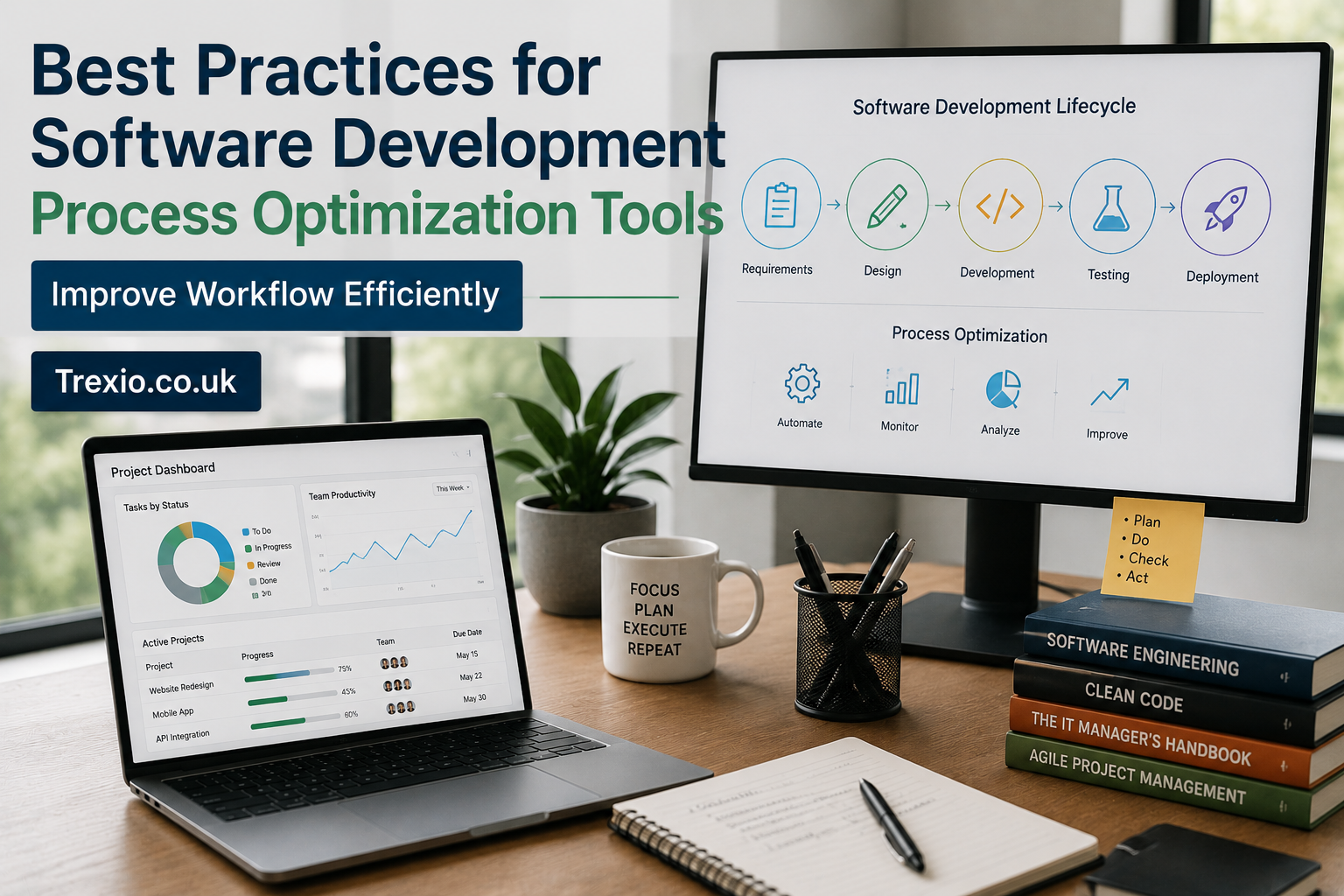
Software teams today face increasing pressure to deliver secure, reliable, and high-quality applications faster than ever before. Modern businesses expect continuous innovation while customers demand flawless digital experiences across every platform. This is why best practices for software development process optimization tools have become a critical part of successful software engineering. Instead of relying on manual processes and disconnected workflows, organizations are investing in intelligent optimization platforms that automate repetitive tasks, improve collaboration, and provide actionable insights. These tools enable development teams to eliminate bottlenecks before they impact delivery schedules. They also improve code quality, reduce technical debt, and streamline communication between developers, testers, security professionals, and project managers. When implemented correctly, process optimization tools become strategic assets that help companies remain competitive in rapidly changing markets. Understanding how to use these solutions effectively is the first step toward building a faster, smarter, and more resilient software development lifecycle.
Quick Answer
The best practices for software development process optimization tools include selecting tools that integrate seamlessly with your existing workflow, automating repetitive development tasks, monitoring project performance using real-time analytics, encouraging collaboration across teams, implementing continuous integration and continuous deployment (CI/CD), improving code quality with automated testing, prioritizing security throughout development, measuring performance through key metrics, and continuously refining workflows based on data-driven insights. Organizations that follow these best practices typically achieve faster releases, improved software quality, reduced operational costs, and higher customer satisfaction.
Understanding Software Development Process Optimization Tools
Software development process optimization tools are designed to improve every phase of the software development lifecycle. These platforms combine automation, collaboration, analytics, project management, testing, deployment, and monitoring into unified workflows that reduce inefficiencies across engineering teams. Instead of manually tracking tasks or performing repetitive activities, developers can rely on automation to handle routine operations while focusing on solving complex technical challenges. Organizations increasingly adopt these solutions because they improve visibility into project progress and simplify collaboration among distributed teams. Whether teams follow Agile, Scrum, Kanban, DevOps, or hybrid methodologies, optimization tools provide flexibility for different development environments. They also help organizations identify workflow bottlenecks before they become expensive delays. By improving transparency and reducing communication gaps, businesses can deliver software more predictably. Ultimately, these tools create standardized development processes that improve productivity while maintaining high-quality software releases.
Optimization platforms continue evolving with artificial intelligence, predictive analytics, and machine learning capabilities that make software delivery even more efficient. AI-powered recommendations can identify inefficient workflows, predict project delays, and suggest improvements before problems escalate. Development leaders gain valuable dashboards that visualize project health, sprint velocity, deployment frequency, and defect trends. These insights help engineering managers make informed decisions using real-time performance data rather than assumptions. Many organizations also integrate cloud infrastructure, version control systems, automated testing frameworks, and security scanners into centralized optimization platforms. This integration eliminates disconnected workflows while creating a more consistent development environment. As software systems become increasingly complex, process optimization tools serve as the foundation for scalable engineering operations. Businesses that embrace these technologies position themselves for sustainable long-term growth.
Why Best Practices for Software Development Process Optimization Tools Matter
Following best practices for software development process optimization tools is about much more than purchasing the latest software solution. Success depends on implementing consistent processes that align technology, people, and business objectives. Many organizations invest in expensive development platforms but fail to realize their full value because they overlook workflow optimization strategies. Best practices ensure every tool contributes measurable improvements rather than introducing unnecessary complexity. Teams benefit from standardized development procedures that reduce confusion while increasing accountability across projects. Well-defined workflows also improve onboarding for new developers because everyone follows consistent engineering practices. This creates a predictable development environment where productivity improves naturally over time. Companies that establish optimization standards generally experience fewer project delays and higher customer satisfaction.
Optimization best practices also strengthen communication between developers, testers, security engineers, operations teams, and business stakeholders. Clear workflows eliminate duplicated work while improving visibility into project priorities. Automation reduces manual errors that commonly occur during code integration, testing, and deployment. Continuous monitoring helps engineering leaders detect performance issues before customers experience them. Better collaboration enables faster decision-making and reduces unnecessary meetings focused on status updates. Teams spend more time creating innovative software instead of resolving avoidable process inefficiencies. Over time, organizations build a culture of continuous improvement where optimization becomes part of everyday development. This long-term mindset supports sustainable software delivery regardless of project size or complexity.
Selecting the Right Software Development Process Optimization Tools
Focus on Integration Capabilities
One of the most important best practices for software development process optimization tools involves selecting platforms that integrate smoothly with existing development environments. Modern software teams rely on numerous technologies including source control, issue tracking, automated testing, CI/CD pipelines, cloud infrastructure, container platforms, and monitoring systems. Choosing optimization tools that communicate effectively with these systems prevents workflow fragmentation. Developers should avoid switching constantly between unrelated applications because context switching reduces productivity. Integrated environments allow information to flow automatically across every development stage. This minimizes duplicate data entry while improving reporting accuracy. Better integration also simplifies automation by connecting previously isolated development processes. Organizations should prioritize interoperability before considering advanced features.
Integration becomes even more valuable as engineering organizations scale across multiple teams and products. Enterprise environments often contain legacy systems alongside modern cloud-native technologies. Optimization platforms must support both environments without requiring expensive infrastructure changes. APIs, plugins, webhooks, and native integrations significantly improve long-term flexibility. Organizations should also evaluate vendor support for emerging technologies to avoid future compatibility issues. Selecting highly adaptable platforms reduces migration costs while protecting previous technology investments. Engineering teams can gradually modernize their workflows instead of replacing entire toolchains simultaneously. This strategic approach ensures smoother digital transformation initiatives while minimizing operational disruption.
Evaluate Scalability Before Adoption
Scalability should never be overlooked when selecting optimization tools. Software organizations frequently expand their development teams, cloud infrastructure, customer base, and application complexity. Tools that perform well for small startups may struggle within enterprise environments containing hundreds of developers. Decision-makers should evaluate user capacity, automation limits, reporting capabilities, and infrastructure performance before committing to long-term adoption. Scalable solutions reduce future migration risks while supporting organizational growth. Flexible licensing models also help companies manage software costs as engineering teams expand. Choosing scalable platforms ensures optimization efforts remain effective for years rather than months. Long-term planning ultimately reduces operational expenses while supporting business growth.
Automating Repetitive Development Tasks

Automation represents one of the most valuable principles behind best practices for software development process optimization tools. Repetitive manual activities consume valuable engineering time while increasing opportunities for human error. Tasks such as code formatting, dependency updates, test execution, deployment, documentation generation, environment provisioning, and vulnerability scanning can all be automated using modern optimization platforms. Developers gain more time to solve architectural challenges instead of performing routine maintenance activities. Automation also improves consistency because every process follows predefined rules regardless of who performs the work. Standardized workflows reduce quality variations between development teams. Faster execution speeds accelerate software delivery while minimizing operational costs. Organizations that automate wisely create more efficient engineering environments without sacrificing quality.
Automation should be implemented gradually rather than attempting to automate every process immediately. Teams should first identify repetitive tasks that consume the most engineering effort before expanding automation initiatives. Measuring performance improvements helps demonstrate automation value to leadership while guiding future investments. Developers should continuously review automated workflows to ensure they remain efficient as technologies evolve. Poorly designed automation can introduce unnecessary complexity if left unmanaged. Regular optimization ensures automated pipelines continue supporting business objectives effectively. Continuous refinement allows organizations to maximize return on investment while improving software delivery speed. Successful automation combines technical excellence with thoughtful process management.
Improving Collaboration Across Development Teams
Successful software projects depend heavily on collaboration, making communication another essential element of best practices for software development process optimization tools. Developers, testers, designers, product managers, DevOps engineers, cybersecurity specialists, and executives all require access to accurate project information. Modern optimization platforms centralize project visibility by providing shared dashboards, automated notifications, documentation repositories, and integrated communication channels. This transparency reduces misunderstandings while helping everyone understand project priorities. Cross-functional collaboration becomes significantly easier when information flows automatically instead of relying on manual updates. Better communication reduces duplicated effort while accelerating decision-making. Teams remain aligned even when working remotely across different time zones. Effective collaboration ultimately improves both software quality and customer satisfaction.
Collaborative development environments also strengthen accountability by clearly defining ownership for every task, feature, bug, and deployment activity. Team members understand project expectations while managers gain real-time insight into engineering progress. Automated reporting reduces administrative overhead because project metrics update continuously without manual intervention. Documentation becomes easier to maintain when integrated directly into development workflows. Teams can quickly identify blockers and resolve issues before deadlines are affected. Collaborative optimization tools also improve knowledge sharing by preserving valuable technical information for future projects. This organizational knowledge becomes increasingly valuable as companies grow and engineering teams expand. Continuous collaboration supports long-term engineering excellence while reducing project risks.
Measuring Success with Software Development Process Optimization Tools
Implementing best practices for software development process optimization tools is only effective when organizations consistently measure outcomes using meaningful performance indicators. Many businesses deploy sophisticated platforms but fail to establish benchmarks for evaluating whether their workflows are actually improving. Engineering teams should define key performance indicators (KPIs) before introducing new optimization tools so they can accurately compare results over time. Common metrics include deployment frequency, lead time for changes, sprint velocity, defect density, code review completion rates, test coverage, and mean time to recovery (MTTR). Tracking these indicators provides visibility into how development processes evolve and where additional improvements are needed. Data-driven decision-making helps engineering leaders prioritize investments that generate measurable value instead of relying on assumptions. Regular performance reviews also encourage continuous improvement by identifying recurring bottlenecks and process inefficiencies. When teams analyze metrics consistently, optimization becomes an ongoing business strategy rather than a one-time initiative.
Performance dashboards should be accessible to everyone involved in the software development lifecycle. Developers benefit from seeing real-time feedback about build success rates, automated testing results, and deployment health, while managers gain strategic insights into team productivity and project timelines. Visualization tools make complex engineering data easier to interpret, allowing organizations to recognize trends before they become serious issues. Metrics should always be evaluated within the context of business goals rather than focusing solely on technical achievements. For example, increasing deployment frequency is valuable only if software quality and customer satisfaction remain high. Organizations should also review historical trends to identify seasonal fluctuations or recurring delivery challenges. Combining quantitative metrics with qualitative feedback from developers creates a balanced understanding of process performance. Ultimately, continuous measurement ensures that best practices for software development process optimization tools produce sustainable improvements across engineering teams.
Integrating DevOps and DevSecOps into Process Optimization
Modern organizations increasingly combine best practices for software development process optimization tools with DevOps and DevSecOps methodologies to improve collaboration, automation, and software security. DevOps emphasizes seamless cooperation between development and operations teams, enabling faster software delivery while maintaining system stability. DevSecOps extends this approach by embedding security practices throughout the development lifecycle instead of treating security as a final checkpoint. Process optimization tools play a central role by automating code analysis, vulnerability scanning, compliance checks, infrastructure provisioning, and deployment workflows. These automated capabilities reduce manual effort while helping teams identify risks much earlier in development. Integrating security into everyday engineering activities minimizes costly vulnerabilities and supports regulatory compliance. Organizations that combine optimization tools with DevSecOps create resilient development pipelines capable of delivering secure applications at scale. This integrated strategy improves both operational efficiency and customer trust.
Another significant advantage of DevOps integration is improved collaboration across traditionally separate departments. Developers receive immediate feedback from automated pipelines, testers validate functionality continuously, and operations teams gain greater confidence in deployment stability. Security professionals can review vulnerabilities using automated dashboards instead of manually auditing every software release. Cloud-native infrastructure further strengthens this approach by allowing scalable environments that automatically adapt to changing workloads. Continuous monitoring also helps teams detect unusual system behavior before customers experience disruptions. Organizations adopting integrated DevOps workflows often achieve shorter release cycles without sacrificing software quality. As development environments continue evolving, combining optimization platforms with DevOps principles will remain one of the most valuable best practices for software development process optimization tools available to engineering organizations.
Benefits of Continuous Monitoring
Continuous monitoring extends beyond infrastructure management by providing valuable insights into application performance, user experience, deployment health, and operational stability. Modern optimization platforms collect logs, performance metrics, error reports, and infrastructure telemetry from multiple environments simultaneously. Engineering teams can identify emerging problems before they escalate into production incidents. Automated alerts reduce response times while enabling proactive maintenance rather than reactive troubleshooting. Performance monitoring also supports capacity planning by revealing infrastructure usage patterns over time. These insights help organizations allocate resources more efficiently while improving application reliability. Continuous monitoring strengthens customer confidence because potential issues are resolved quickly. It remains an essential component of successful software process optimization.
Adapting Optimization Tools for Agile and Remote Development
Agile methodologies continue to influence how software organizations implement best practices for software development process optimization tools. Short development cycles require rapid communication, continuous planning, and flexible workflows that adapt to changing customer requirements. Optimization platforms simplify Agile execution by automating backlog management, sprint planning, issue tracking, and release coordination. Teams gain better visibility into project priorities while reducing administrative overhead associated with manual project management. Real-time dashboards allow product owners to monitor sprint progress and identify obstacles before they affect delivery schedules. Automation also accelerates feedback loops, enabling developers to resolve issues quickly during active development. Agile optimization encourages continuous learning by making retrospective insights easier to collect and analyze. As a result, engineering teams become more responsive to customer feedback and market demands.
Remote and hybrid work environments have increased the importance of centralized development platforms. Distributed engineering teams depend on shared repositories, collaborative documentation, integrated messaging, and automated reporting to maintain productivity across different locations and time zones. Process optimization tools reduce communication delays by providing a single source of truth for project information. Cloud-based collaboration ensures developers have secure access to development resources regardless of physical location. Automated workflows also reduce dependency on synchronous meetings, allowing teams to work more efficiently across global schedules. Knowledge sharing becomes easier because documentation, code reviews, and project updates remain accessible to everyone involved. Organizations that embrace remote-friendly optimization strategies improve both employee satisfaction and operational resilience. These capabilities make remote collaboration another essential aspect of best practices for software development process optimization tools.
Comparing Popular Categories of Software Development Process Optimization Tools
| Tool Category | Primary Purpose | Major Benefits | Best For |
|---|---|---|---|
| Project Management Tools | Planning and tracking work | Better visibility, sprint planning, task management | Agile development teams |
| Version Control Systems | Source code management | Collaboration, code history, branching | Software developers |
| CI/CD Platforms | Automated build and deployment | Faster releases, consistent deployments | DevOps teams |
| Automated Testing Tools | Software quality assurance | Reduced defects, faster testing | QA engineers |
| Code Quality Platforms | Static analysis and code reviews | Improved maintainability, fewer bugs | Development teams |
| Monitoring & Observability Tools | Performance monitoring | Faster incident detection, better reliability | Operations teams |
| Security Scanning Tools | Vulnerability identification | Secure software delivery, compliance | DevSecOps teams |
| Documentation Platforms | Knowledge management | Better collaboration, easier onboarding | Entire engineering organization |
Best Practices for Software Development Process Optimization Tools
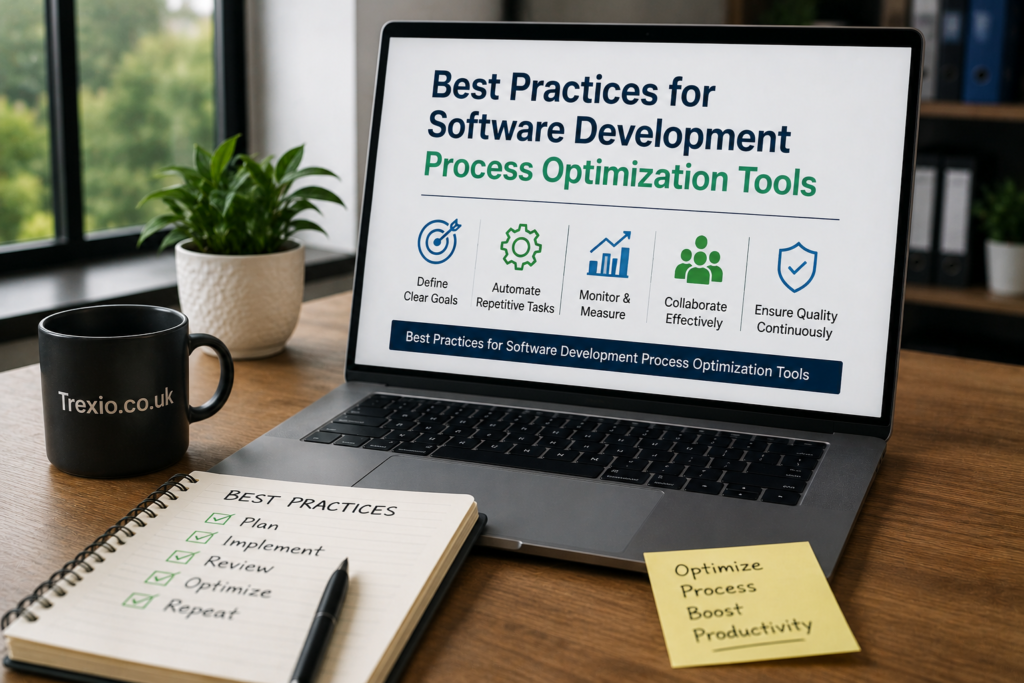
Implementing best practices for software development process optimization tools requires both technical expertise and organizational discipline. Teams should begin by documenting existing workflows before introducing automation so that improvement opportunities become easier to identify. Select platforms that integrate naturally with current development environments rather than forcing unnecessary process changes. Encourage cross-functional collaboration between developers, testers, operations engineers, and security specialists throughout every project phase. Automate repetitive activities gradually while continuously measuring productivity improvements using clearly defined KPIs. Maintain comprehensive documentation so future team members can understand optimized workflows without unnecessary delays. Regularly review tool performance and remove outdated processes that no longer support business objectives. Finally, promote a culture of continuous improvement where optimization evolves alongside organizational growth and technological innovation.
Best Practices Checklist
- Define measurable engineering goals before implementation.
- Choose scalable and integration-friendly platforms.
- Automate repetitive development and testing tasks.
- Implement continuous integration and continuous deployment.
- Embed security throughout the development lifecycle.
- Monitor workflow metrics using real-time dashboards.
- Train employees on new optimization tools regularly.
- Standardize documentation and coding practices.
- Conduct frequent workflow reviews.
- Continuously refine optimization strategies using performance data.
Common Mistakes to Avoid
Many organizations invest heavily in software optimization platforms but overlook the process improvements required to maximize their value. One common mistake is implementing too many tools simultaneously, creating unnecessary complexity instead of simplifying workflows. Another frequent issue involves ignoring integration capabilities, resulting in disconnected systems and duplicate work. Some businesses automate inefficient processes without first improving them, causing automation to amplify existing problems. Insufficient employee training also reduces adoption because developers fail to understand advanced platform capabilities. Organizations sometimes prioritize speed over software quality, increasing technical debt despite faster releases. Failing to monitor KPIs makes it impossible to determine whether optimization efforts actually improve performance. Neglecting security integration exposes organizations to avoidable cybersecurity risks. Avoiding these mistakes significantly improves long-term success with best practices for software development process optimization tools.
Pro Tips for Long-Term Optimization Success
Experienced engineering leaders understand that successful optimization is an ongoing journey rather than a completed project. Begin with small workflow improvements before expanding automation across larger engineering initiatives. Review optimization metrics monthly to identify emerging trends and opportunities for improvement. Encourage developers to provide feedback because frontline engineers often recognize workflow inefficiencies before management does. Invest in scalable cloud-native solutions capable of supporting future business growth. Standardize documentation to simplify onboarding and preserve organizational knowledge. Continuously update automation pipelines as technologies evolve to avoid outdated processes. Finally, align optimization initiatives with business objectives so engineering improvements directly contribute to customer satisfaction, revenue growth, and competitive advantage. Following these professional recommendations strengthens every aspect of best practices for software development process optimization tools.
Conclusion
Adopting best practices for software development process optimization tools enables organizations to build faster, smarter, and more reliable software while reducing operational complexity. Successful optimization extends beyond selecting modern platforms; it requires strategic planning, continuous measurement, strong collaboration, intelligent automation, and a commitment to ongoing improvement. By integrating Agile methodologies, DevOps principles, automated testing, security practices, and performance monitoring into a unified workflow, engineering teams can consistently deliver high-quality applications that meet evolving customer expectations. Organizations that embrace optimization as a continuous process rather than a one-time implementation gain long-term competitive advantages through increased productivity, better software quality, lower operational costs, and improved customer experiences. As software development continues evolving, investing in optimized workflows will remain one of the most valuable decisions technology leaders can make.
Frequently Asked Questions (FAQs)
1. What are software development process optimization tools?
They are platforms that improve software development by automating workflows, enhancing collaboration, tracking performance, and streamlining the software development lifecycle.
2. Why are software development process optimization tools important?
They reduce manual work, improve software quality, accelerate releases, enhance team productivity, and support continuous improvement.
3. Which teams benefit the most from these tools?
Developers, QA engineers, DevOps teams, project managers, security professionals, and business stakeholders all benefit from optimized workflows.
4. Can small businesses use process optimization tools?
Yes. Many cloud-based solutions offer scalable pricing and features suitable for startups and growing software companies.
5. How do these tools support Agile development?
They automate sprint planning, backlog management, issue tracking, reporting, and continuous feedback, making Agile workflows more efficient.
6. What role does automation play in software optimization?
Automation reduces repetitive manual tasks such as testing, deployments, code formatting, and security scanning, allowing developers to focus on innovation.
7. How often should organizations review optimization strategies?
Engineering teams should review workflows and performance metrics regularly—typically monthly or quarterly—to ensure continuous improvement.
8. Are software optimization tools compatible with DevOps?
Yes. Most modern platforms integrate seamlessly with DevOps pipelines, supporting continuous integration, continuous deployment, infrastructure automation, and monitoring.
9. What metrics should organizations monitor?
Common KPIs include deployment frequency, lead time, sprint velocity, defect rates, code coverage, build success rates, and mean time to recovery (MTTR).
10. How can organizations maximize return on investment?
They should choose scalable tools, prioritize integration, automate repetitive processes, train employees regularly, measure KPIs, and continuously refine workflows.
Author Bio
Author: Trexio Editorial Team
The Trexio Editorial Team specializes in software engineering, DevOps, cloud technologies, cybersecurity, digital transformation, and enterprise development strategies. The team produces research-driven, experience-based content following Google’s EEAT and Helpful Content principles, helping developers, technology leaders, and businesses make informed decisions about software tools, development methodologies, and modern engineering best practices.