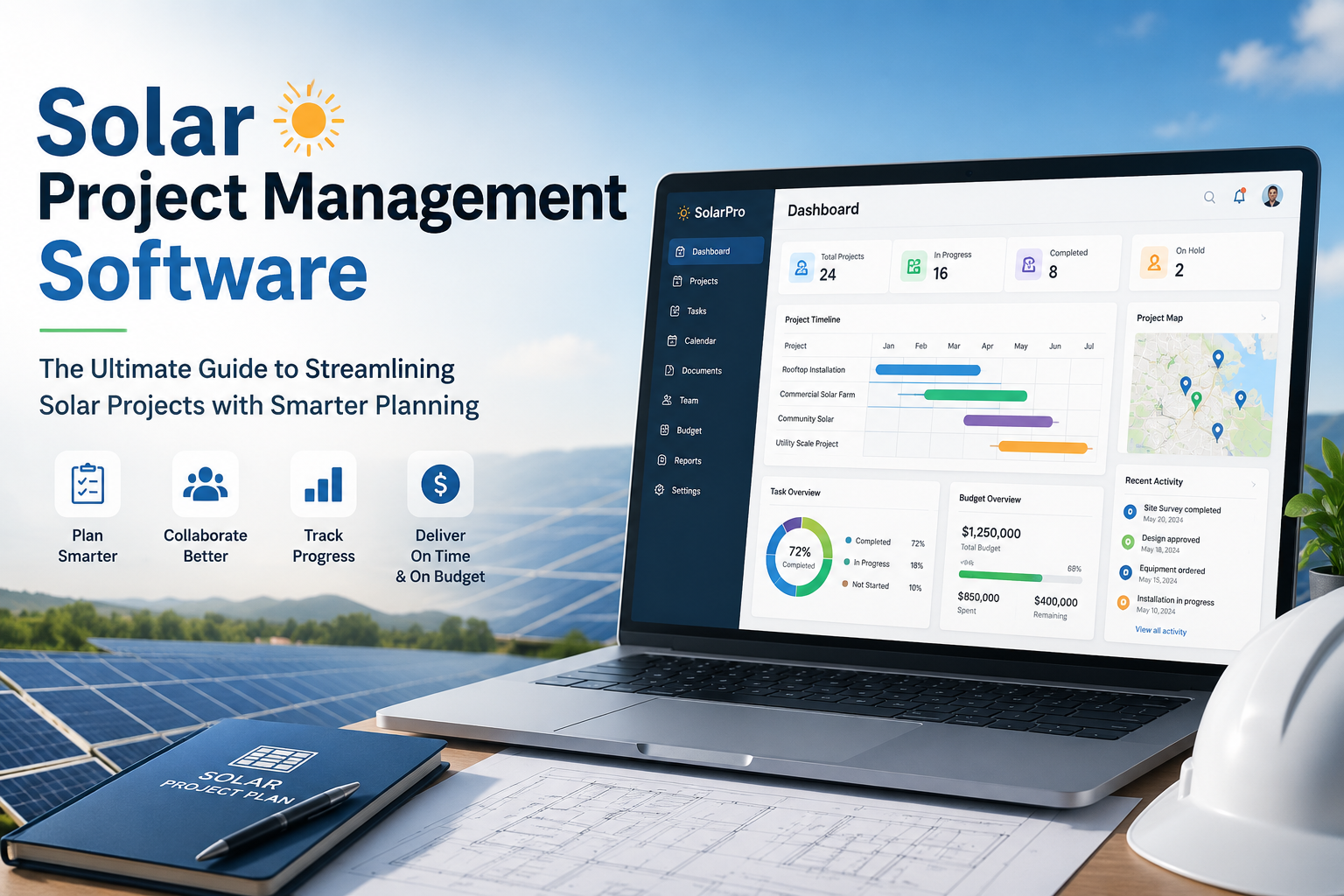
The rapid growth of the renewable energy industry has made solar projects more complex than ever before. From residential rooftop installations to large-scale commercial solar farms, every project requires careful planning, accurate scheduling, effective communication, and complete documentation. Without a structured workflow, teams can easily face delays, budget overruns, missed deadlines, and dissatisfied customers. This is why Solar Project Management Software has become an essential solution for modern solar businesses looking to stay competitive.
Solar companies must coordinate sales representatives, engineers, installers, project managers, suppliers, inspectors, and customers throughout the project lifecycle. Managing these responsibilities manually often leads to errors and confusion. Solar Project Management Software centralizes project information, automates repetitive tasks, and provides real-time visibility into every stage of the installation process. As a result, businesses can improve productivity, enhance customer satisfaction, and complete more projects with greater confidence.
What Is Solar Project Management Software?
Understanding the Core Purpose
Solar Project Management Software is a specialized digital platform designed to help solar companies organize, track, and manage every phase of a solar installation project. Unlike generic project management tools, these solutions are built specifically for the unique requirements of the solar industry.
The software typically combines scheduling, task management, document storage, workflow automation, customer communication, budgeting, reporting, and resource allocation into a single platform. This centralized approach allows everyone involved in the project to access accurate information while reducing manual work and communication gaps.
Why the Solar Industry Needs Specialized Software
Solar installation projects involve many moving parts that must work together seamlessly. Sales teams generate leads, engineers prepare system designs, procurement teams order equipment, installation crews complete field work, and project managers oversee timelines.
Without dedicated software, businesses often rely on spreadsheets, emails, phone calls, and paper documents. These disconnected systems increase the risk of mistakes, duplicate work, and project delays. Solar Project Management Software simplifies collaboration while improving overall operational efficiency.
Key Features of Solar Project Management Software
Project Planning and Scheduling
One of the most valuable features is project scheduling. Managers can create detailed timelines, assign tasks, establish milestones, and monitor project progress from a centralized dashboard. Automated scheduling helps ensure that installation crews, inspectors, and suppliers remain aligned throughout the project.
Real-time updates also allow managers to adjust schedules quickly whenever unexpected delays occur. This flexibility minimizes downtime and keeps projects moving forward efficiently.
Customer Relationship Management
Many Solar Project Management Software platforms include customer management capabilities. Businesses can store customer information, track communications, schedule appointments, and monitor project status from the initial inquiry through final installation.
Having complete customer records in one location improves communication while helping teams deliver a more professional customer experience.
Document Management
Solar projects generate numerous documents, including permits, engineering drawings, inspection reports, contracts, invoices, warranties, and compliance records. Managing these files manually can become overwhelming.
Document management tools securely organize all project files in one place. Team members can quickly access the latest versions, reducing confusion and preventing costly documentation errors.
Task Management
Every solar project consists of dozens of individual tasks. Project managers can assign responsibilities, set deadlines, prioritize work, and monitor task completion in real time.
Automated reminders ensure that critical deadlines are not overlooked while improving accountability across departments.
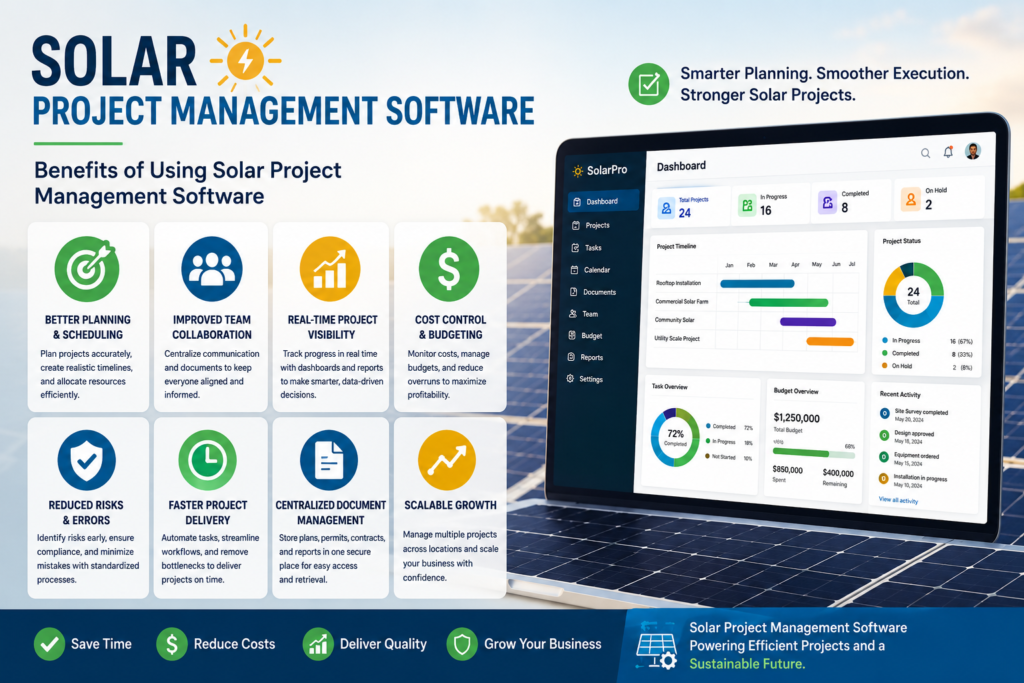
Benefits of Using Solar Project Management Software
Improved Project Visibility
Project managers gain complete visibility into ongoing projects through centralized dashboards. They can instantly identify bottlenecks, monitor budgets, review schedules, and track installation progress without collecting updates from multiple departments.
Greater transparency enables faster decision-making and better resource planning.
Better Team Collaboration
Effective collaboration is essential for successful solar installations. Solar Project Management Software connects office staff, field technicians, engineers, subcontractors, and customers through shared project information.
Everyone works from the same data, reducing misunderstandings and improving coordination throughout the project lifecycle.
Reduced Administrative Work
Manual data entry consumes valuable time and increases the likelihood of human error. Workflow automation eliminates repetitive administrative tasks such as scheduling updates, status notifications, document sharing, and reporting.
Employees spend less time on paperwork and more time delivering high-quality installations.
Higher Customer Satisfaction
Customers appreciate clear communication and timely project updates. Solar companies using project management software can provide accurate progress reports, appointment reminders, and installation timelines.
Improved transparency builds trust while creating a more positive customer experience from beginning to end.
Essential Features to Look For
Workflow Automation
Automation streamlines repetitive business processes by automatically assigning tasks, sending notifications, updating project statuses, and generating reports. This reduces manual effort while improving operational consistency.
Businesses that automate workflows often experience greater efficiency and fewer administrative delays.
Resource Management
Managing installers, vehicles, equipment, and materials requires careful planning. Resource management features help companies allocate labor and inventory efficiently while preventing scheduling conflicts.
Proper resource planning improves productivity and minimizes unnecessary operational costs.
Mobile Accessibility
Field crews spend most of their time at installation sites rather than in the office. Mobile access allows technicians to update project progress, upload photos, complete checklists, and communicate with managers directly from their smartphones or tablets.
Real-time field reporting keeps office staff informed while reducing paperwork.
Reporting and Analytics
Comprehensive reporting tools provide valuable insights into project performance, team productivity, installation timelines, financial metrics, and customer satisfaction.
These reports help business leaders identify improvement opportunities and make informed strategic decisions.
How Solar Project Management Software Improves Business Growth
Faster Project Completion
Efficient planning and automated workflows reduce unnecessary delays throughout the installation process. Teams remain organized, deadlines become easier to manage, and projects reach completion more quickly.
Completing projects faster enables companies to take on additional work without sacrificing quality.
Better Financial Control
Tracking project expenses is critical for maintaining profitability. Solar Project Management Software helps businesses monitor labor costs, equipment purchases, material usage, and project budgets throughout each installation.
Financial visibility reduces unexpected expenses while supporting healthier profit margins.
Stronger Operational Efficiency
Centralized workflows eliminate duplicate work and improve communication between departments. Employees spend less time searching for information and more time focusing on productive activities.
Greater efficiency leads to smoother operations across the entire organization.
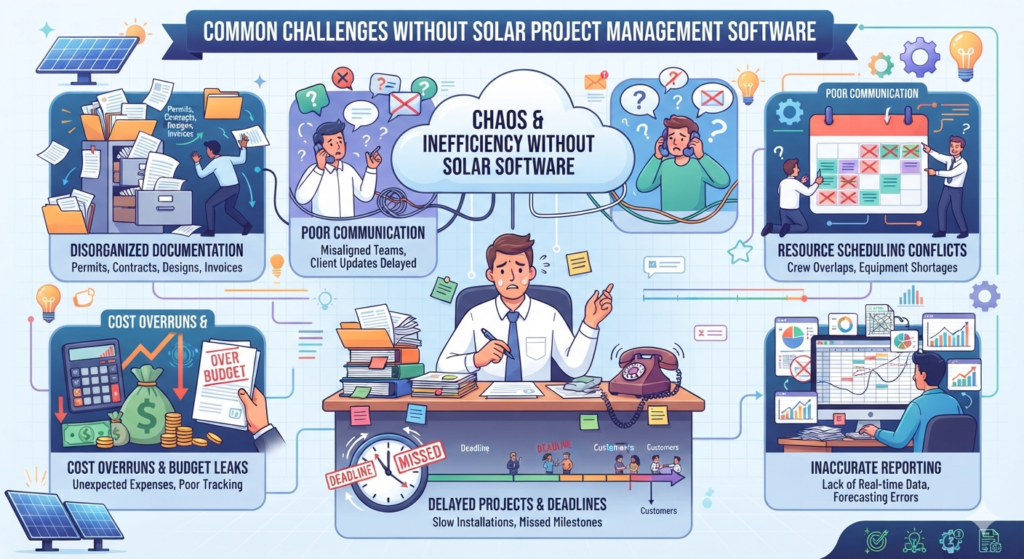
Common Challenges Without Solar Project Management Software
Poor Communication
When project information is scattered across emails, spreadsheets, and paper documents, communication becomes inconsistent. Teams may receive outdated information, resulting in scheduling conflicts and installation delays.
Centralized software ensures everyone has access to the same accurate project data.
Missed Deadlines
Without automated reminders and project tracking, important deadlines can easily be overlooked. Delayed permits, inspections, or equipment deliveries often affect the entire project schedule.
Project management software helps managers monitor every milestone before issues become serious.
Limited Visibility
Business leaders cannot effectively manage projects without real-time insights. Limited visibility makes it difficult to identify bottlenecks, allocate resources, or forecast completion dates accurately.
Centralized dashboards provide instant access to critical project information.
Best Practices for Successful Software Implementation
Train Your Team
Even the most advanced software delivers limited value if employees do not understand how to use it properly. Comprehensive training ensures staff members can fully utilize available features while improving adoption across the organization.
Ongoing education also helps employees adapt as new features become available.
Standardize Your Processes
Before implementing software, businesses should establish standardized workflows for scheduling, communication, documentation, and reporting. Consistent processes improve software effectiveness while simplifying daily operations.
Standardization also makes it easier to measure performance and identify areas for improvement.
Monitor Performance Regularly
Software implementation should not end after deployment. Managers should continuously review project metrics, gather employee feedback, and adjust workflows whenever necessary.
Continuous improvement helps maximize return on investment while supporting long-term business growth.
Quick Bio
Topic: Solar Project Management Software
Category: Renewable Energy Technology
Primary Purpose: Streamline solar installation planning, scheduling, collaboration, documentation, and project tracking.
Best For: Residential solar installers, commercial solar contractors, EPC companies, renewable energy firms, project managers, and installation teams.
Primary Benefits: Improved efficiency, better collaboration, accurate scheduling, reduced manual work, enhanced customer satisfaction, and stronger project visibility.
Conclusion
Solar Project Management Software has become an essential technology for businesses operating in today’s competitive renewable energy market. As solar projects continue to increase in complexity, companies need reliable systems that simplify planning, improve collaboration, and provide complete visibility throughout every stage of the installation process. Investing in the right software helps reduce operational challenges while supporting consistent project delivery.
Although implementing new software requires planning and employee training, the long-term advantages often outweigh the initial effort. Better communication, improved scheduling, stronger financial oversight, and higher customer satisfaction all contribute to sustainable business growth. By choosing a solution that matches operational needs and focusing on standardized workflows, solar companies can build more efficient processes and deliver successful projects with greater confidence.
Frequently Asked Questions (FAQ)
What is Solar Project Management Software?
Solar Project Management Software is a specialized platform that helps solar businesses plan, organize, monitor, and complete solar installation projects more efficiently.
Who should use Solar Project Management Software?
It is ideal for residential solar installers, commercial solar contractors, engineering teams, EPC companies, renewable energy businesses, and project managers.
What are the biggest benefits of Solar Project Management Software?
The primary benefits include improved scheduling, better collaboration, automated workflows, document management, real-time project tracking, enhanced customer communication, and increased operational efficiency.
Can Solar Project Management Software reduce project delays?
Yes. By improving scheduling, task tracking, communication, and resource management, the software helps identify issues early and minimizes delays.
Is Solar Project Management Software suitable for growing businesses?
Yes. As businesses expand, managing multiple projects becomes more challenging. The software provides scalable tools that support efficient growth while maintaining project quality and consistency.