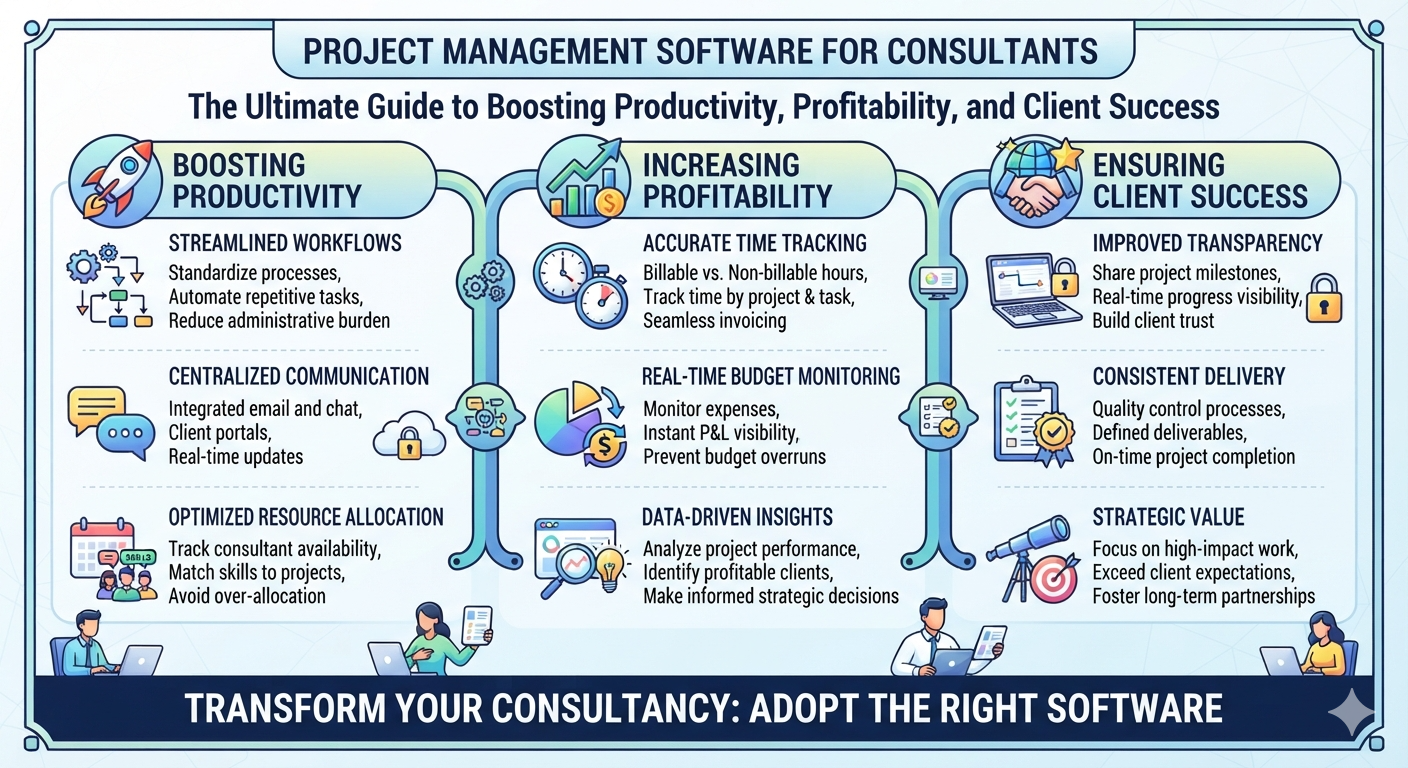
Consultants manage multiple responsibilities every day, from handling client communication and tracking project milestones to organizing documents and monitoring deadlines. As consulting businesses grow, managing these tasks manually becomes increasingly difficult. This is where Project Management Software for Consultants becomes an essential business tool. It helps consultants streamline operations, improve team collaboration, and ensure every client project stays on schedule.
Whether you work as an independent consultant or lead a consulting agency, selecting the right project management solution can significantly improve efficiency. A well-designed platform centralizes project planning, task management, time tracking, resource allocation, file sharing, and reporting into one workspace. Instead of juggling spreadsheets and emails, consultants can focus on delivering value to clients while reducing administrative work and minimizing project risks.
What Is Project Management Software for Consultants?
Understanding the Basics
Project Management Software for Consultants is a digital platform designed to help consulting professionals organize, plan, execute, and monitor projects from beginning to end. It combines multiple business functions into one centralized system, making project execution more efficient and transparent.
Unlike general productivity tools, consulting project management software is specifically designed to support client-focused workflows. It allows consultants to assign tasks, schedule deadlines, track billable hours, manage project budgets, and maintain clear communication with both team members and clients.
Why Consultants Need Project Management Software
Consulting projects often involve strict deadlines, changing client requirements, and multiple stakeholders. Managing everything manually increases the risk of missed deadlines, communication gaps, and resource conflicts. Modern project management software reduces these challenges by automating routine tasks and providing real-time project visibility.
With organized workflows and centralized information, consultants spend less time searching for files or updating spreadsheets and more time solving client problems. This improves productivity while creating a more professional client experience.
Key Features Every Consultant Should Look For
Task and Project Planning
Effective planning is the foundation of successful consulting projects. Project management software allows consultants to create detailed project plans, break work into manageable tasks, assign responsibilities, and establish realistic deadlines.
Project timelines provide a clear overview of progress, making it easier to identify potential delays before they affect project delivery. This level of visibility helps maintain consistency throughout the project lifecycle.
Time Tracking and Billable Hours
Many consultants charge clients based on hourly work. Built-in time tracking allows professionals to record billable hours accurately without relying on manual logs. This improves invoice accuracy while providing valuable insights into team productivity.
Time reports also help consultants estimate future projects more accurately, resulting in better pricing strategies and improved profitability.
Client Collaboration
Consulting projects require continuous communication. A reliable project management platform enables consultants to share updates, exchange documents, collect feedback, and keep clients informed throughout the engagement.
Centralized communication reduces confusion caused by scattered emails while ensuring everyone has access to the latest project information.
Resource Management
Consultants often work on multiple projects simultaneously. Resource management features help allocate workloads efficiently, preventing team members from becoming overbooked or underutilized.
Balanced resource planning improves productivity, maintains project quality, and supports sustainable business growth.
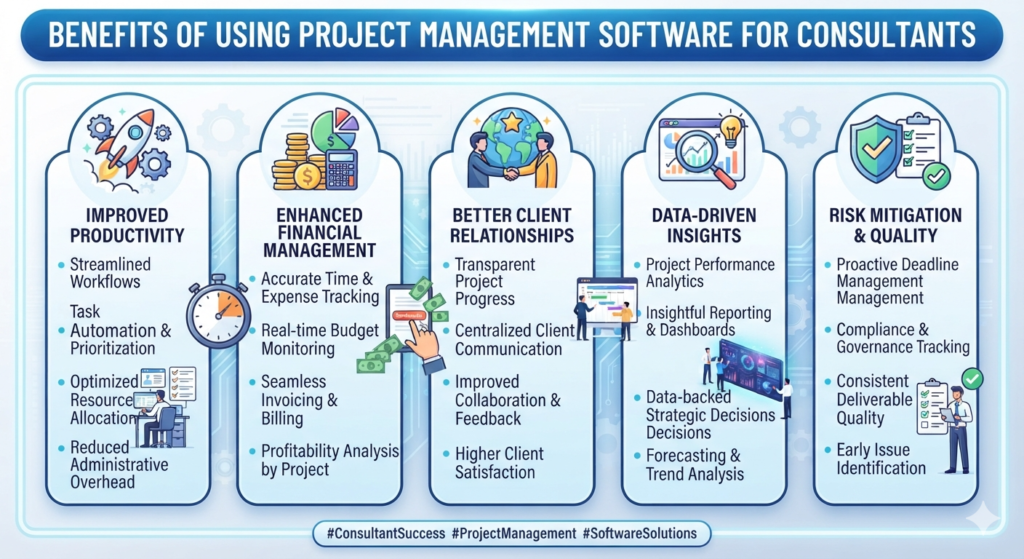
Benefits of Using Project Management Software for Consultants
Improved Productivity
One of the biggest advantages of project management software is increased productivity. Automated workflows eliminate repetitive administrative tasks, allowing consultants to focus on strategic consulting work rather than manual coordination.
When project information is organized in one place, teams spend less time searching for files or following up on status updates. This creates a more efficient working environment.
Better Project Visibility
Real-time dashboards provide consultants with a complete overview of project performance. Managers can instantly monitor completed tasks, upcoming deadlines, budget status, and overall project health.
Early visibility into potential problems allows consultants to make proactive decisions before small issues become major obstacles.
Enhanced Client Satisfaction
Clients appreciate transparency and timely communication. Project management software enables consultants to provide regular updates, share progress reports, and demonstrate accountability throughout the engagement.
Satisfied clients are more likely to become repeat customers and recommend consulting services to others, supporting long-term business growth.
Reduced Operational Risks
Manual project management often leads to overlooked deadlines, lost documents, or inconsistent communication. Centralized project management significantly reduces these risks by keeping every task, document, and discussion organized within one system.
This structured approach improves consistency while reducing costly project errors.
How to Choose the Best Project Management Software for Consultants
Identify Your Business Requirements
Every consulting business has unique needs. Before selecting software, evaluate your typical project size, team structure, reporting requirements, client communication process, and budget.
Choosing software that aligns with your consulting workflow ensures higher adoption and better long-term value.
Prioritize Ease of Use
Even the most feature-rich platform offers little value if it is difficult to use. Consultants should select software with an intuitive interface that allows teams to become productive quickly without extensive training.
Simple navigation encourages consistent usage across the organization.
Look for Scalability
Your consulting business may expand over time. Selecting scalable project management software ensures the platform can support additional users, larger projects, and more advanced workflows without requiring a complete system replacement.
Scalable solutions protect your investment while supporting future growth.
Evaluate Reporting Capabilities
Data-driven decision-making is becoming increasingly important. Powerful reporting tools help consultants analyze project performance, resource utilization, financial metrics, and client satisfaction.
These insights improve future planning while helping businesses identify opportunities for operational improvement.
Best Practices for Successful Implementation
Train Your Team
Introducing new software requires proper onboarding. Providing practical training helps employees understand how to manage projects, track tasks, and use collaboration features effectively.
Consistent training increases user adoption while reducing implementation challenges.
Standardize Project Workflows
Creating standardized templates for consulting projects improves consistency across teams. Common workflows reduce setup time, simplify project execution, and ensure best practices are followed.
Standardization also improves reporting accuracy by using consistent project structures.
Review Performance Regularly
Project management software generates valuable performance data. Reviewing project reports regularly helps consultants identify bottlenecks, improve resource planning, and optimize business processes.
Continuous improvement leads to better project outcomes and stronger client relationships.
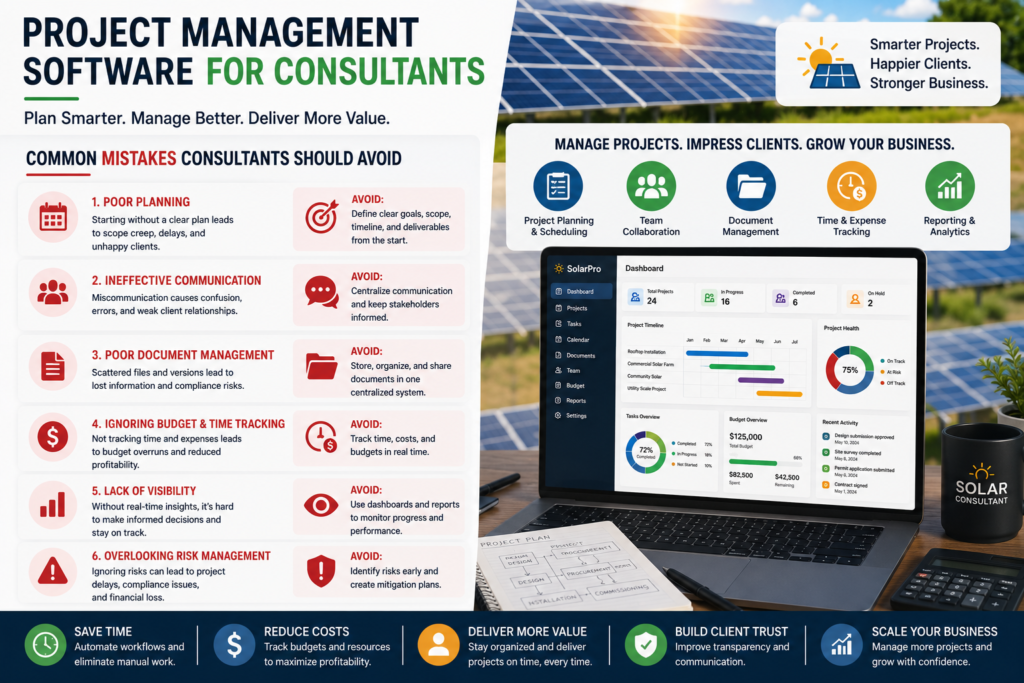
Common Mistakes Consultants Should Avoid
Choosing Software Based Only on Price
Affordable software may appear attractive initially, but missing essential features can create long-term operational challenges. Consultants should evaluate functionality, scalability, security, and ease of use rather than focusing solely on cost.
A well-balanced investment often delivers greater value through improved efficiency and client satisfaction.
Ignoring Team Adoption
Even excellent software fails if employees refuse to use it consistently. Involving team members during software selection and implementation encourages stronger engagement and smoother adoption.
Successful implementation depends on both technology and user commitment.
Quick Bio
Project management software for consultants is a business solution that helps consulting professionals organize projects, manage tasks, collaborate with clients, track time, allocate resources, and improve overall project delivery. It enables consultants to work more efficiently while maintaining transparency, meeting deadlines, and increasing client satisfaction. Businesses of all sizes can benefit from adopting modern project management practices supported by reliable software solutions.
Conclusion
Project Management Software for Consultants has become an essential investment for modern consulting businesses. As client expectations continue to grow, consultants need efficient systems that simplify planning, improve collaboration, and provide complete visibility into every project. The right software reduces administrative work, supports better decision-making, and helps teams deliver consistent results.
Selecting the best project management platform requires careful evaluation of business needs, workflow requirements, and future growth plans. Rather than choosing software based solely on features or pricing, consultants should focus on long-term value, usability, scalability, and operational efficiency. With the right solution in place, consulting professionals can increase productivity, strengthen client relationships, reduce project risks, and build a more successful consulting business.
Frequently Asked Questions (FAQ)
What is Project Management Software for Consultants?
Project Management Software for Consultants is a digital platform that helps consultants plan projects, assign tasks, manage deadlines, track time, collaborate with clients, and monitor project performance from a centralized dashboard.
Why is project management software important for consultants?
It improves organization, increases productivity, enhances client communication, reduces manual work, and helps consultants deliver projects on time while maintaining quality.
Which features are most important in project management software?
Essential features include task management, project planning, time tracking, client collaboration, document management, reporting, workflow automation, resource management, and project dashboards.
Can freelance consultants benefit from project management software?
Yes. Freelancers can organize client work, manage deadlines, track billable hours, improve communication, and maintain professional project records without relying on multiple separate tools.
How does project management software improve client satisfaction?
It provides better communication, transparent project updates, organized documentation, accurate reporting, and timely project delivery, creating a more reliable consulting experience for clients.
Is project management software suitable for small consulting firms?
Absolutely. Small consulting firms benefit from improved organization, efficient collaboration, better resource management, and scalable workflows that support future business growth.