
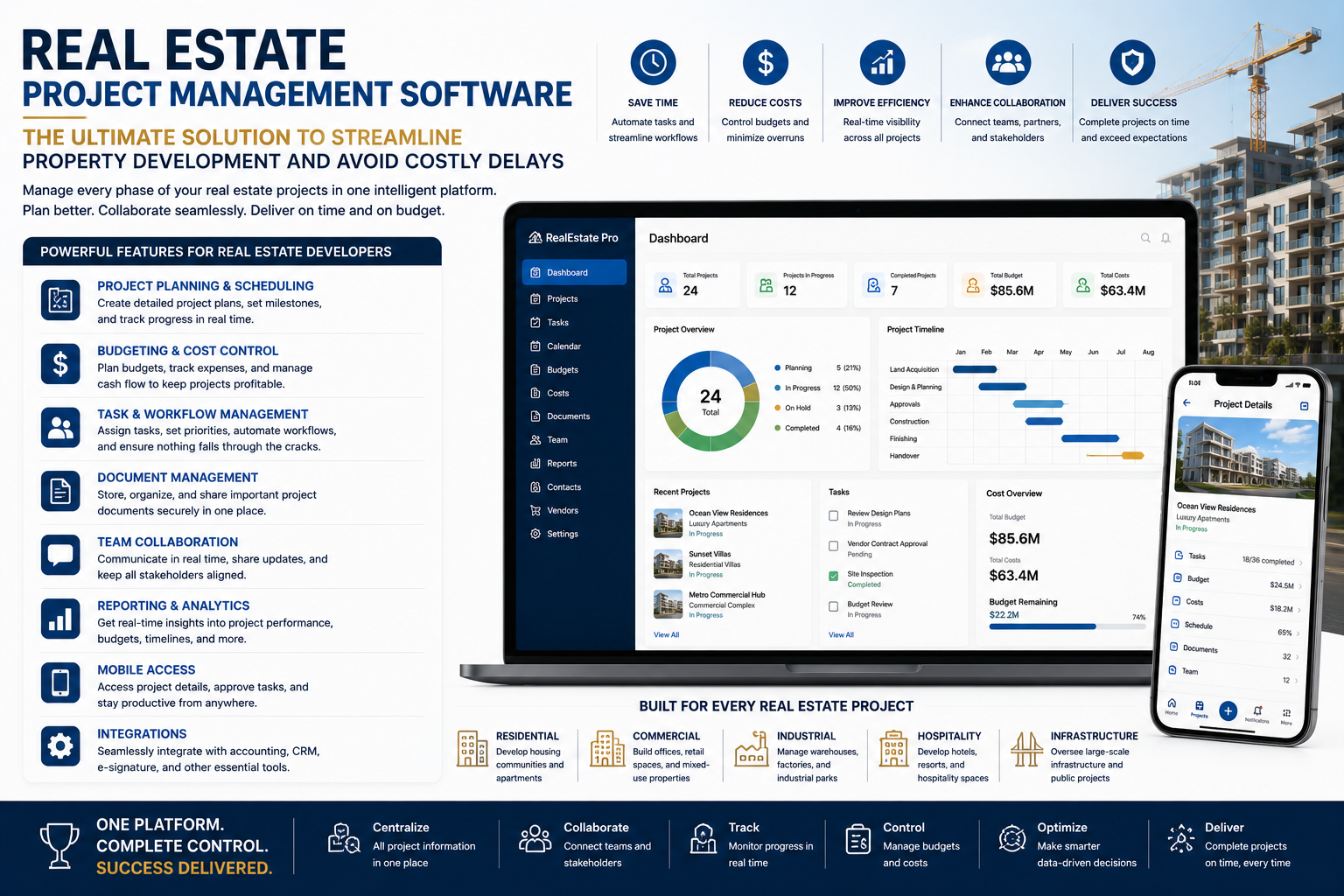
Real estate development involves multiple moving parts, including planning, budgeting, scheduling, construction, document management, and communication between different stakeholders. Managing these tasks manually often leads to delays, budget overruns, missed deadlines, and poor coordination. This is why businesses are increasingly investing in Real Estate Project Management Software to simplify operations and improve project outcomes.
Whether you are a real estate developer, construction manager, property investor, architect, or contractor, the right software provides a centralized platform for managing every phase of a project. From land acquisition to final handover, modern project management solutions help teams stay organized, collaborate efficiently, and make data-driven decisions. This guide explains everything you need to know about real estate project management software, its benefits, features, and how to choose the right solution.
What Is Real Estate Project Management Software?
Real Estate Project Management Software is a digital platform designed to help real estate professionals organize, monitor, and complete property development projects efficiently. It combines project planning, task management, budgeting, scheduling, communication, and document storage into one integrated system.
Instead of relying on spreadsheets, emails, and paper documents, project teams can access real-time information from one dashboard. This improves visibility, reduces errors, and ensures everyone involved in the project works with updated information. The software is suitable for residential, commercial, industrial, and mixed-use property developments.
Why Real Estate Companies Need Project Management Software
The real estate industry is highly competitive, and even small delays can result in significant financial losses. Managing contractors, vendors, engineers, clients, and legal documentation manually becomes increasingly difficult as projects grow larger.
Using Real Estate Project Management Software allows organizations to automate repetitive tasks, monitor progress in real time, and quickly identify potential issues before they become expensive problems. Better planning helps reduce unnecessary costs while improving communication across every department involved in the project.
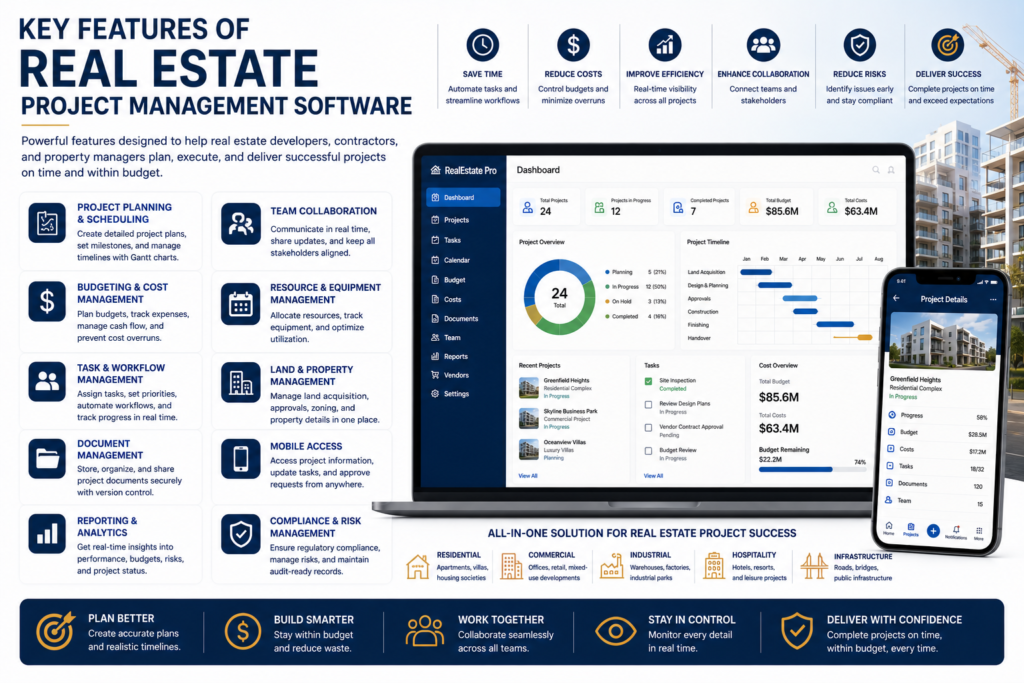
Key Features of Real Estate Project Management Software
Project Planning and Scheduling
Project scheduling tools allow managers to create timelines, assign responsibilities, and monitor deadlines. Interactive calendars and Gantt charts help visualize project milestones and ensure activities stay on track.
Automatic scheduling updates keep everyone informed whenever project timelines change. This reduces confusion and helps teams respond quickly to unexpected challenges.
Budget Management
Financial management is one of the most valuable features of project management software. Users can estimate project costs, monitor expenses, approve invoices, and compare actual spending with planned budgets.
Real-time financial tracking enables managers to identify overspending early. Better visibility into project finances helps organizations maintain profitability throughout the development lifecycle.
Task Management
Task management features help assign responsibilities to team members while tracking progress from start to finish. Managers can prioritize work, set deadlines, and receive notifications when tasks are completed.
Clear accountability reduces confusion among contractors, consultants, and employees. Everyone understands their responsibilities, leading to improved productivity and faster project completion.
Document Management
Real estate projects generate large volumes of contracts, permits, blueprints, inspection reports, and legal documents. A centralized document management system ensures files remain organized and easily accessible.
Version control prevents teams from using outdated documents. Secure cloud storage also reduces the risk of losing important project information.
Team Collaboration
Collaboration tools improve communication between architects, engineers, contractors, investors, and clients. Team members can share updates, exchange files, and discuss issues without relying on lengthy email chains.
Centralized communication minimizes misunderstandings and improves decision-making. Faster responses help projects move forward with fewer delays.
Benefits of Using Real Estate Project Management Software
Improved Project Visibility
Project managers gain complete visibility into every stage of development. Dashboards display budgets, schedules, tasks, risks, and project performance in one location.
Having access to accurate data allows decision-makers to solve problems before they become major obstacles. This leads to better project control and increased client satisfaction.
Better Resource Management
Managing labor, equipment, and materials efficiently is essential for successful real estate projects. Project management software helps allocate resources based on availability and project priorities.
Efficient resource planning reduces idle time and prevents shortages. As a result, organizations maximize productivity while minimizing unnecessary operational costs.
Reduced Risk
Construction delays, budget overruns, and compliance issues can significantly impact project success. Risk management tools help identify potential problems early and provide alerts when issues arise.
Early detection enables managers to take corrective action before risks affect project timelines or profitability. This proactive approach improves overall project performance.
Faster Decision Making
Real-time reporting gives project managers instant access to critical information. Instead of waiting for manual reports, executives can analyze current project status and make informed decisions quickly.
Accurate reporting improves transparency and allows organizations to respond confidently to changing project conditions.
Industries That Benefit from Real Estate Project Management Software
Residential Development
Home builders and residential developers use project management software to coordinate construction schedules, monitor budgets, and manage contractors across multiple housing projects.
The software improves planning accuracy while helping deliver homes on time and within budget.
Commercial Real Estate
Commercial developments involve complex coordination among investors, contractors, engineers, and regulatory authorities. Project management software simplifies communication and keeps every stakeholder informed.
Improved collaboration helps commercial projects progress efficiently despite their complexity.
Property Development Companies
Large property developers often manage multiple projects simultaneously. Centralized dashboards allow executives to monitor every project without switching between multiple systems.
Portfolio management features provide valuable insights into overall business performance and resource allocation.
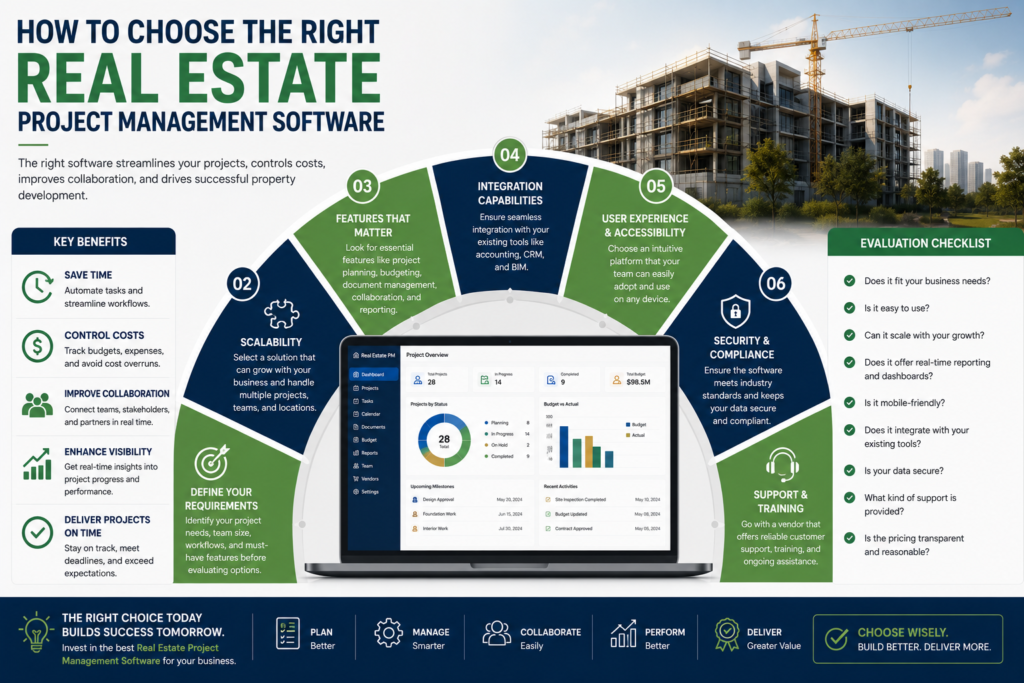
How to Choose the Right Real Estate Project Management Software
Understand Your Business Needs
Before selecting software, evaluate your organization’s project size, workflow, team structure, and future growth plans. Different businesses require different levels of functionality.
Choosing software that aligns with your operational requirements ensures higher adoption rates and better long-term value.
Look for Scalability
As your business grows, your software should grow with it. Scalable solutions support additional users, projects, and advanced features without requiring complete system replacement.
Flexible platforms protect your investment while supporting future expansion.
Prioritize Ease of Use
A complicated interface reduces productivity and increases training time. User-friendly software encourages adoption across the entire organization.
Simple navigation allows employees to focus on project delivery instead of learning complicated systems.
Integration Capabilities
Modern businesses use multiple digital tools for accounting, CRM, document management, and communication. Choosing software that integrates with existing systems improves workflow efficiency.
Integrated platforms eliminate duplicate data entry while increasing operational accuracy.
Common Challenges Without Project Management Software
Organizations that rely on manual project management frequently experience communication gaps, scheduling conflicts, budget inaccuracies, and document mismanagement. These issues often result in missed deadlines, unhappy clients, and increased project costs.
Lack of centralized information makes decision-making slower and less reliable. As projects become larger and more complex, manual methods struggle to maintain efficiency and transparency.
Future Trends in Real Estate Project Management Software
Artificial intelligence is becoming increasingly valuable for forecasting project timelines, identifying risks, and improving resource planning. Predictive analytics helps organizations make smarter decisions using historical project data.
Cloud-based platforms, mobile applications, automation, digital collaboration tools, and real-time reporting continue transforming how real estate professionals manage projects. Businesses adopting these technologies are better positioned for long-term success in an increasingly competitive market.
Quick Bio
Real Estate Project Management Software is a digital solution that helps property developers, construction firms, contractors, and real estate businesses plan, monitor, and complete projects more efficiently. It centralizes project scheduling, budgeting, document management, team collaboration, resource allocation, and reporting, making complex property developments easier to manage while improving productivity and reducing operational risks.
Conclusion
Managing modern real estate projects without dedicated software can create unnecessary challenges that slow growth and increase operational costs. Real Estate Project Management Software provides a smarter way to organize tasks, manage budgets, improve communication, and monitor project progress from beginning to completion.
As the real estate industry becomes increasingly competitive, organizations that embrace digital project management solutions gain stronger control over schedules, resources, and financial performance. Investing in the right software not only improves efficiency but also supports long-term business success, higher client satisfaction, and more profitable project delivery.
Frequently Asked Questions (FAQ)
What is Real Estate Project Management Software?
It is software designed to help real estate professionals manage planning, budgeting, scheduling, communication, documentation, and project execution from one centralized platform.
Who should use Real Estate Project Management Software?
Real estate developers, property management companies, contractors, architects, engineers, construction firms, consultants, and investors can all benefit from using this software.
What are the biggest benefits of using project management software?
Major benefits include better project visibility, improved collaboration, budget control, efficient resource management, reduced project risks, and faster decision-making.
Can small real estate businesses use project management software?
Yes. Many solutions are suitable for small businesses as well as large enterprises, allowing companies to improve organization and productivity regardless of project size.
Does Real Estate Project Management Software improve team collaboration?
Yes. Team members can share updates, manage tasks, communicate instantly, and access important project documents from a centralized platform, improving overall coordination.
Is cloud-based project management software better than manual methods?
In most cases, yes. Cloud-based software provides real-time access, automatic updates, secure document storage, and improved collaboration compared to spreadsheets and paper-based systems.