
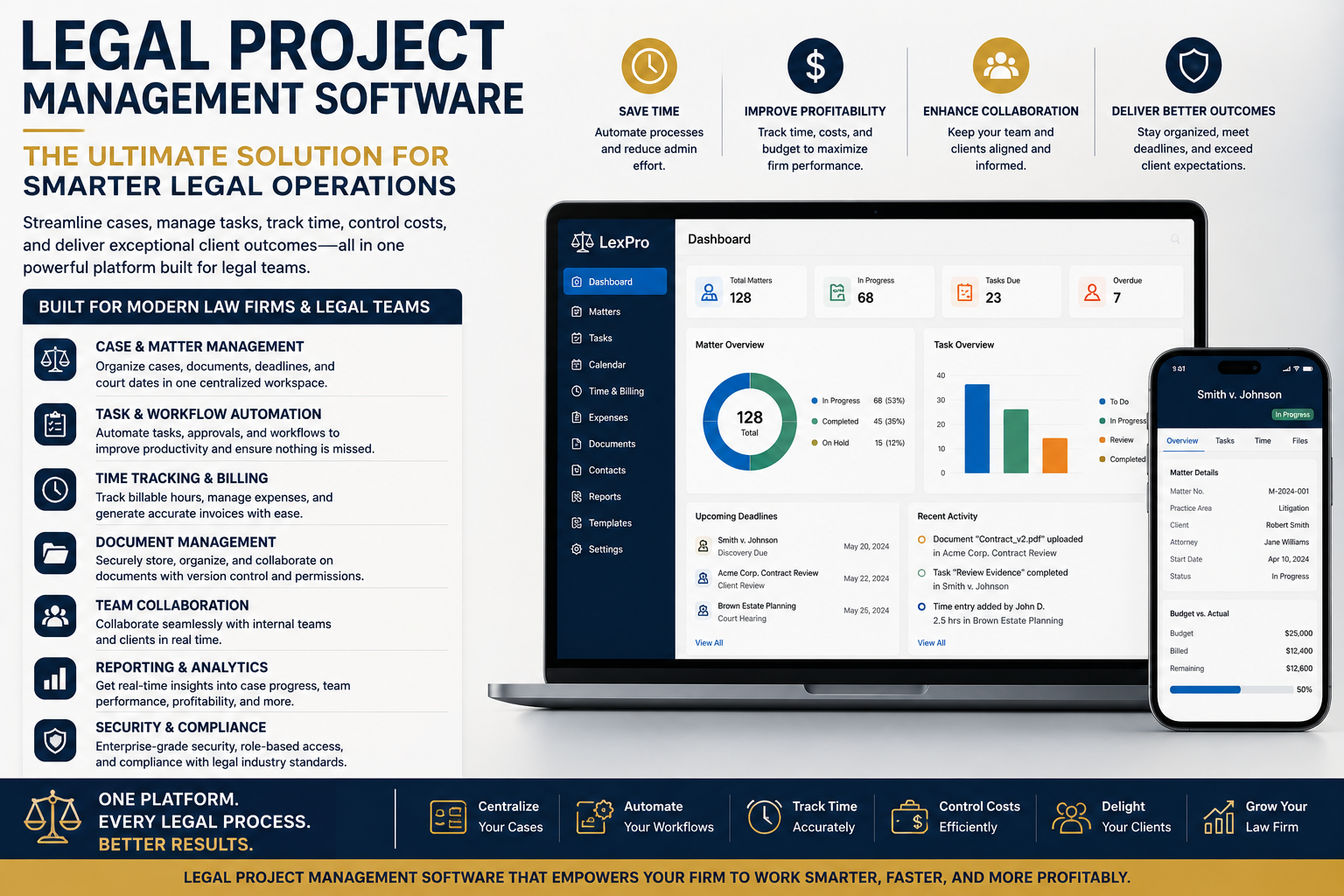
Legal Project Management Software has become an essential solution for law firms, corporate legal departments, and legal professionals seeking greater efficiency and improved workflow management. As legal matters become increasingly complex, relying on spreadsheets, emails, or manual tracking can create unnecessary delays, missed deadlines, and communication gaps. A dedicated legal project management platform helps organize tasks, allocate resources, manage documents, and improve collaboration while maintaining better control over every legal project.
Modern legal teams are expected to deliver faster results without sacrificing quality or compliance. Legal Project Management Software provides a structured approach to planning, monitoring, and completing legal matters from start to finish. Instead of working reactively, firms can proactively manage cases, deadlines, budgets, and client expectations. This improves productivity, minimizes operational risks, and supports better decision-making throughout every stage of legal work.
What Is Legal Project Management Software?
Legal Project Management Software is a specialized digital solution designed to help legal professionals organize, manage, and monitor legal projects using structured workflows. Unlike general project management platforms, these solutions are built to support legal processes, document management, task assignments, matter tracking, and deadline management while keeping legal teams aligned.
The software allows attorneys, paralegals, legal assistants, and administrative staff to collaborate within one centralized workspace. Teams can monitor progress, assign responsibilities, track billable activities, manage legal documents, and communicate more effectively. The result is greater visibility into ongoing work and better control over every legal matter.
Why Legal Teams Need Project Management Software
Managing legal matters involves numerous moving parts that require careful planning and coordination. Without an organized system, legal professionals may struggle with missed deadlines, duplicated work, inconsistent communication, and inefficient resource allocation. These issues can negatively impact client satisfaction and internal productivity.
Legal Project Management Software creates standardized processes that help firms maintain consistency across multiple cases. By centralizing information, improving collaboration, and automating repetitive tasks, legal teams can focus more on legal strategy rather than administrative work. This leads to smoother operations and stronger client relationships.
Key Features of Legal Project Management Software
Matter and Case Management
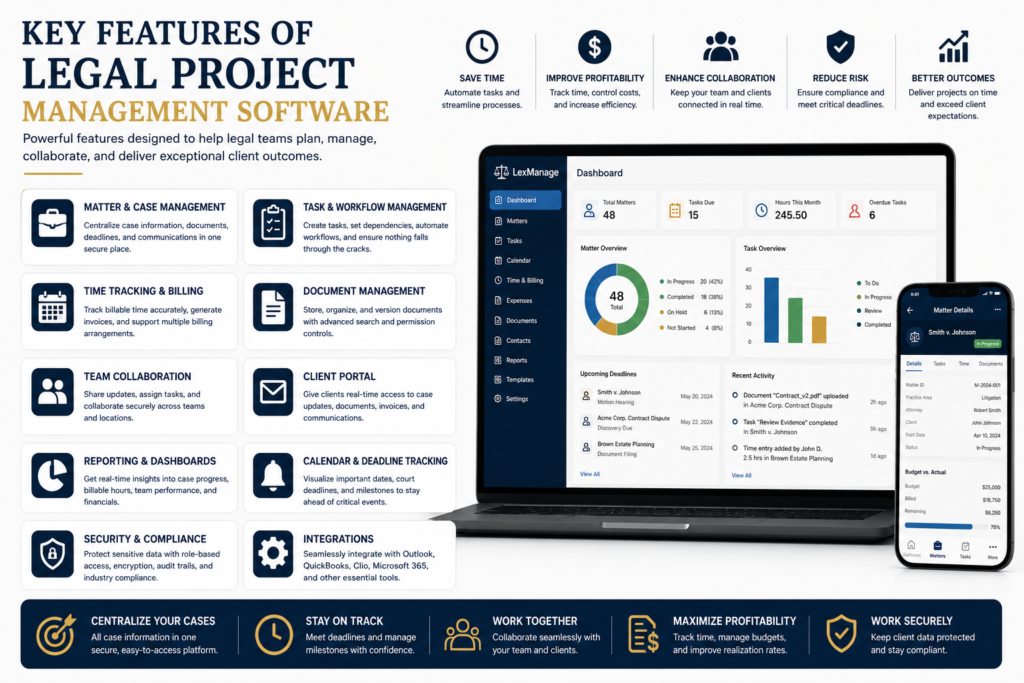
Matter management enables legal professionals to organize every legal project from initial consultation through final resolution. Each matter can include tasks, documents, notes, communications, deadlines, and assigned team members within a single workspace.
Having all case information in one location reduces confusion and eliminates the need to search through multiple systems. This organized approach improves visibility while helping legal teams stay on schedule.
Task and Workflow Automation
Workflow automation simplifies repetitive legal processes by automatically assigning tasks, sending reminders, and updating project statuses. Instead of manually tracking every activity, teams can follow predefined workflows that increase consistency.
Automation reduces administrative burden while minimizing human error. Legal professionals can dedicate more time to legal research, client communication, and strategic planning instead of routine management tasks.
Document Management
Legal projects involve large volumes of contracts, agreements, pleadings, evidence, and supporting documents. Document management features provide secure storage, organized folders, version control, and easy retrieval.
Centralized document management improves collaboration by allowing authorized team members to access updated files without confusion. This helps maintain document accuracy while supporting efficient legal operations.
Calendar and Deadline Tracking
Court dates, filing deadlines, client meetings, and internal milestones require careful scheduling. Legal Project Management Software includes integrated calendars that automatically notify team members of upcoming deadlines.
Effective deadline management reduces the likelihood of missed obligations. Automated reminders ensure legal professionals remain informed and prepared throughout the lifecycle of every project.
Benefits of Legal Project Management Software
Improved Team Collaboration
Legal matters often require collaboration among attorneys, paralegals, administrative staff, and clients. Centralized communication tools reduce scattered conversations and ensure everyone has access to current information.
Improved collaboration encourages transparency, faster decision-making, and better coordination between departments. Teams work more efficiently when responsibilities and updates are clearly visible.
Better Time Management
Time is one of the most valuable resources in legal practice. Legal Project Management Software helps teams prioritize tasks, monitor workloads, and allocate resources more effectively.
By organizing daily responsibilities, legal professionals can reduce wasted effort and improve productivity. Better time management also contributes to higher client satisfaction and improved operational efficiency.
Enhanced Client Satisfaction
Clients appreciate timely communication, organized case management, and predictable progress updates. Project management software allows firms to deliver consistent service by maintaining organized workflows and accurate timelines.
When clients receive prompt responses and transparent project updates, trust naturally increases. Strong client relationships often lead to long-term partnerships and positive referrals.
Greater Project Visibility
Real-time dashboards provide managers with a complete overview of project progress, pending tasks, completed milestones, and resource utilization. This visibility supports informed decision-making and proactive issue resolution.
Project transparency helps identify potential delays before they become serious problems. Managers can adjust priorities and workloads to keep projects moving forward efficiently.
How Legal Project Management Software Improves Law Firm Productivity
Law firms often manage multiple legal matters simultaneously, making organization essential for success. Legal Project Management Software reduces administrative complexity by bringing together scheduling, document management, communication, and task tracking into one integrated environment.
Instead of relying on disconnected tools, legal professionals gain a centralized system that supports consistent workflows and efficient collaboration. This streamlined approach helps reduce unnecessary delays while improving overall firm productivity.
Choosing the Right Legal Project Management Software
Ease of Use
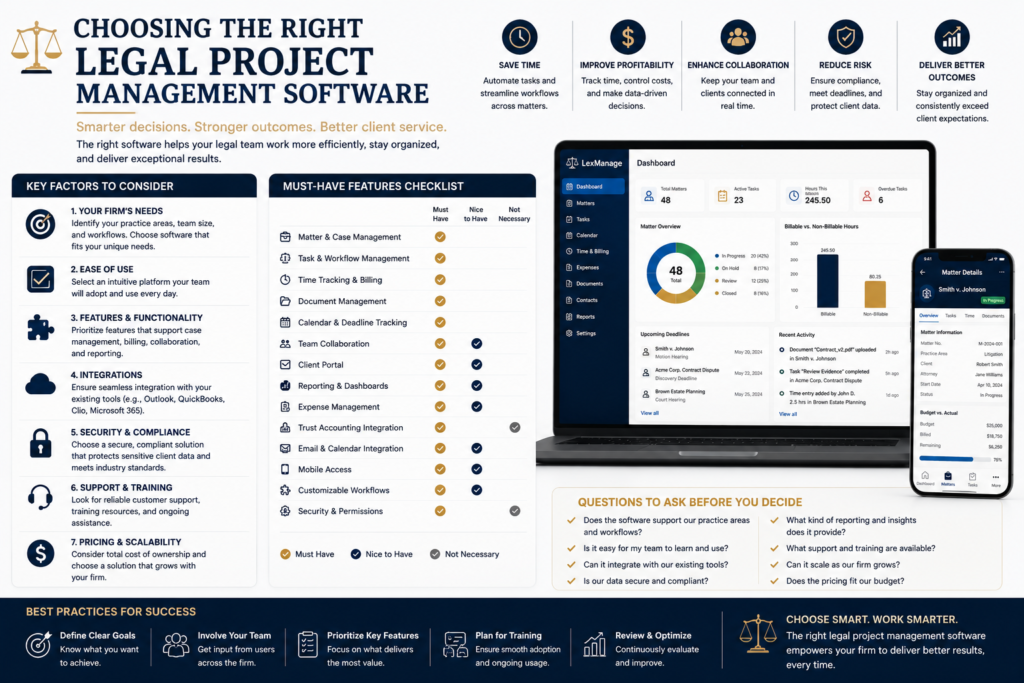
Software should offer an intuitive interface that allows legal professionals to quickly navigate features without extensive training. A simple user experience encourages adoption across the organization.
Complex systems may reduce productivity rather than improve it. Selecting software with straightforward navigation helps teams begin using the platform more effectively.
Customizable Workflows
Every legal practice operates differently. Flexible workflow customization allows firms to create processes that match their unique practice areas, internal procedures, and client requirements.
Custom workflows support consistency while accommodating changing business needs. This flexibility improves long-term usability across different legal departments.
Security and Compliance
Legal information contains sensitive client data that requires strong protection. Quality Legal Project Management Software includes secure access controls, user permissions, encrypted storage, and audit capabilities.
Strong security practices help protect confidential information while supporting professional responsibilities. Data protection should remain a priority when selecting any legal software solution.
Scalability
As firms grow, software should continue supporting increasing workloads, additional users, and expanding legal matters. Scalable solutions help organizations avoid frequent system replacements.
Choosing software that supports future growth provides long-term value while minimizing operational disruption during expansion.
Common Challenges Without Legal Project Management Software
Law firms relying on manual processes often experience inconsistent communication, missed deadlines, scattered documents, and inefficient task management. These challenges can reduce productivity while increasing operational risks.
Poor organization also creates unnecessary stress for legal professionals attempting to manage multiple projects simultaneously. A centralized project management system helps eliminate these inefficiencies and promotes structured legal operations.
Conclusion
Legal Project Management Software is transforming the way legal professionals manage cases, collaborate with colleagues, and deliver client services. By organizing workflows, improving communication, centralizing documents, and tracking deadlines, firms can increase productivity while maintaining greater control over every legal matter.
Although implementing new software requires planning and training, the long-term benefits significantly outweigh the initial effort. Firms that embrace structured legal project management are better positioned to improve efficiency, reduce administrative challenges, strengthen client relationships, and support sustainable business growth in an increasingly competitive legal industry.
Frequently Asked Questions (FAQ)
What is Legal Project Management Software?
Legal Project Management Software is a digital platform that helps legal professionals organize legal matters, manage tasks, monitor deadlines, collaborate with teams, and store important documents in one centralized system.
Who should use Legal Project Management Software?
Law firms, corporate legal departments, solo attorneys, legal consultants, paralegals, compliance teams, and legal operations professionals can all benefit from using legal project management solutions.
Does Legal Project Management Software improve productivity?
Yes. It improves productivity by organizing workflows, reducing manual work, automating repetitive tasks, improving communication, and helping teams manage deadlines more effectively.
Is Legal Project Management Software suitable for small law firms?
Yes. Small firms can use the software to streamline daily operations, improve organization, manage client matters efficiently, and support future business growth.
What features should I look for?
Important features include matter management, task tracking, workflow automation, document management, deadline tracking, collaboration tools, reporting, security, and customizable workflows.
Quick Bio
Author: Editorial Team
The Editorial Team specializes in creating well-researched, SEO-focused technology and business content. Their goal is to produce practical, easy-to-understand articles that help professionals make informed decisions about software, digital transformation, and modern business solutions while following the latest content optimization practices.