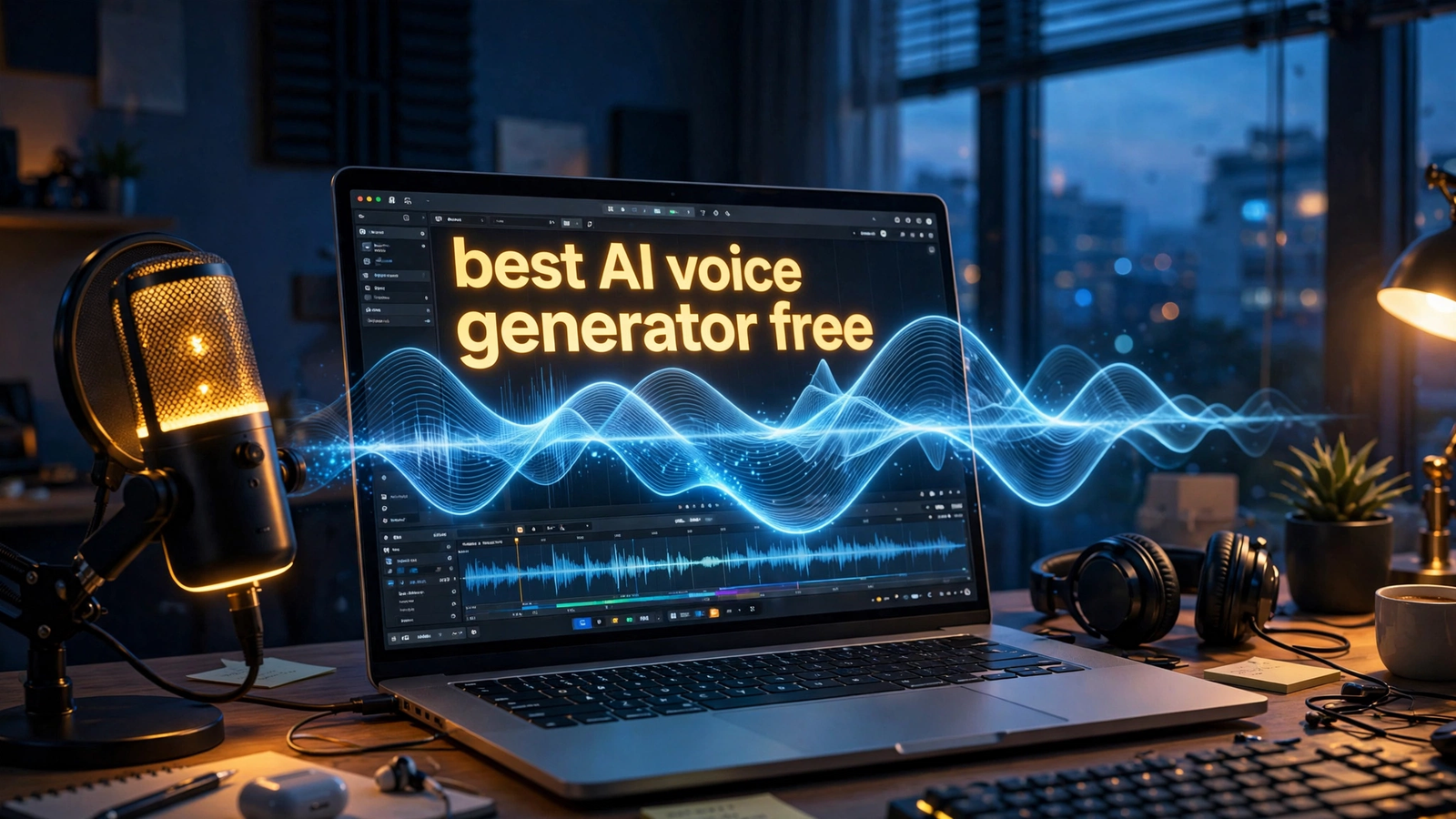
Turning text into natural-sounding speech used to require a recording studio, but that has changed completely. Today anyone can use a free AI voice generator to create voiceovers for videos, podcasts, courses, and social media. The best AI voice generator free options of 2026 sound remarkably human and cost nothing to start. In this guide we walk through the free tools we tested, explain what each does best, and show you where the free plans stop — including watermark and commercial-use traps.
What a Truly Free AI Voice Generator Looks Like
Before signing up, it helps to know what free actually means in voice AI. Most platforms offer a free tier, but those tiers differ wildly. Some give a monthly allowance of characters or minutes, some let you listen forever but charge for downloads, and a few are free with almost no restrictions. A truly free AI voice generator lets you create and download audio without a credit card, with no watermark stamped on your finished audio.
Voice quality and language support matter just as much. The gap between a robotic voice and a human-sounding narrator is enormous, and the most advanced platforms usually offer the most natural free-tier voices. Meanwhile, tools like TTSMaker support more than one hundred languages, opening audiences your own voice never could. Think about your use case — YouTube narration, a course module, or reading your blog aloud — and weigh quality against limits.
ElevenLabs: The Most Realistic Free Voice Generator
ElevenLabs is widely regarded as the gold standard for realistic AI speech, and its free plan is genuinely useful. You get around ten thousand credits per month — roughly ten minutes of audio — and the voice quality matches the paid plans exactly. That is enough for several short narrations or social media voiceovers that sound like professional recordings. For students, bloggers, and new creators, this monthly allowance covers plenty of experimentation.
The platform’s strength is emotional range and natural pacing. Voices pause, breathe, and emphasize words like a real speaker, making ElevenLabs ideal for storytelling, audiobook chapters, and dramatic narration. A large community voice library lets you audition dozens of narrators, and basic voice cloning is available with limits. If your scripts are short and sounding human is the priority, this is the free AI voice generator to beat.
Know the limits before you commit. Ten minutes a month runs out fast with regular content, and the free tier is licensed for personal use — not commercial publishing — so check the terms before monetizing. Still, as a way to experience the best voice AI available without paying, the ElevenLabs free plan is unmatched. Start here, learn the workflow, and upgrade only when your volume demands it.
TTSMaker: The Most Generous Free Plan
If ten minutes a month feels too small, TTSMaker gives away far more for nothing. The free plan includes twenty thousand characters per week, resetting every seven days, across more than one hundred languages and hundreds of voice styles. Downloads carry no watermark, and commercial use is permitted — a rarity at this price. For multilingual creators or anyone needing real volume, TTSMaker is one of the strongest free options in 2026.
The trade-off is voice quality: clear and usable, but without the emotional depth of ElevenLabs. For explainer videos, tutorials, and faceless YouTube channels, clean delivery matters more than drama, so this rarely hurts. The interface is simple — paste text, pick a voice, generate — with no sign-up wall for basic use. Maximum free output for zero cost.
CapCut: Unlimited Free Voiceovers for Video Creators
CapCut is known as a video editor, but its built-in text-to-speech engine is one of the most practical free AI voice generators for short-video creators. Basic voices are unlimited and free, and exports carry no watermark — perfect for TikTok, Reels, and YouTube Shorts. Because narration lives inside your editing timeline, there is no exporting audio from one app to import into another. Type your script, pick a voice, and it appears ready to sync with your clips.
One quirk: each text entry is capped at around five hundred characters, so longer scripts must be split and stitched. In practice this fits short-form video perfectly, since creators write scene by scene anyway. Voice options cover the narrator styles that perform well on social platforms. For video-first creators wanting zero friction between script and edit, CapCut is hard to beat.
Speechify: The Best Free Tool for Listening and Proofreading
Speechify takes a different approach: instead of downloadable voiceovers, it reads your content back to you. The free tier offers generous listening with basic voices across web pages, documents, PDFs, and ebooks. Writers proofread by ear — catching awkward phrasing silent reading misses — and students turn dense reading into something absorbable on a walk. It will not produce a publishable narration, but as a personal listening tool it is outstanding.
The experience centers on reading, not production: adjustable speed, highlighted follow-along text, and voices from functional to pleasant. The free tier nudges you toward upgrades fairly often, and audio downloads are not included. Still, for hearing drafts, consuming articles hands-free, or testing a script before recording, Speechify earns its place as a reading companion.
Microsoft Clipchamp and Edge Read Aloud: Hidden Free Gems
Some of the most generous free voice tools hide inside software you already own. Microsoft Edge’s Read Aloud turns any webpage or document into spoken audio with decent natural voices — no sign-up, no limits. Highlight text, right-click, and listen. It is listening-only, so you cannot download audio, but for proofing articles, reviewing research, or accessibility it is completely free and always available. Most users never realize this built-in tool exists.
Clipchamp, Microsoft’s video editor, goes further: more than one hundred and seventy AI voices in its free text-to-speech tool, no usage cap on the basic tier, and no watermark on export. Write your script, choose from a large multilingual voice library, and narration drops straight into your timeline. For Windows users making tutorials or training videos, Clipchamp delivers real convenience without a subscription.
Neither tool is a standalone voice platform — you cannot fine-tune voices like in ElevenLabs, and emotional range is narrower. But they remove the two biggest barriers, cost and complexity, entirely. If you need reliable text-to-speech without learning a new platform, check what is already installed before paying for anything.
Play.ht and Descript: Free Tiers Worth Trying for Bigger Projects
Play.ht’s free plan offers roughly twelve thousand words per month — enough to turn two or three blog posts into audio each month. Its polished voices suit content repurposing: articles become podcasts, audio embeds, or narrated videos. For bloggers and small publishers, that allowance can quietly turn a text-only site into a multimedia one. Treat the free tier as a production trial to prove the concept before investing.
Descript bundles voice generation into a full audio and video editor. The free plan includes sixty media minutes per month plus a one-time AI credit pool, covering voiceover generation, text-based audio editing, and even voice cloning for overdubbing. It is the most powerful option here but also the most complex, and the allowance covers editing minutes too. For podcasters wanting an all-in-one workflow, it is an excellent free learning ground.
Commercial Use Rules You Should Know Before Publishing
The most misunderstood aspect of free AI voice generators is licensing. Most free tiers are for personal use — experimenting and learning — while monetized videos, client work, or commercial products may violate the terms. ElevenLabs restricts its free tier to non-commercial use, and other platforms may require paid plans or attribution before you monetize. TTSMaker is a notable exception, permitting commercial use without credit. Always read the licensing terms before your content goes live.
The second trap is the watermark. Some tools advertise as free but stamp audio watermarks into exports unless you upgrade, making the audio useless for real projects. Every tool in this guide exports cleanly on its free tier — that is why they made the list. Still, terms change, so verify the current policy at sign-up. If a tool demands your credit card before generating a single word, treat its free claims skeptically.
Conclusion: Start Creating Free AI Voiceovers Today
The best AI voice generator free options in 2026 can replace studio recordings for most everyday projects. Want the most human narration for short scripts? Start with ElevenLabs. Need volume and languages at zero cost? TTSMaker. Making videos? CapCut or Clipchamp. Reading and proofing? Speechify or Edge Read Aloud. Exploring audio content? Play.ht or Descript. Each is free to start, exports clean audio, and takes minutes to learn.
Pick the tool matching your main use case and generate your first voiceover today. You will quickly learn whether AI narration fits your workflow, and you can switch or upgrade later. The barrier to entry has never been lower. Choose your free AI voice generator, paste your first script, and hear your words come to life. If you hire people, also see our guide to the best AI tools for recruiters to speed up your hiring workflow.