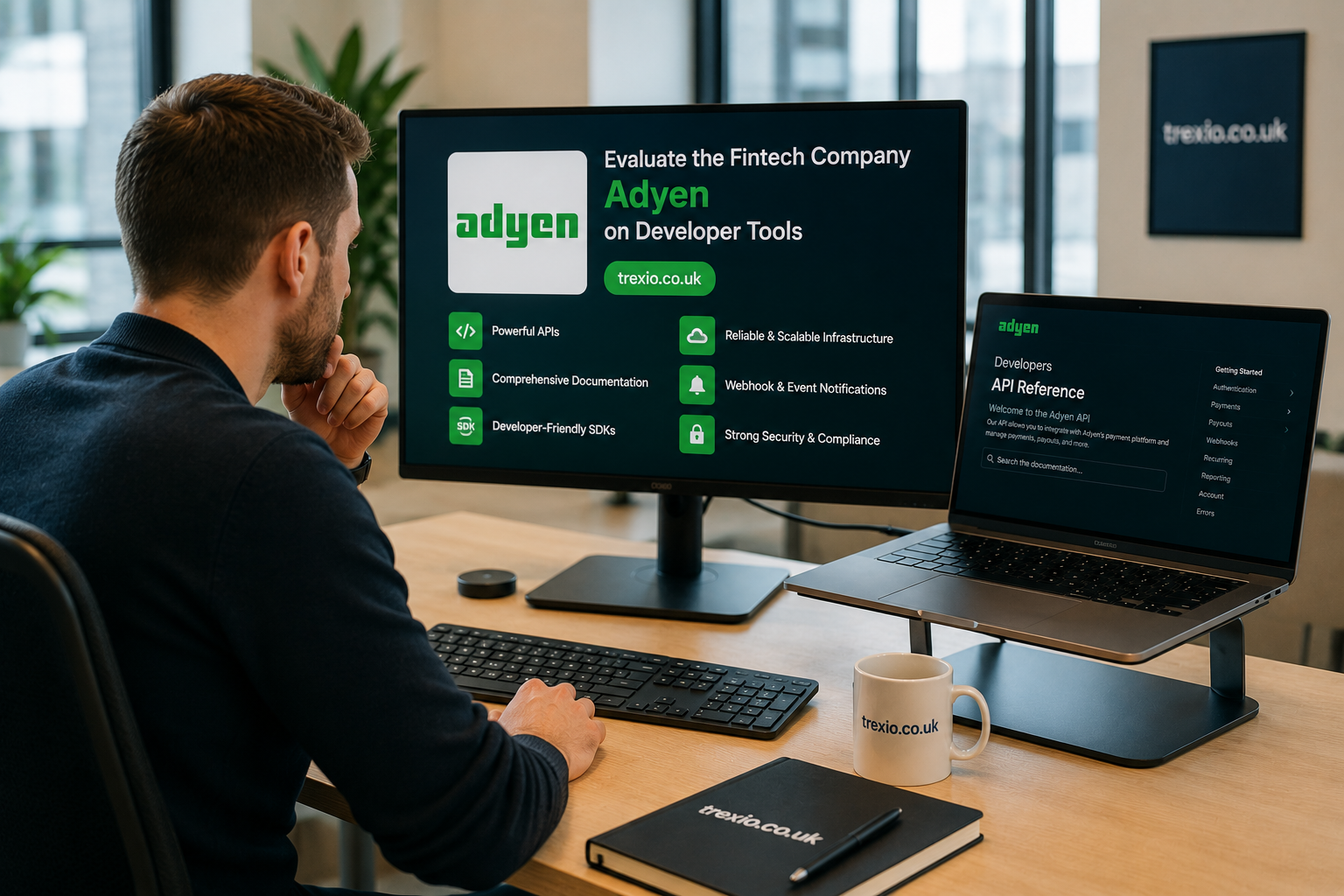
When organizations evaluate the fintech company Adyen on developer tools, they are usually looking beyond payment processing alone. Modern engineering teams need flexible APIs, reliable documentation, comprehensive SDKs, sandbox environments, automation capabilities, and strong security features that simplify payment integration. Developer tooling has become one of the biggest competitive advantages for payment platforms because it directly affects development speed, maintenance costs, and product innovation. Businesses building eCommerce stores, SaaS applications, marketplaces, subscription platforms, or omnichannel payment systems need technology that scales without creating unnecessary complexity. Adyen has invested heavily in its developer ecosystem to support startups, enterprise organizations, and global merchants. This article examines the technical strengths, platform architecture, and developer-focused capabilities that make Adyen a notable fintech infrastructure provider. Rather than focusing only on payment features, this review evaluates the tools developers use every day to build, test, deploy, and maintain payment applications.
Quick Answer
If you want to evaluate the fintech company Adyen on developer tools, Adyen performs exceptionally well in several critical areas. Its REST APIs are well structured, SDKs support multiple programming languages, documentation is detailed, sandbox testing is comprehensive, and security follows industry best practices. The platform is designed for scalability, making it suitable for startups, growing businesses, and global enterprises. Although implementation can require technical expertise, the overall developer experience is considered strong because of consistent APIs, extensive integration options, webhook support, and modern authentication mechanisms. For organizations prioritizing reliability, automation, and global payment infrastructure, Adyen offers one of the more mature developer ecosystems in fintech.
Understanding Adyen’s Developer Ecosystem
Developer tools are no longer optional additions to payment platforms. They represent the foundation upon which software teams build customer experiences, automate financial operations, and expand internationally. When businesses evaluate the fintech company Adyen on developer tools, they typically assess API quality, documentation, software libraries, security standards, integration flexibility, monitoring capabilities, testing environments, and ongoing platform support. Adyen has structured its ecosystem around a unified payments architecture that reduces fragmentation across payment methods and geographic regions. Instead of managing multiple providers, developers interact with a consistent API layer that simplifies implementation and long-term maintenance. This unified design allows engineering teams to spend less time adapting to different payment infrastructures and more time improving customer experiences. The result is a platform that emphasizes consistency, scalability, and developer productivity while supporting complex enterprise payment operations.
Developer experience also depends on how easily new engineers can understand the platform. Adyen organizes documentation into logical sections covering authentication, payments, payouts, recurring billing, reporting, webhooks, dispute management, and platform services. Clear code samples help developers understand implementation patterns across multiple languages. Step-by-step tutorials reduce onboarding time while allowing experienced engineers to move directly into advanced integrations. This documentation-first approach improves collaboration between developers, solution architects, and technical project managers. As organizations continue to evaluate the fintech company Adyen on developer tools, the quality of educational resources remains one of its strongest competitive advantages.
Why Developer Tools Matter in Modern Fintech
Modern financial technology depends heavily on software engineering efficiency. Payment platforms are no longer isolated transaction processors; they serve as infrastructure powering online stores, subscription services, digital marketplaces, mobile applications, and enterprise commerce. Developers require reliable APIs that minimize downtime while supporting millions of transactions securely. When organizations evaluate the fintech company Adyen on developer tools, they also consider how quickly engineering teams can launch new payment experiences without introducing technical debt. Efficient tooling accelerates deployment cycles, improves testing accuracy, and reduces integration risks. Strong developer platforms also encourage innovation by allowing engineers to experiment with new payment methods and business models. These factors directly influence operational costs, customer satisfaction, and long-term scalability.
Developer tools also affect maintenance over time. Poorly designed APIs create recurring engineering challenges, whereas standardized APIs simplify upgrades and reduce compatibility issues. Adyen’s consistent API structure helps developers build reusable components across projects while maintaining predictable integration behavior. Automation capabilities reduce manual operational tasks, enabling engineering teams to focus on product improvements rather than infrastructure maintenance. As payment ecosystems become increasingly complex, robust developer tooling becomes essential for delivering reliable customer experiences across multiple channels and international markets.
Core Components of Adyen’s Developer Platform
The developer platform combines several integrated components that support every stage of payment implementation. REST APIs provide access to payment processing, recurring billing, customer authentication, risk management, reporting, and account management. SDKs simplify application development by handling common implementation tasks while maintaining compatibility with the underlying APIs. Webhooks deliver real-time payment events that enable applications to react automatically to transaction updates, refunds, chargebacks, and settlements. Authentication mechanisms protect sensitive payment operations through secure credential management and encrypted communication. Comprehensive documentation explains implementation patterns while offering troubleshooting guidance for common development scenarios. Sandbox environments enable safe experimentation without processing live transactions. Together, these components create a comprehensive ecosystem that developers can rely upon throughout the software development lifecycle.
Evaluating Adyen APIs
Application Programming Interfaces are the backbone of every payment platform. They determine how efficiently software communicates with payment infrastructure and how easily new features can be introduced. Organizations that evaluate the fintech company Adyen on developer tools often begin with API quality because it affects nearly every integration decision. Adyen provides REST-based APIs that follow predictable design principles, making them easier to understand and maintain. Developers benefit from consistent request formats, structured error responses, version control, and standardized authentication methods. These characteristics reduce development complexity while supporting scalable software architectures. The APIs are designed for enterprise-grade workloads without sacrificing usability for smaller development teams. This balance makes Adyen appealing across different business sizes and industries.
Another notable strength is API consistency across payment services. Instead of learning separate interfaces for different payment methods, developers work within a unified architecture. This simplifies expansion into new markets while reducing integration complexity. Engineers can also automate payment workflows through programmable endpoints rather than relying on manual administrative processes. Such flexibility supports continuous deployment strategies and enables organizations to release payment-related features more rapidly. Businesses seeking reliable developer infrastructure frequently identify API consistency as one of the reasons to evaluate the fintech company Adyen on developer tools.
REST API Design Principles
Adyen follows widely accepted REST design conventions that promote readability and predictable behavior. Endpoints use logical resource naming, HTTP methods align with expected operations, and responses follow structured JSON formatting. Error handling provides meaningful diagnostic information that accelerates debugging. Developers can integrate payment functionality into existing applications without learning proprietary communication protocols. This adherence to industry standards reduces onboarding time while supporting maintainable software architecture. As engineering teams grow, standardized APIs become increasingly valuable because they encourage reusable code and collaborative development practices.
API Versioning and Stability
Stable APIs are essential for enterprise software that evolves over many years. Frequent breaking changes create maintenance challenges and increase development costs. Adyen emphasizes backward compatibility while introducing improvements through controlled versioning strategies. This allows organizations to adopt new features without immediately rebuilding existing integrations. Developers appreciate predictable release cycles because they simplify planning and reduce production risk. Long-term API stability contributes significantly to overall developer satisfaction and platform reliability.
SDKs and Programming Language Support
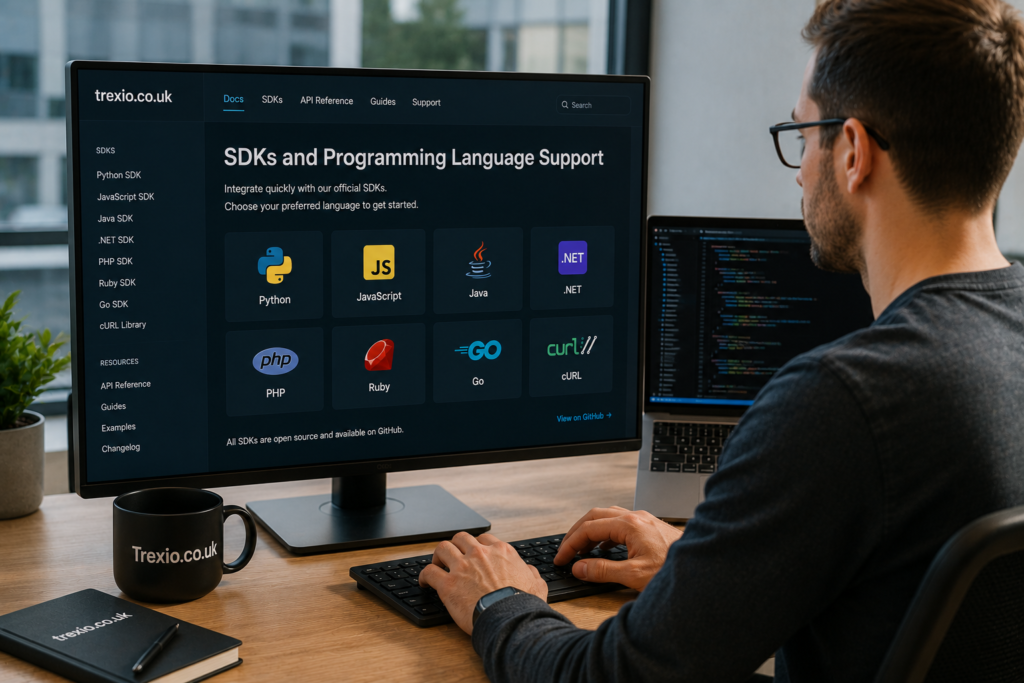
Software Development Kits reduce implementation effort by providing reusable libraries for common development tasks. Instead of manually constructing every API request, developers can use officially supported SDKs that handle authentication, serialization, request formatting, and response parsing. When businesses evaluate the fintech company Adyen on developer tools, SDK quality often becomes an important consideration because it directly affects productivity. Adyen provides SDKs for several popular programming languages used across enterprise and startup environments. This broad language support enables organizations to integrate payments into existing technology stacks without major architectural changes. Engineers can work within familiar development environments while benefiting from standardized implementation patterns. The availability of maintained SDKs also reduces long-term maintenance requirements and accelerates application development.
SDK documentation complements the software libraries by explaining installation procedures, authentication workflows, error handling strategies, and practical implementation examples. Developers can quickly prototype payment functionality before expanding into more advanced capabilities. The combination of SDKs, tutorials, and sample applications helps reduce onboarding friction for new engineering teams. As software projects become increasingly collaborative, consistent development libraries contribute to cleaner codebases and more reliable payment integrations.
Popular Languages Supported
Adyen supports several programming ecosystems commonly used for backend and enterprise software development.
| Programming Language | Primary Use Case | Developer Benefits |
|---|---|---|
| Java | Enterprise Applications | High scalability |
| Python | Automation & APIs | Rapid development |
| PHP | Web Applications | Easy integration |
| Node.js | Modern Web Services | Fast asynchronous processing |
| .NET | Enterprise Systems | Strong Microsoft ecosystem |
| Go | High-performance Services | Excellent concurrency |
SDK Benefits for Engineering Teams
Official SDKs simplify authentication, improve code consistency, reduce repetitive implementation work, accelerate testing, and improve maintainability. Engineering teams spend less time handling low-level API communication while focusing more on business logic and customer-facing features. This productivity improvement becomes increasingly valuable as payment systems grow in complexity.
Documentation Quality and Learning Resources
One of the strongest reasons organizations evaluate the fintech company Adyen on developer tools is the quality of its technical documentation. Well-written documentation significantly reduces onboarding time, shortens implementation cycles, and minimizes support requests from engineering teams. Adyen organizes its documentation into logical categories, allowing developers to quickly locate information related to payments, webhooks, authentication, reporting, terminals, risk management, and APIs. Each section typically includes conceptual explanations alongside practical implementation examples, enabling both junior and experienced developers to understand the platform efficiently. The documentation also provides code snippets in multiple programming languages, making it easier to translate concepts into production-ready applications. Interactive examples help developers visualize request and response structures before writing code. Clear error explanations reduce debugging time and encourage faster issue resolution during development. From an overall developer experience perspective, the documentation is comprehensive enough to support everything from initial testing to enterprise-scale deployment.
In addition to API references, Adyen provides implementation guides that explain complete payment workflows rather than isolated endpoints. This holistic approach helps developers understand how different services interact throughout the payment lifecycle. Engineers can learn about recurring payments, subscriptions, payment methods, fraud prevention, reconciliation, and reporting without searching through disconnected resources. The documentation is updated regularly as new capabilities become available, helping businesses remain aligned with platform improvements. Organizations that evaluate the fintech company Adyen on developer tools often consider documentation quality a deciding factor because excellent documentation directly improves developer productivity. Strong educational resources also reduce dependence on customer support, allowing teams to solve technical problems independently. Overall, Adyen demonstrates a mature documentation strategy that supports continuous learning throughout the software development lifecycle.
Sandbox Environment and Testing Capabilities
Before deploying payment functionality into production, developers need safe environments for experimentation and validation. This is another area where businesses evaluate the fintech company Adyen on developer tools carefully. Adyen’s sandbox environment closely resembles the production platform while ensuring that no real financial transactions occur. Developers can simulate successful payments, failed transactions, authentication flows, refunds, chargebacks, and webhook events without financial risk. Such testing capabilities improve confidence before launching customer-facing payment features. Comprehensive testing also helps identify edge cases early, reducing production incidents after deployment. The sandbox supports integration testing, user acceptance testing, and automated quality assurance processes across multiple payment scenarios.
Testing capabilities become increasingly valuable for organizations practicing continuous integration and continuous deployment (CI/CD). Automated test suites can validate payment workflows every time new code is released, ensuring application stability throughout rapid development cycles. Developers can repeatedly execute payment scenarios without affecting real customer data or financial records. Mock responses and predictable transaction outcomes simplify automated testing while improving software reliability. Engineering teams also appreciate having environments that closely mimic production because discrepancies between testing and live systems often cause deployment issues. When companies evaluate the fintech company Adyen on developer tools, the quality of sandbox infrastructure contributes significantly to overall developer satisfaction and implementation confidence.
Advantages of the Sandbox Environment
The sandbox offers numerous benefits for software teams throughout development.
| Feature | Developer Benefit |
|---|---|
| Test Payments | Validate workflows safely |
| Mock Transactions | Simulate multiple payment outcomes |
| Webhook Testing | Verify event handling |
| Authentication Testing | Confirm secure integrations |
| Error Simulation | Improve exception handling |
| API Validation | Detect implementation issues early |
Security Features for Developers
Security is one of the most critical considerations when organizations evaluate the fintech company Adyen on developer tools. Payment systems process highly sensitive financial information, making strong security practices essential for protecting customer trust and regulatory compliance. Adyen incorporates modern authentication methods, encrypted communication, secure API credentials, and robust access management into its developer platform. Rather than leaving security entirely to application developers, many safeguards are integrated directly into the platform. This reduces implementation errors while helping businesses maintain industry standards. Secure credential management prevents unauthorized access to payment infrastructure, while encrypted communication protects data transmitted between applications and payment services. Developers also benefit from detailed security guidance throughout the documentation.
Another significant advantage is Adyen’s emphasis on compliance with globally recognized payment security standards. Developers building applications can leverage platform capabilities instead of implementing every security feature independently. This reduces engineering complexity while improving overall application resilience. Secure webhook verification, tokenization support, and fraud management services provide additional protection throughout the payment lifecycle. Engineering teams can focus more on delivering customer features while relying on established security mechanisms within the payment platform. Businesses that evaluate the fintech company Adyen on developer tools frequently identify its security architecture as one of the strongest aspects of the developer ecosystem.
Security Technologies
Some of the major security capabilities include:
- HTTPS encryption
- API key authentication
- Tokenization
- Webhook verification
- PCI DSS compliance support
- Risk management integration
- Access control mechanisms
- Secure credential management
Integration Flexibility Across Platforms
Integration flexibility determines whether a payment platform fits existing technology stacks. Organizations evaluate the fintech company Adyen on developer tools by examining compatibility with websites, mobile applications, enterprise systems, cloud platforms, and eCommerce solutions. Adyen supports multiple integration methods ranging from direct APIs to prebuilt plugins and hosted payment components. This flexibility enables businesses to select an implementation approach that matches available engineering resources. Smaller organizations can deploy integrations quickly using existing libraries, while larger enterprises can build fully customized payment experiences using APIs. Such adaptability supports diverse business requirements without forcing unnecessary architectural changes.
Cross-platform compatibility also improves long-term scalability. As companies expand into new regions, launch mobile applications, or adopt microservices architectures, consistent payment integrations become increasingly valuable. Adyen’s developer tools help organizations maintain unified payment experiences across web, mobile, point-of-sale, and marketplace environments. This consistency reduces duplicated development effort while simplifying maintenance across multiple customer channels. Businesses looking for sustainable payment infrastructure often consider integration flexibility one of the primary reasons to evaluate the fintech company Adyen on developer tools.
Performance, Reliability, and Scalability

Performance plays a crucial role in payment processing because customers expect transactions to complete quickly and reliably. Slow or unstable payment systems can negatively impact user satisfaction and business revenue. When organizations evaluate the fintech company Adyen on developer tools, they also assess how well the platform supports high transaction volumes under demanding conditions. Adyen is designed to serve businesses ranging from startups to multinational enterprises, emphasizing infrastructure capable of handling significant payment workloads. Reliable APIs, efficient request processing, and scalable backend architecture contribute to consistent application performance. Developers benefit from predictable system behavior even during peak shopping periods and high-demand events.
Scalability extends beyond transaction capacity. Growing businesses require payment infrastructure that can expand alongside new products, additional markets, increasing customer bases, and evolving regulatory requirements. Adyen’s unified platform reduces the operational burden associated with managing multiple payment providers across different regions. Developers can introduce additional payment methods without redesigning core payment architecture. This long-term scalability supports sustainable software development while minimizing future migration challenges. Engineering teams therefore gain confidence that their payment integrations will remain effective as organizational requirements evolve.
Advantages and Limitations of Adyen Developer Tools
Every technology platform has strengths and trade-offs. Evaluating both perspectives provides a balanced understanding for technical decision-makers.
| Advantages | Limitations |
|---|---|
| Excellent API consistency | Enterprise features may require experience |
| Comprehensive documentation | Initial learning curve for beginners |
| Strong SDK support | Advanced configurations can be complex |
| Reliable sandbox testing | Some features target larger organizations |
| High security standards | Smaller projects may not need every capability |
| Global payment infrastructure | Full implementation requires planning |
Best Practices When Using Adyen Developer Tools
To maximize success, development teams should follow proven implementation strategies rather than rushing directly into production. Begin every integration inside the sandbox environment and thoroughly validate payment flows before enabling live transactions. Review the official documentation regularly because APIs and recommended implementation patterns continue to evolve. Store API credentials securely instead of embedding them directly within application code. Use webhooks for asynchronous event processing rather than relying exclusively on synchronous API responses. Monitor application logs carefully to identify failed transactions, authentication issues, and unexpected API behavior early. Build automated integration tests that verify payment workflows whenever new software versions are deployed. Keep SDKs updated to benefit from security improvements, bug fixes, and new platform capabilities. Finally, document internal implementation decisions so future developers can maintain the payment infrastructure efficiently.
Common Mistakes Developers Should Avoid
Many implementation challenges occur because teams underestimate payment integration complexity. One common mistake is skipping comprehensive sandbox testing before moving to production, increasing the likelihood of customer-facing issues. Another frequent error involves poor credential management, such as storing API keys in unsecured repositories or application code. Developers sometimes ignore webhook verification, creating unnecessary security vulnerabilities. Failing to implement robust error handling can also result in inconsistent customer experiences when network interruptions or declined payments occur. Some teams overlook API version management, making future upgrades more difficult. Inadequate monitoring limits visibility into transaction failures and operational issues after deployment. Finally, relying solely on default configurations without understanding platform capabilities may prevent organizations from fully leveraging Adyen’s developer ecosystem.
Pro Tips for Engineering Teams
- Design payment integrations as modular services for easier maintenance.
- Automate API testing within your CI/CD pipeline.
- Monitor webhook delivery and retry unsuccessful events.
- Keep SDK versions current to receive security improvements.
- Use tokenization whenever possible to reduce sensitive data handling.
- Review API release notes before major platform updates.
- Implement detailed logging for troubleshooting production issues.
- Separate development, testing, and production credentials completely.
- Document payment workflows for future engineering teams.
- Continuously review security practices alongside platform updates.
Conclusion
Organizations that evaluate the fintech company Adyen on developer tools generally find a mature, enterprise-ready platform built around developer productivity, scalability, and secure payment infrastructure. Its consistent REST APIs, officially supported SDKs, comprehensive documentation, reliable sandbox environment, flexible integration options, and strong security architecture create a development ecosystem capable of supporting businesses of many sizes. While beginners may experience a moderate learning curve due to the platform’s extensive capabilities, the long-term benefits often outweigh the initial investment in implementation. Adyen’s unified architecture reduces complexity across multiple payment methods and international markets, allowing engineering teams to focus more on innovation than infrastructure management. Strong testing capabilities, stable APIs, and extensive learning resources further enhance the developer experience. Organizations seeking reliable payment technology with long-term scalability will likely find Adyen’s developer tools well suited for modern software development. Overall, Adyen stands out as a strong choice for businesses requiring secure, flexible, and developer-friendly payment infrastructure.
Frequently Asked Questions (FAQs)
1. What are Adyen developer tools?
Adyen developer tools include REST APIs, SDKs, documentation, sandbox testing, webhooks, security features, and integration resources that help developers build payment applications.
2. Does Adyen provide a sandbox for testing?
Yes. Developers can safely test payment workflows, refunds, authentication, and webhook events without processing real financial transactions.
3. Which programming languages are supported?
Adyen offers SDKs for several popular languages, including Java, Python, PHP, Node.js, .NET, and Go.
4. Are Adyen APIs REST-based?
Yes. Adyen primarily provides REST APIs with JSON request and response formats following modern development practices.
5. Is Adyen suitable for enterprise applications?
Yes. Its infrastructure is designed to support enterprise-scale payment processing while remaining flexible enough for growing businesses.
6. How secure are Adyen developer tools?
They incorporate encrypted communication, secure authentication, tokenization, webhook verification, and support for major payment security standards.
7. Can developers automate payment workflows?
Yes. APIs and webhooks enable extensive automation for payments, refunds, reporting, subscriptions, and other payment-related operations.
8. Does Adyen offer detailed documentation?
Yes. The platform provides comprehensive documentation with tutorials, API references, implementation guides, and code examples.
9. What industries commonly use Adyen?
Retail, eCommerce, SaaS, travel, hospitality, digital platforms, subscription businesses, and enterprise organizations commonly use Adyen.
10. Is Adyen a good choice for long-term scalability?
Yes. Its unified architecture, stable APIs, and global payment capabilities make it well suited for businesses planning future growth.
Author Bio
About the Author
The author is an experienced fintech and enterprise software writer specializing in payment technologies, developer platforms, APIs, cloud infrastructure, and digital transformation. With extensive experience analyzing financial technology ecosystems, the author produces in-depth, research-driven content that follows Google’s EEAT principles while helping developers, technology leaders, and business decision-makers understand complex software platforms and implementation strategies.