
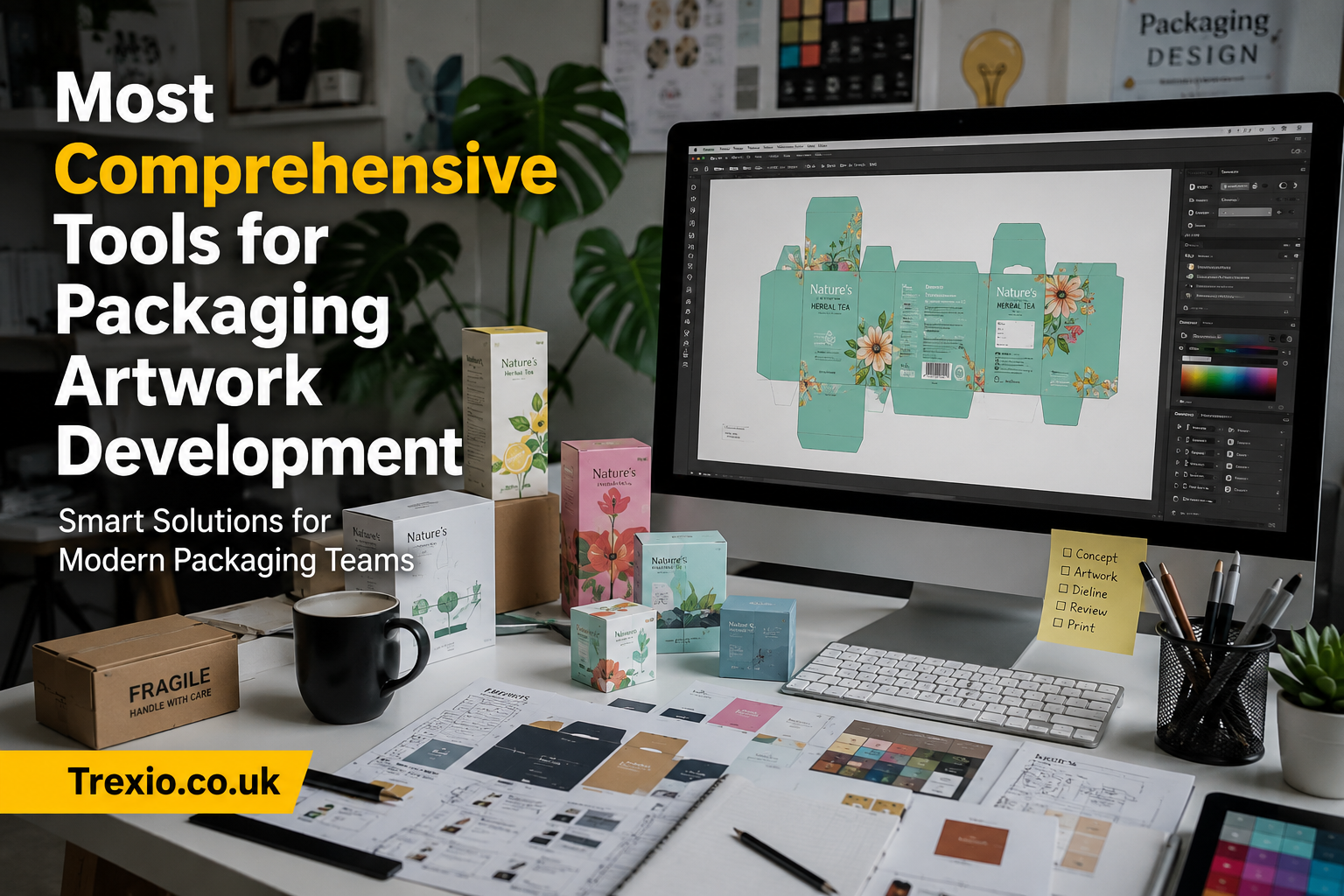
Packaging has evolved far beyond simply protecting products during shipping. Today, packaging serves as a powerful marketing tool, a compliance document, and a key element of the customer experience. Every label, color, logo, ingredient list, barcode, and regulatory statement must be accurate before products reach store shelves. Because of these growing demands, businesses increasingly rely on the most comprehensive tools for packaging artwork development to simplify design, approval, collaboration, and production. These solutions reduce manual work while improving consistency across multiple product lines and markets. Whether a company manufactures food, cosmetics, pharmaceuticals, electronics, or consumer goods, modern packaging artwork software helps minimize costly mistakes. Organizations that invest in the most comprehensive tools for packaging artwork development gain greater visibility into artwork workflows while ensuring branding standards remain consistent across every package. As packaging regulations continue changing worldwide, having the right digital platform has become a competitive advantage rather than an optional investment.
Quick Answer
The most comprehensive tools for packaging artwork development combine artwork creation, workflow automation, version control, regulatory compliance, proofing, collaboration, digital asset management, and print-ready production into one centralized platform. These systems help marketing teams, designers, regulatory departments, printers, and manufacturers collaborate efficiently while reducing artwork errors, shortening approval cycles, and maintaining brand consistency throughout the packaging lifecycle.
Understanding the Most Comprehensive Tools for Packaging Artwork Development
Packaging artwork development involves far more than creating attractive graphics. It includes planning layouts, managing brand assets, reviewing legal information, validating nutritional facts, checking barcode quality, maintaining language translations, preparing print files, and coordinating approvals among multiple departments. The most comprehensive tools for packaging artwork development bring these activities together into one connected workflow instead of relying on disconnected spreadsheets, emails, and shared folders. This integrated approach reduces communication gaps while improving project visibility. Teams can monitor every revision, track stakeholder comments, compare artwork versions, and ensure the latest approved file moves into production. These platforms also provide automated notifications, reducing delays caused by manual follow-ups. As organizations expand globally, centralized artwork management becomes increasingly important because different markets often require unique packaging regulations and language variations. Businesses using the most comprehensive tools for packaging artwork development are better equipped to manage growing product portfolios without sacrificing quality or compliance.
Why Packaging Artwork Has Become More Complex
Packaging requirements have expanded dramatically over the past decade. Products now require multilingual labeling, sustainability information, recycling icons, ingredient disclosures, allergen statements, QR codes, digital traceability, accessibility considerations, and region-specific legal text. Every update introduces new opportunities for human error when organizations depend on manual editing processes. The most comprehensive tools for packaging artwork development help eliminate these risks by automating repetitive tasks and maintaining centralized artwork libraries. Instead of recreating packaging files from scratch, teams reuse approved templates while updating only the required elements. Automated validation ensures mandatory information remains visible and correctly formatted before artwork enters production. These capabilities reduce expensive printing mistakes and product recalls while improving overall operational efficiency. Companies also benefit from better collaboration between design, quality assurance, regulatory affairs, and external printing partners.
Industries That Depend on Packaging Artwork Platforms
Many industries require sophisticated packaging management because compliance errors can result in financial penalties, product recalls, or damaged consumer trust. Food manufacturers rely heavily on packaging software to maintain nutritional labels, ingredient declarations, expiration information, and allergen warnings. Pharmaceutical companies require strict version control to ensure medication packaging meets international health regulations. Cosmetics manufacturers must accurately display ingredients, safety instructions, and country-specific labeling standards. Consumer electronics companies manage multilingual packaging, technical specifications, warranty information, and certification logos. Beverage companies coordinate branding updates across thousands of packaging variations each year. Retail brands launching private-label products also benefit from the most comprehensive tools for packaging artwork development because they simplify collaboration with suppliers, designers, and printing vendors while maintaining consistent brand presentation across multiple product categories.
Core Capabilities of the Most Comprehensive Tools for Packaging Artwork Development
Selecting software requires understanding which capabilities provide the greatest value throughout the artwork lifecycle. Modern solutions combine creative functionality with workflow management, compliance verification, and production readiness.
Artwork Creation and Design Management
Artwork creation serves as the foundation of every packaging project. Designers require intuitive interfaces that support high-resolution graphics, color management, typography, vector editing, and template customization. The most comprehensive tools for packaging artwork development integrate these creative functions with centralized asset libraries containing approved logos, fonts, icons, colors, and packaging templates. This approach prevents outdated branding from appearing on new packaging while reducing repetitive design work. Creative teams can quickly access reusable components that accelerate project completion. Built-in template management also ensures packaging dimensions remain consistent across product families. Automated updates allow branding modifications to flow across multiple packaging variations without requiring manual editing of every file. As organizations manage larger product catalogs, centralized artwork creation significantly improves design efficiency.
Version Control and Revision Tracking
Version management is one of the most valuable features found within the most comprehensive tools for packaging artwork development. Packaging files often undergo dozens of revisions involving marketing departments, legal teams, printers, translators, and regulatory specialists. Without centralized tracking, outdated artwork can accidentally reach production. Version control maintains a complete history of every modification, allowing users to compare revisions and restore previous versions when necessary. Audit trails document who approved each change and when it occurred. This transparency supports compliance while improving accountability across departments. Automated comparison tools highlight artwork differences instantly, making reviews faster and more accurate. Organizations handling regulated products particularly benefit from comprehensive revision histories that simplify regulatory audits.
Digital Asset Management
Digital asset management eliminates the confusion associated with scattered design files stored across multiple systems. The most comprehensive tools for packaging artwork development centralize approved brand assets into searchable repositories accessible by authorized users worldwide. Logos, product images, regulatory icons, packaging templates, marketing graphics, and typography guidelines remain organized and protected through user permissions. Designers spend less time searching for files while ensuring every package reflects current branding standards. Asset metadata improves discoverability, making large content libraries easier to navigate. Automated expiration controls remove outdated assets from active projects, reducing branding inconsistencies. This centralized environment improves collaboration while strengthening brand governance.
Workflow Automation in Packaging Artwork Development
Manual approval processes frequently delay packaging projects and increase the likelihood of communication errors. Workflow automation transforms these processes into structured digital sequences that improve speed and accountability.
Automated Approval Workflows
The most comprehensive tools for packaging artwork development allow organizations to configure approval workflows tailored to specific product categories, regulatory requirements, and internal governance policies. Each project automatically moves through predefined review stages, notifying the appropriate stakeholders when their input is required. Marketing verifies branding accuracy, regulatory teams validate compliance, quality assurance checks technical details, and production confirms print readiness. Automated reminders prevent projects from stalling because reviewers receive timely notifications regarding pending approvals. Escalation rules ensure overdue reviews receive management attention before deadlines are missed. Centralized dashboards provide project managers with complete visibility into approval progress, enabling proactive workload management and faster product launches.
Task Assignment and Collaboration
Packaging development involves cross-functional collaboration among internal departments and external partners. The most comprehensive tools for packaging artwork development simplify communication by assigning tasks directly within each artwork project. Team members receive clear responsibilities, deadlines, comments, and supporting documentation without relying on lengthy email threads. Designers respond to feedback within the artwork interface while reviewers annotate files using collaborative markup tools. Everyone accesses the same version, reducing confusion caused by outdated attachments. Real-time collaboration improves transparency while minimizing approval bottlenecks. External suppliers and printing vendors can participate securely through permission-based access, further streamlining project coordination.
Real-Time Project Visibility
Project dashboards provide valuable operational insights that improve decision-making throughout the packaging lifecycle. Managers monitor project status, pending approvals, revision counts, resource utilization, and production readiness from centralized reporting interfaces. These analytics help organizations identify workflow bottlenecks before they delay product launches. Historical reporting also supports continuous process improvement by highlighting recurring issues and approval trends. Teams using the most comprehensive tools for packaging artwork development gain measurable visibility into artwork performance metrics, allowing leadership to allocate resources more effectively while improving operational efficiency.
Regulatory Compliance and Quality Assurance
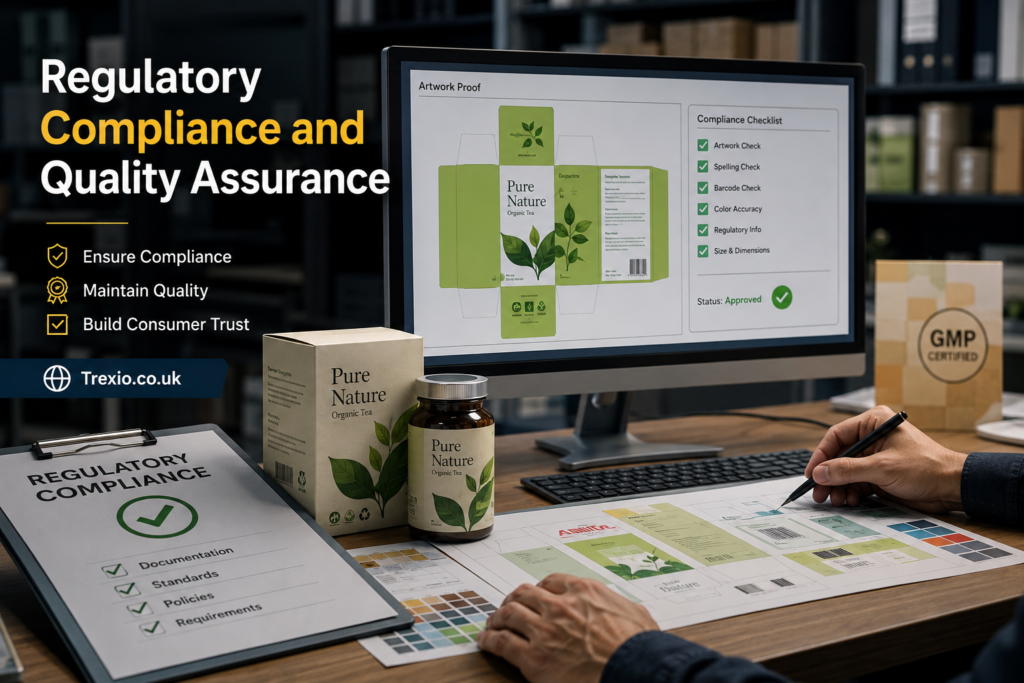
Regulatory compliance remains one of the primary reasons organizations adopt dedicated packaging artwork software. Modern products must satisfy complex regional labeling requirements before entering global markets.
Built-In Compliance Verification
The most comprehensive tools for packaging artwork development include automated compliance validation that helps organizations identify missing information before packaging reaches production. Systems verify barcode placement, mandatory warning labels, nutritional panels, ingredient declarations, recycling symbols, language requirements, and country-specific regulations. Automated validation reduces dependence on manual proofreading while improving consistency across thousands of packaging variations. Compliance rules can be customized according to product categories and regional markets, ensuring organizations meet changing legal requirements efficiently. Automated alerts notify reviewers whenever required information is missing or incorrectly formatted. These capabilities significantly reduce costly packaging errors while strengthening consumer trust.
Barcode and Print Quality Validation
Barcode accuracy directly affects inventory management, retail scanning, logistics, and customer satisfaction. The most comprehensive tools for packaging artwork development integrate barcode verification features that evaluate readability before files reach commercial printing. Color contrast, sizing, placement, and resolution are validated according to industry standards. Print quality analysis also checks image resolution, bleed settings, typography clarity, and color consistency to minimize production issues. Early identification of technical problems reduces waste while improving manufacturing efficiency. These validation capabilities help organizations deliver reliable, production-ready packaging artwork that performs consistently throughout the supply chain.
Integration Capabilities That Enhance Packaging Artwork Development
The most comprehensive tools for packaging artwork development rarely operate as standalone applications. Instead, they integrate with enterprise software that manages product information, inventory, manufacturing, customer data, and quality processes. These integrations eliminate duplicate data entry while ensuring every department works from the same source of truth. Product specifications can automatically populate artwork templates, reducing manual input and minimizing the possibility of inconsistencies. Marketing teams receive updated product information immediately, while regulatory specialists can review changes without requesting multiple spreadsheets from different departments. Integration also improves traceability because every modification is linked to the corresponding product record. Organizations launching hundreds of new products annually benefit from this connected ecosystem because it accelerates packaging creation without sacrificing accuracy. As digital transformation continues across manufacturing industries, seamless integration has become one of the defining characteristics of the most comprehensive tools for packaging artwork development.
Product Information Management (PIM) Integration
Product Information Management systems store essential product details such as dimensions, ingredients, specifications, marketing claims, and technical attributes. Connecting these databases with packaging artwork software ensures that approved information flows directly into packaging layouts without requiring repetitive manual copying. This reduces transcription errors while improving consistency across printed materials, e-commerce listings, and marketing collateral. Teams also spend less time verifying product data because approved records automatically synchronize whenever updates occur. Automated synchronization becomes especially valuable when managing multilingual packaging or region-specific product variations. Instead of updating each artwork individually, organizations modify the central product record and distribute changes throughout connected systems. This streamlined workflow improves operational efficiency while reducing compliance risks.
Enterprise Resource Planning (ERP) Connectivity
ERP integration supports collaboration between manufacturing, procurement, finance, logistics, and packaging departments. The most comprehensive tools for packaging artwork development exchange information with ERP platforms to synchronize product launches, production schedules, supplier information, and inventory planning. This connectivity improves visibility across the entire supply chain while reducing communication delays. Packaging teams receive real-time production timelines, allowing artwork approvals to align with manufacturing deadlines. Procurement departments also gain confidence that approved packaging files correspond with current production requirements. Automated synchronization minimizes costly production interruptions caused by outdated artwork versions. Businesses operating globally particularly benefit because ERP integration supports standardized packaging governance across multiple facilities.
Cloud-Based Collaboration Advantages
Cloud technology has fundamentally changed how organizations manage packaging artwork. Cloud-based solutions allow authorized users to access artwork projects securely from any location with an internet connection. Designers, regulatory specialists, marketing managers, printers, translators, and suppliers collaborate simultaneously without exchanging large email attachments. Automatic backups protect valuable artwork assets while reducing dependence on local servers. Software updates occur automatically, ensuring organizations always benefit from the latest security improvements and workflow enhancements. Cloud environments also support scalable storage for growing product portfolios. These capabilities make cloud deployment a preferred choice for companies seeking flexible and collaborative packaging operations.
Artificial Intelligence in Packaging Artwork Development
Artificial intelligence is becoming an increasingly valuable component of the most comprehensive tools for packaging artwork development. Rather than replacing creative professionals, AI assists designers, reviewers, and regulatory specialists by automating repetitive processes and identifying potential issues before production begins. Machine learning algorithms analyze previous artwork projects to recommend layout improvements, identify missing compliance elements, and predict workflow bottlenecks. AI-powered automation reduces administrative work, allowing creative teams to focus on branding, innovation, and customer experience. As software continues evolving, intelligent recommendations improve project accuracy while shortening review cycles. Organizations adopting AI-supported packaging workflows often experience faster product launches alongside improved quality control. These innovations demonstrate how advanced technology continues transforming packaging artwork management.
Automated Content Verification
Content verification represents one of the most practical AI applications within packaging artwork software. Intelligent systems automatically compare artwork content against approved product databases, highlighting inconsistencies in ingredients, product names, nutritional values, safety warnings, and marketing claims. Reviewers receive immediate notifications whenever discrepancies appear, allowing corrections before artwork reaches printing. Automated verification significantly reduces human oversight while improving regulatory confidence. Organizations managing extensive product portfolios particularly benefit because manual proofreading alone becomes increasingly difficult as packaging complexity grows. AI-assisted verification strengthens quality assurance while reducing operational costs associated with packaging errors.
Intelligent Translation Support
Global brands frequently distribute products across dozens of countries, requiring packaging in multiple languages. The most comprehensive tools for packaging artwork development increasingly include intelligent translation workflows that simplify multilingual packaging management. While professional translators remain essential, software helps organize translation memory, terminology databases, and language-specific approval workflows. Reusing previously approved translations reduces costs while maintaining consistency across product families. AI also assists by identifying duplicate content and recommending existing translations when similar packaging projects are created. These capabilities accelerate international product launches while supporting linguistic accuracy.
Security and Data Governance
Packaging artwork contains confidential business information, including product formulations, unreleased branding, pricing strategies, supplier details, and regulatory documentation. Protecting these assets is a critical responsibility for every organization. The most comprehensive tools for packaging artwork development include enterprise-grade security measures that safeguard intellectual property while supporting regulatory compliance. Multi-factor authentication, encrypted data storage, role-based permissions, secure cloud hosting, and detailed audit logs help prevent unauthorized access. Security policies also simplify compliance with international data protection regulations while improving customer trust. Organizations benefit from centralized governance that ensures sensitive artwork remains protected throughout the development lifecycle. Strong cybersecurity has become a standard expectation rather than an optional feature.
Permission-Based Access Control
Permission management ensures users only access projects relevant to their responsibilities. Designers may edit artwork, regulatory specialists review compliance, marketing teams approve branding, and external printers receive production-ready files without accessing confidential internal documentation. Granular permissions reduce accidental modifications while strengthening information security. Organizations can also revoke access immediately when suppliers change or projects conclude. These capabilities improve governance while maintaining efficient collaboration between internal teams and external partners.
Measuring Success with Packaging Artwork Development Tools
Implementing software is only the first step. Organizations must evaluate measurable outcomes to determine whether their investment delivers long-term value. The most comprehensive tools for packaging artwork development provide reporting dashboards that track performance indicators throughout the packaging lifecycle. Metrics include approval cycle duration, artwork revision frequency, compliance error rates, project completion speed, print rejection percentages, and resource utilization. These analytics enable continuous improvement by identifying inefficiencies that require attention. Executive leadership gains better visibility into packaging operations while making data-driven investment decisions. Consistent measurement also supports process standardization across multiple business units.
Key Performance Indicators (KPIs)
The most valuable packaging KPIs extend beyond simple project completion. Organizations monitor first-pass approval rates, average review duration, regulatory correction frequency, supplier responsiveness, artwork reuse percentages, and packaging launch timelines. Higher first-pass approval rates typically indicate stronger collaboration and better governance. Reduced revision counts often reflect improved template management and standardized workflows. Monitoring these indicators helps organizations benchmark performance over time while identifying opportunities for optimization. The most comprehensive tools for packaging artwork development simplify KPI tracking through automated reporting and customizable dashboards.
Comparison Table: Traditional Artwork Process vs Modern Packaging Artwork Tools
| Feature | Traditional Manual Process | Modern Packaging Artwork Development Tools |
|---|---|---|
| File Storage | Multiple folders | Centralized repository |
| Version Control | Manual naming | Automated version history |
| Collaboration | Email chains | Real-time collaboration |
| Regulatory Review | Manual checking | Automated validation |
| Barcode Verification | External testing | Built-in verification |
| Asset Management | Disconnected files | Centralized asset library |
| Workflow | Manual approvals | Automated workflow |
| Reporting | Limited visibility | Real-time dashboards |
| Security | Basic permissions | Enterprise-grade security |
| Scalability | Difficult | Highly scalable |
Comparison Table: Features to Prioritize
| Feature | Importance | Business Value |
|---|---|---|
| Workflow Automation | Very High | Faster approvals |
| Version Control | Very High | Fewer production errors |
| Compliance Management | Very High | Reduced legal risks |
| Cloud Collaboration | High | Better teamwork |
| Digital Asset Management | High | Consistent branding |
| AI Assistance | High | Greater efficiency |
| ERP Integration | Medium-High | Connected operations |
| Analytics Dashboard | Medium | Performance optimization |
Best Practices for Using the Most Comprehensive Tools for Packaging Artwork Development
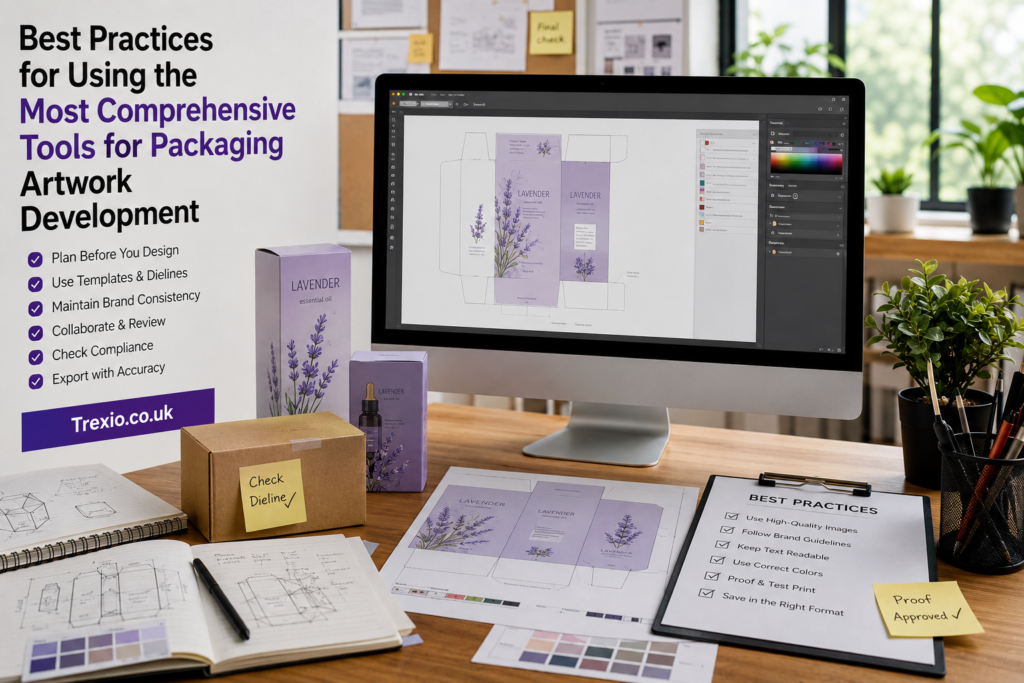
- Build standardized artwork templates before launching projects.
- Maintain a centralized digital asset library with approved branding materials.
- Establish clear approval workflows for every product category.
- Regularly update regulatory requirements within the software.
- Train employees on artwork governance and version management.
- Integrate packaging software with ERP and PIM systems whenever possible.
- Review analytics reports monthly to identify workflow bottlenecks.
- Archive outdated artwork while preserving audit histories.
- Validate print files before production begins.
- Conduct periodic security audits to protect confidential packaging assets.
Common Mistakes to Avoid
- Relying on email instead of centralized collaboration.
- Allowing multiple unofficial artwork versions to circulate.
- Ignoring regulatory updates for international markets.
- Skipping barcode verification before printing.
- Using outdated logos or brand assets.
- Failing to define user permissions properly.
- Overlooking integration opportunities with existing business systems.
- Delaying artwork reviews until production deadlines approach.
- Not documenting approval decisions.
- Underestimating employee training requirements.
Pro Tips
- Create reusable packaging templates for recurring product categories.
- Automate repetitive approval workflows wherever possible.
- Schedule periodic audits of digital asset libraries.
- Use dashboards to monitor approval delays proactively.
- Store regulatory references alongside artwork projects.
- Encourage real-time collaboration instead of offline document exchanges.
- Review AI-generated recommendations before final approval.
- Maintain consistent naming conventions across every packaging project.
- Benchmark workflow performance against previous product launches.
- Continuously optimize processes using analytics provided by the most comprehensive tools for packaging artwork development.
Conclusion
Selecting the most comprehensive tools for packaging artwork development is no longer simply a technology decision—it is a strategic investment that influences operational efficiency, regulatory compliance, brand consistency, and customer trust. Modern organizations face increasing packaging complexity as they expand into new markets, introduce additional product variations, and comply with evolving global regulations. Comprehensive packaging artwork platforms address these challenges by combining artwork creation, workflow automation, compliance validation, digital asset management, cloud collaboration, analytics, and enterprise integration within a unified environment. Businesses that adopt these solutions reduce costly errors, accelerate product launches, improve collaboration across departments, and establish stronger governance throughout the packaging lifecycle. As artificial intelligence, automation, and cloud technologies continue advancing, packaging artwork development will become even more intelligent and efficient. Organizations that embrace these innovations today will be better positioned to respond quickly to market demands while maintaining exceptional packaging quality and regulatory confidence.
Frequently Asked Questions
1. What are the most comprehensive tools for packaging artwork development?
They are software platforms that combine artwork design, approval workflows, compliance management, version control, digital asset management, collaboration, and production preparation within one centralized system.
2. Why is packaging artwork software important?
It reduces manual errors, improves collaboration, accelerates approvals, maintains brand consistency, and supports regulatory compliance.
3. Which industries benefit the most?
Food, beverage, pharmaceutical, cosmetics, consumer goods, medical devices, retail, and electronics industries benefit significantly.
4. Can small businesses use packaging artwork development software?
Yes. Many cloud-based solutions offer scalable features suitable for startups and growing businesses.
5. Does packaging artwork software support regulatory compliance?
Yes. Most advanced platforms include automated validation for labeling requirements, barcode verification, and regional compliance standards.
6. How does version control improve packaging accuracy?
Version control tracks every modification, prevents outdated files from entering production, and maintains a complete audit history.
7. What role does AI play in packaging artwork development?
AI assists with content verification, workflow optimization, translation support, compliance checks, and identifying potential artwork issues before production.
8. Can these tools integrate with ERP systems?
Yes. Integration allows product information, production schedules, and packaging workflows to remain synchronized across departments.
9. What should companies consider before selecting a platform?
Organizations should evaluate workflow automation, compliance features, scalability, cloud deployment, security, integrations, reporting capabilities, and vendor support.
10. Are cloud-based packaging artwork tools secure?
Most enterprise-grade cloud platforms provide encryption, access controls, audit logs, automated backups, and compliance with modern security standards.
Author Bio
Editorial Team
The Editorial Team specializes in creating research-driven, SEO-focused content covering packaging technology, manufacturing software, digital transformation, workflow automation, and enterprise business solutions. Every article is developed using EEAT principles, industry best practices, and user-focused insights to provide practical, accurate, and trustworthy information for professionals and decision-makers.